I read a post from one of the members of the women in pain awareness group (https://www.facebook.com/#!/groups/111961795481256/ )and she reminded me of something very important; something I think many of us tend to overlook, even those not in pain. For me, it is a constant that I forget rather then remember.
I have lost a lot. My dreams, my hopes, my life as I once thought it would be.
I sometimes look in the mirror and am surprised. Who is that older women? I am supposed to be 26 still; my hair long and dark, face smooth, eyes sparkling -'bedroom eyes' Bill, my castmate from "HELLO DOLLY" called them; a mouth with the tiny smile that reads expectation and options.
I awaken in the morning and think. What is there to do today? Usually nothing, or maybe an errand or two. Is it a good morning and the eye is not swollen yet, the pain quiescent? Or am I already behind, the pain having the upper hand?
I go to the computer and start reading email. It is too much for my eye. I want to stop but what else is there to do? Who else is there, the writers often unknownst to me but still people with whom I am having a 'conversation'. It is someone, a way out of the alone, and when it is from another person in pain, someone who 'gets' it.
But even that is fraught with the loss. I don't want to have a medical issue in common, much less pain, I want to talk politics and cooking, and theater, and, well, almost anything else.
I am working on my greeting card line to get them ready for an Etsy store. That makes me happy, when I think of a joke or an illustration I can do. I get scared and upset when I take the thought further. What if I can't succeed at this? What if it is too much for my eye - to get items ready to mail out, to address the envelopes or boxes?
My fantasy is that when this is over, because it will be, because the pain will be gone, (I know it is only a fantasy but then you never know.) I will be 26 and have the life still before me I had envisioned when I moved to NYC. I will act, I will sing, I will continue with the friends I made, going out for lunch, watching parades, eating at each other's homes, just 'hangin'.
When I look at it that way there is nothing to celebrate, it is all loss and fear and can'ts.
But I can write the jokes and words for the cards. I can draw the pictures (not good but cartoony enough that they fit). Because of the Miracle I can go outside anytime I want, letting the breeze and leaves, and snow fall on my face, turn my face right into the wind, and not be in pain.
One surgery left so much damage in my neck that I have the 2 clamps and 12 pins holding it up. But, as the orthopedic surgeon told me, "You could have become paralyzed just walking down the street."
But I can walk, and breathe, and my body can do almost everything I want it to do and it can do all it needs to do. I am not as completely alone as it feels - because there is no one to touch and feel right here, right in front of me, but I do have my friend in New York and we talk almost every day, I do have my nephew, we email almost every day. It is more than many have.
I have a roof over my head, I am not destitute. One day I may be living on the edge, because of my financial situation but that is not today. Today it is okay.
So. I have a choice. Is my thinking going to be a broken record and keep repeating: the pain, the pain, the can't, the don't, the fear? Or will it play a new song - yes the pain will be there, it will get worse. I will have to stop; but right now, for this moment, for this few moments, this half hour, this hour, I am okay and it is a good feeling. Hold onto it and maybe even through the pain the celebration of the have will play on.
My book.
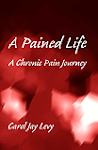
"Fascinating" Stephen S. Hall. writer, N.Y.Times magazine. "Hard to put down." A.C.P.A., American Chronic Pain Association.
Showing posts with label RSD trigeminal neuralgia. Show all posts
Showing posts with label RSD trigeminal neuralgia. Show all posts
Wednesday, November 2, 2011


Friday, September 2, 2011
Ben's friends is no friend of mine - follow up. or How to evade responsibility.
I am so saddened that the owner of a support group behaves in a way no different than what many of us have experienced with friends, family, colleagues, etc.
I had written earlier about Ben' Friends group, living with atypical trigeminal neuralgia.
I received a note saying I had been suspended for spam they could not prove and harassment, for which they had no explanation other than to say if I replied to an email from one of the administrators it would be considered harassment.
I sent copies of the email and my replies to Ben so he would be aware of what was happening. He emailed me back asking that we speak by phone.
During the conversation I reiterated that I asked for proof of their allegations: they had none. I also told him I had owned a ning group such as his. When I suspended someone for spam I sent out a note to the group telling them someone had been removed for that reason. The same can be done if someone is removed erroneously.
Accusing someone of spamming and harassment is a major 'crime' on the internet. They needed to apologize, or correct their lie, by posting a note that they had wrongly suspended a member for those reasons. They did not even need to use my name.
This was the reply I received from Ben this morning.
It is a typical response to someone who truly does not 'get' it.
Instead of acknowledging they were wrong, instead of issuing an apology which he said they felt would be "inappropriate" with this "issue" he seemed to put the the blame for this fandango on me, writing "I know you have dealt with a lot in your life, medically," and wished me the best of luck.
My medical experiences had nothing to do with being wrongly accused.
It is sad when moderators, when shown to be wrong, when proven to put out bad information, are rewarded but the whistleblower is shown the door.
Support groups are good and necessary but no group is good, or safe, if the ones on whom members rely are so glued to their wrong positions that they refuse to acknowledge their errors.
Saturday, July 9, 2011
Pain screams, cajoles, and inveigles.
The first surgery worked, wonderfully. I was ecstatic, and stayed ecstatic. My neurosurgeon, Dr. Osterholm, told me to give it 6 weeks of recovery before getting back into life. 6 weeks to the day I went out looking for a job. I interviewed at 3 places and accepted a job as a clerk at HOUSE BEAUTIFUL magazine. Everything was on track. I liked the job. I quickly made 2 friends. As soon as my hair grew back (they had shaved me bald) I intended to start auditioning and taking classes again. The blood vessels in that area of my brain had a different plan. They grew back, and the pain attacked me with the same suddenness and ferocity as it had the first time.
To this day I say if I were to meet Dr. Osterholm in the street and he said "I know how to fix the pain." I would lie down in the middle of the road with my arms out wide. "Go ahead." My trust in him then, and now, is complete and total.
I felt the opposite about his resident, Dr. Martinez. I did not like him and the feeliing was mutual. He was not a nice man. He was someone in whom I had no faith.
Why then did I agree to let him operate on me despite knowing it was a terrible decision?
After the pain returned Dr. Osterholm said he would admit me to the hospital for a reoperation. Once I got there he decided that was not the safest way to go. Instead he wanted me to have the thermorhizolysis procedure. (I had had a similar procedure done about a year prior to this. It was done in NYC. The surgeon did it with me awake and used a novocaine type medication instead of heat. It was torture, total and complete torture. It was of no benefit. The upside was there were no side effects.)
"I don't know how to turn on the rhizolysis machine. Only Dr. Martinez can do it." Dr. Osterholm told me. I knew that a reoperation made the most sense. After all it worked the first time. Dr. Osterholm insisted this was safer. I truly believe, then and now, he was looking out for my safety and best interest.
I knew in my heart of hearts this would be a disaster.
I could not get Dr. Osterholm to budge. It was the procedure performed by Dr. Martinez or nothing. No one suggested any other or that it might be worth getting another opinion. (Had my family been interested enough or involved enough maybe someone might have thought of this idea. I was too embroiled in the pain to be able to look past one minute to the next.)
Choiceless, or at least convinced I was, I agreed. I did not want it, I definitely did not want Dr. Martinez to do it but...what else was there?
The pain screamed at me. "Do something!! Stop me!!" I listened to the pain. I should have listened to my heart, my logic and intelligence.
Within a few hours after the procedure the whole side of my face was numb. Numbness was a risk but supposedly only in the affected area. Instead I lost all feeling forehead to jaw. I was told I could lose the feeling in my eye. I did. I was never told TN pain could be added to the part of my face where it had not been. It was. I was never told I could lose the taste in my left mouth and tongue. I did. (This is a partial list.)
Pain screams, cajoles, and inveigles. Logic and intelligence are not as cunning.
When it comes to making the decisions that will affect the trajectory of the pain and the rest of your life, the volume knob of pain needs to be turned to mute. Only then can you hear the soft whisperings of sense.
Sunday, June 5, 2011
G-D gave me a Miracle (my doctors agree).You may call it something else and that's ok..
Some people will call it Mother Nature, The Universe, happenstance or coincidence. I call it G-d.
My neurosurgeon wrote in my chart that what happened is "amazing" He says "I have to see the definition of Miracle before I call it that." My opthalmologist and neurologist use the word Miracle.
Trigeminal neuralgia, the cause of my pain, is also called "the worst pain known to man." and "The suicide disease." For me it was the latter.
Trigeminal neuralgia, for me, was horrendous, life destroying pain, constant and sporadic in the left upper side of my face. It came out of the blue smacking me in my left temple: a lightning bolt burrowing - a thin line of burning, sharpness, a knife turning and slicing through my face. A slight breeze, a wisp of hair could set it off. Wind, cold, bright sun became my enemies; fearsome and loathsome, because they too caused tremendous pain.
It was only one half of one half of my face but it totally disabled me.
The first operation stopped the pain. For three months. Then the blood vessels that had caused it and been removed grew back. And the pain assaulted me again.
The next brain surgery and the next and the next, six all told, did not help. I was better in the summer because the weather was better. That let me go outside more but the pain was not stopped.
I suffered terrible side effects, from drugs and surgeries. The pain continued. I could not give up on finding a way to stop it. I had no choice. TN was my enemy. It had to be contained. I stumbled through more tests, drugs, even alternative treatments, such as hypnosis and acupuncture, all to no avail.
At the end of my rope and strength, suicide became the only possible way to end the pain.
I told the psychologist I had been seeing. She suggested I meet with a thanantologist, a specialist in death.
I met with him for an hour or so. He told me I should call him if I ever needed his help. I was not sure how he meant that.
The next step was an inpatient pain clinic. They were very nice there but told me at the outset they could not help me. They worked with pain that was from the neck down. Exercise, and PT could not help me. The group therapy, relaxation techniques, biofeedback could not hurt so it was worth trying.
Dr.(H) the owner of the clinic and a psychiatrist, asked me directly. "What will you do if we can't help your pain?"
"I will kill myself."
"Carol, I called the Court's chief psychiatrist to see if you could be involuntarily committed since you are threatening suicide."
"It's not a threat. I don't want to die." I said. "I just have to do whatever I have to to stop the pain."
"He agrees. He told me we could not have you committed since your threat is in response to a legitimate medical situation."
A month later I was packing to leave. My pain was unchanged. Members of the staff added to their goodbyes. "We'd prefer you don't kill yourself but we'll understand if you do."
I was ready to go home and act on it. At the last second the director called and told me another neurosurgeon had agreed to see me.
I went to the Massachusetts General Hospital expecting to have surgery. Dr. Sweet (the surgeon) and I had talked about the operation in a long phone call. He was going to cut the trigeminal nerve root. Once I was admitted to the hospital the surgery changed to a mini- frontal lobotomy: "You'll still have the pain. You just won't care that you do."
I said I would try anything to stop the pain but, not this.
The experience with him was very difficult and crazy making. I went home thinking if I killed myself I would not know if it was from the pain or from what had happened there. I decided I could not do anything, including suicide, until I felt more sane.
That was in 1981.
I limped along with the pain for five more years; slightly less disabled primarily because I was on more drugs.
Finally I went to see Dr. Barolat, a neurosurgeon practicing with the same group where my first surgeon, now retired, had been. He had stopped the pain. Magically, I thought this man could do the same, and at first he did.
I agreed to a brain implant, called a dorsal column stimulator. It did nothing for three months. Then suddenly it kicked in.
My pain was gone about 85%. I was still disabled because of the eye movement pain but I was able to stand in the rain, the cold, the wind. And not have pain. It was terrific.
The wonderfulness lasted only 7 months. The battery that powered the computer chip that was the implant died. I somehow also moved the wire that connected the battery to the chip.
Surgery to change the battery and re-place the wire was done at the same time. It required 2 incisions. That might have been why I ended up with an infection. I had to have the entire implant removed.
We tried another one about a year later but that did not work at all.
Dr. Barolat said nothing more could be done. A few months later he changed his mind. "I have an idea." Instead of putting the implant in the neck he would put it in my brain, directly stimulating it. It would be experimental but pain was pain. It made the decision for me. "Let's do it."
It took many weeks to find the right combination of stimulation before it seemed to be helpful. It never did what I needed though. I stayed on medications, including a lot of codeine. I never got to a point where I was not still disabled by the pain.
I waited a long time for relief.
Finally I was back to where suicide was the right and only answer.
I stood in my living room, a bottle of pills in my hand.
"Okay." I said as I looked at them. "There's no other choice."
I felt sad. And scared.
And then I felt this compelling feeling.
It was not a voice or words, just a sensation of being pulled. You need to lie down..
I could have fought it or refused but did not. I went and lay down on the couch.
When I tried hypnosis to deal with the pain it had not helped at all. It only taught me how to put myself into trance.
The feeling continued. Put yourself in trance. I thought, I don't know why I'm doing this. There's nothing to say. I know what I am going to do. And then the words came into my head.
I did not hear a voice; the words were just somehow there. "Your brain needs to know and remember that the left fifth nerve, your trigeminal nerve, has been cut, burned and killed. It is totally and completely dead. Your brain needs to know and remember that."
The words were true. They continued, over and over, for about 10, maybe 20 minutes. I had never heard of pain hypnosis being done in this way. It was always with "glove anaesthesia": The therapist gave instructions to make your hand numb. You then transferred the numb from your hand to the pained area. The only other way I knew was to talk directly to the pain. I had never heard of addressing the brain directly.
The words talked to my brain. Finlly they ended and I came out of trance.
And the pain was gone!
I could touch my face. A face that had needed to be washed under general anaesthesia. A face that had such pain I let them cut into my brain over and over again. And give me narcotics, even opium and morphine.
That was in 1998. I don't know why G-d gave me the Miracle. For some reason it did not effect the eye pain. Why He would stop part and not all, only G-d knows. Maybe it was because it was the face pain and not the eye pain that was creating my self imposed death sentence, .
I know people, including me, think when there is a Miracle everything changes, life is suddenly terrific.
It is not.
You know my story. I want to work but the eye won't let me. I did not get a family, the one I have, the ones who live up the street did not suddenly start caring. I still have to use the word 'disabled', because I am. The full life I want and still expect, even after all these years, did not materialize.
I am often unhappy with my lot. But.
But I can touch my face. I can go outside. I thank G-d every day for this. He probably gets tired of hearing me say it for I also do it when the wind hits my face or the rain starts or its cold or breezy, or, or, or...
Thursday, June 2, 2011
Make tenacity your partner.
My friend Jennie (pseudonym) went to her general practitioner (G.P.) complaining of cough, fever, and generally feeling bad. Chest x rays showed a spot that was pneumonia.
After 6 weeks of medication and rest the doctor ordered more films. The spot was still there. Dr. Jones (pseudonym) thought it was an area of infection or just a remnant of the pneumonia. He told her "I'm sure it is not cancer. Nothing to worry about."
Jennie was not satisfied. She insisted on additional tests. She was right to do so: it turned out the spot was cancer.
Jennie returned to her G.P. a few weeks after her successful cancer surgery. Her doctor was apologetic. "I do not see patients the same way anymore. I was so sure you did not have cancer. I will be paying much more attention from now on."
I think too many chronic pain patients have had similar experiences.
A doctor decides we are making too much of our pain: it is not as bad as we say. Pain is completely subjective, its symptoms mostly invisible. The ones he can see may not have diagnostic meaning when looked at individually. The time is not spent or available to consider the problem, and patient, as a whole, so he does not take the time to put them all together in a way that might lead to a diagnosis or treatment.
Our complaints may not be an indication of a killer lurking, like Jennie's was, but chronic pain can be a murderer all on its own, either just the pain itself, killing spirit and life day by day, or a more insidious executioner that can be held at bay, such as lupus, rheumatoid arthritis and others that, the earlier they are caught, the better the treatments and treatment outcomes.
Jennie's tenacity helped to heal her. She refused to be placated by her doctor's reassurances. She insisted on further tests and follow up. That may have well saved her life.
We need to be Jennies. We need to speak up: loud and strong, fighting if necessary, to be heard and to get what we need from our doctors. And if they refuse to hear us or belittle us, or treat us like children, we need to have the courage of our convictions and find a doc who will listen, and act as healer.
Tuesday, May 31, 2011
The subtitle says "good things". Here are some of them.
What have I learned over time:
The guy at the teller's area in the bank was taking such a long time. I started to get antsy and annoyed.
Wait a minute, I told myself. The air conditioning is on here. I don't have it at home. Let him take his time. I am really enjoyinig this.
What did I learn? Patience. Maybe it is a virtue but in this instance it was cool, literally.
The computer is taking forever to turn off. I sit here and wait and wait. I am starting to grit my teeth. When will this turn off, for goodness sake's??"
I look at the clock. Oh, sure it felt like 10 - 15 minutes but it was all of 2 - 3 minutes. What else would I be doing if I wasn't waiting for it to turn off?
Heck, not much. After all it is only 2 - 3 minutes. It is not like I do this a lot of times, so maybe I have spent all of 2 - 6 minutes of my day waiting for it to turn off.
What did I learn? Time may not fly when this slow slow computer finally decides to turn all the way off; but time is not as slow as I think it is. Oh right. Patience. Again.
Everytime I go outside, or wash my face, or rain falls on my head I revel in the lack of pain. I rejoice each and everyday, no matter how bad the day might look, in the fact that I can touch my face.
The simplest of things, washing my face, I took for granted all of my life up to the second the tic started. I never thought a person would need general anaesthesia just to get hair, scalp, and face cleaned.
What did I learn?
The surgeon always made sure he had some children's shampoo in his locker in case I forgot mine. The nurses were wonderful. I felt like an inconvenience, at best. They were saving vision - this must be a wate of time to them.
Instead I learned some folks can be absolutely terrific and caring.
My neck was injured during one of the trigeminal neuralgia surgeries. The surgeon who evaluated me for the neck said "You could be paralyzed just walking down the street." My neck is now held together with 2 clamps and 12 pins.
What have I learned?
The simplest of lessons: I can never take anything for granted. It is a glory that I can brush my hair on the left side, that I can stand, and walk, and talk, and hear, and see; to do everything a body needs to do and most of what it wants to do.
I can't. I can't. I can't. This is a mantra of mine. But, as a friend points out, Yes, you can. Yes you did. You wrote a book, you kept a lawsuit alive by self-representing that otherwise would have gone down the tubes. You drove cross country 2 times. You advovate for women in pain awareness. You asked and got the Pa. senate to pass 2 years in a row (and working on it for this year) a proclamation to declare September Women In Pain Awareness Month.
What have I learned?
All that was after the pain. The pain does not have to stop me. It is I who stop myself.
What have I learned?
That this old dog forgets she does not have to learn new tricks. A lot of the tricks are already in my repertoire, there for the remembering and taking.
Monday, May 30, 2011
( - ) narcissism
(Sometimes it is hard to write the post while trying to not inadvertantly appear to insult or complain about someone else. I do not mean to and hope nothing I write is taken that way.)
The person who normally sits next to me in the choir loft was absent. The person who sits next to her kept her distance rather than moving over to sit next to me. To my mind that did not look good, especially when we rose to sing. I started thinking Is it me? Is there something I have done that makes her not want to move closer? I could not think of anything, but I kept looking at it as it must be something that relates to me. The old "It's not her, it's me."
I was at the dental clinic. My student told me I had to get root canal.
"How long ago was it that you hurt the tooth?" she asked me. "6 weeks." "I checked with the attending dentist. He agrees with me. You need root canal." "You know it amazes me that it's over 6 weeks ago and I still even have a bruise." I said, pointing it out. "6 weeks? I thought you said 6 months." "No, 6 weeks." "Well, you still need it done." Surprised, I said, "Maybe the attending dentist should look at it." "Ms. Levy, he said it is necessary." I asked again, "Are you sure? Because it is only 6 weeks and not months." "No. He says you need it."
After she finished sanding and preparing the tooth for the next appointment I again asked about having the attending come to check. She bristled. "I am a dentist. I know what I am doing." Very aggravated she suggested maybe I wanted to have another student assigned to me. It was not worth the fight. I thanked her and left.
I knew that I had said "weeks" and not months. Every other time I had work done at the graduate clinic the attending checked the student's work. It was not an inappropropriate request. From my experience not being seen was the abnormal.
What does that have to do anything?
I started thinking. Maybe it was my fault that she was angry. I knew I had given her the right information; that she was a student and I had the right to have the attending check and speak with me. I knew she was wrong and not I. But, somehow or other it had to be my fault.
Negative narcissism.
In a way there is no 'positive narcissism'. You hold yourself in an abundently high level of esteem to the point where you are the 'It." of life.
But isn't that the same thing I was doing? "It is not her, it is me." It is ME.
It is hard for me to find and make friends. It is because I have no family, no husband, children, grandchildren, work? This is how I explain it.
But. Maybe it is not all me. Maybe it is others, not willing to extend their hand further. To want to learn about me even when I work to learn about them. "How are you today? I heard you say (about your work, kids, grandkids, the world). That sounds interesting." Someone else comes along and they turn from me, looking to the people they know well, cutting me from the conversation.
(Sometimes it is me. I am uncomfortable. I do not know what to talk about when they talk about all of the above. A friend says "Talk about your grandcats." No. That is one more step into the definition of crazy cat lady or spinster.)
I have a diagnosed chronic pain disorder. The doctor does not hear me when I explain the pain. He blames his inability to diagnose or help me on me. "There are times like today when I believe in her pain.", i.e. there are times when he does not. Other docs have said the same in different words. "Your pain is not that bad." "It is imaginary." and so on. They don't believe in, accept my pain? It is proven and documented. It must be me, the way I appear, I explain, I behave, I speak.
Even the assinine. If I had something else, he could help me, fix me. But this, what I have. It is the fault of my body, of my ridiculous uniqueness.
I think of other times, other examples. It has to be me. What else could it be? It could be others, it could be life.
It is time to get out of my head, out of my negative me, me, me. Positive narcissism (I am wonderful, terrific, the be all and end all), negative narcissism (I am terrible, blameworthy, a nuisance, the Fault.). Too much me and too much me. There must be a middle ground. The trick is in finding it.
(-)
Saturday, May 28, 2011
Cancer vs pain
I had a conversation, years ago, with someone about a friend of theirs who had gone through 13 operations for cancer. "!3!" I said, amazed. "How can anyone go through all that. I can't imagine."
My friend looked at me increduously. "You have had 12 brain surgeries for the pain." I shook my head. "No. that's not the same. Not the same at all. Your poor friend had cancer."
Is it the same: 12 operations to try and solve my pain, 13 to remove cancer? No. I did not see it. I 'only' have pain. She had cancer. Cancer can kill, pain can only...well..., kill me, even if it is only in the spiritual and life changing, altering, closing off of alternatives, choices, and abilities kind of way.
People know cancer. Chronic pain is, for the most part, unknown. And misunderstood/not understood.
I have a tiny basal cell skin cancer. Caught quickly, it is as close to nothing as anything associated with the word cancer can be. I hurt my thumb, it goes away. Both nothing much in the scheme of things.
I hurt my thumb. It sets off a bodywide pain that does not go away, that gets worse, that can keep me bedridden. This is RSD (CRPS). I get a chasm making, face splitting pain that lasts for only a few seconds. Within 2 weeks it disables me, coming on its own, triggered by any touch, and accompanied by a constant choking murderous pain. It is trigeminal neuralgia. I am diagnosed with an organ, blood, or bone cancer. It may be killing me, literally.
The word goes out for the latter. Jane has cancer. Family comes together, neighbors, local church groups offer to make meals, help take care of you. You are embraced. The cancer community, through wellness centers and other support groups, is there for you.
Jane has constant intractable pain. The word does not go out. Family, friends, neighbors, get tired of Jane refusing to go places. "She says she can't, she has pain." It is tiresome.
A number of years ago I was at lunch with my mother and sister, Sue (pseudonym). There was a decorative lit candle in the middle of the table. The movement and glow of the flame was excruciating to my eye. Nevertheless I was afraid to blow it out, afraid of the response I would get. The pain decided for me. "I need to blow that out." I said. As I did Sue gave me a look, a 'geesh' body gesture. "The light and flickering hurts my eye." "It's perfectly fine and looks nice. I'm going to have the waitress re light it." "Please don't do that" I said. "You just want to make a fuss and get attention." The waitress was summoned and lit the candle again as requested. A few minutes later Sue excused herself from the table. Immediately I blew out the light again. (My mother was quiet throughout not wanting to get involved.) The minute my sister came back to the table she looked at the candle and waved the waitress over again. For once I stood my ground, the pain taking the lead. "Thank you but we do not want to have that relit. In fact, wy don't you remove it from the table?" My sister fumed, the conversation stilted, the atmosphere blackened. What had I done wrong? Nothing. I merely asked that my pain be respected and honored.
My other sister developed cancer. (I was not notified until she was nearing the end of the disease.) Friends took care of her, my brother made sure I knew she stayed at his home while she underwent chemotherapy. The family embraced her.
I was denied, my pain ignored and disbelieved, 12 brain surgeries looked at as 'she must have talked them into it'. June's (pseudonym) cancer was accepted, her needs met as soon and as often as possible.
I was hurt by all this but that is not the point of this post. (It had started out in a different direction but as often happens, somehow it went in a completely new direction.) The difference is: cancer is believed. We hear about it all the time. I think most of us also fear it, and rightfully so. It is a clarion call.
Pain goes away. That is what most of us know from our own experience with it. A pain that continues, and continues, and continues still. It is also a taker of life, in a different way, and people also fear that. Cancer is real. We cannot turn our heads away or bury them in the sand.
We need to do that when it comes to pain. How can one live, exist, if the pain never goes away, when our bodies become the torturer? The only way to ignore that question is to pretend chronic intractable pain does not exist, that we who have it are poseurs, malingerers, liars.
The time has come. We raise money for cancer, all cancer, because at the end of the day cancer is cancer. We also raise money and awareness for pain but mostly for one pain disorder at a time. Arthritis, Lupus, MS, RSD even, now that that is becoming more accepted as a 'real' disease: they each have their own fundraisers. That cannot be done with chronic pain as a whole because each entity is a completely different disorder. None of it comes under one umbrella, except the one called chronic intractable pain. .
Please, do not ignore us or dismiss us. You would not do it if I had cancer. Pain is every bit just as real.
Wednesday, May 25, 2011
Does accepting the label of disabled mean giving up hope?
(I wrote this at midnight a few minutes after finishing the last post.)
I ended my last post a few sentences early, wanting to end on a happier note. I had added two additional sentences that changed it from positive, or at least hopeful, to something more negative. Then I reread it and thought you cannot add those sentences. If you do you you negate hope but hope, or rather the question of hope is the point of this one.
What happens when you say "Okay. I am disabled?" If you say that, if you accept it, do you deny hope?
All the doctors have told me "I am sorry there is nothing else we can offer you." If I believe that, if I take those words to heart, hope becomes medically lost. If I take those words to heart while saying I am disabled, is it the refusal to say those words, to accept that term in applying it to myself, that keeps the (false) hope alive? And is it the falsity of that hope that keeps me from acknowledging my disability? And keeps me from accepting the falsehood of hope?
My family has treated me very poorly during all this. (It started way before that however). I hear and read people say about their dysfunctional families "No matter how estranged we are, no matter how dysfunctional when one of us is in need we come together for that person." That was never the case for me. The struggle to stay afloat, emotionally as well to meet the demands of facing more surgery, more meds, more side effects, and to do it alone could only be done if I was 'able', an irony since the fight was against my disabler - the pain. I needed to ignore, to not accept that I have a disability.
Wait a minute. Maybe right there, as I wrote that sentence, is where the difference comes in. I am not disabled, I have a disability. The word choice allows for the wiggle room. I am not the disability, I merely have one, which means that I also have ability. Hmm, is it the lateness of the day that has me meandering, maybe to an important AHA! moment?
I have never denied my abilities. It is those abilities that have made it harder to accept my limitations, my disability. "Of course I can do that." I say, offering for instance, to make phone calls, get people to sign petitions, write emails, knowing that I have offered to do something that will make me reach for the codeine pills, will hurt me, and hurt me bad, but if I say "No." I feel guilty. If I say "No." I may have to add, "I can't. The eye pain will not let me do that." If I say "No." I am saying 'my disability will not let me do that'.
I love words but when it comes to my own life distinction of meaning is harder to see. I am not sure if the acknowledgement of my abilities overrides the meaning of disability. My abilities let me do a lot of things. I can think, hear, see, speak, write, do the tasks of living.
It is the disability though that always has priority. Pain takes precedence, nature made it so.
So what do I do? Do I continue fighting the same fight?
I love the saying "crazy is doing the same thing over and over again and expecting a different result." Sometimes the different outcome does happen. Hope springs eternal. Disability ends, ability takes over. Until then seeing myself as Carol, who has a disability but is not her disability, may be trying to teach an old dog new tricks but old dogs can and do learn.
Maybe me too.
_________________________________________________________________________
I just read a comment from a reader about the difference between having a disability and being disabled. She makes a great point, for the most part when the question is asked on a form it is usually to find out if you can pay, rarely do they even need to know what your job is so you can pretty much write anything. That thought makes me smile. Maybe the old dog was just taught a new trick.
Saturday, May 21, 2011
Fear and pain stop me. I am a coward.
This 'tweet' spoke volumes to me: "Nobody made a greater mistake than he who did nothing because he could only do a little." Edmund Burke (Tweeted by Mayor Corey Booker this a.m.)
I often find myself saying that. I can't do what I want, I can only do a little so the heck with it.
I also tell myself the opposite: If I go forward, little by little, what if I am successful, I will not be able to do what needs to be done with the success.
I have started making greeting cards. I write text and do the illustrations. Because of the eye and intense concentration; and looking to do them right, it may take a few days to get one done the way I want. Then it takes more time to scan them into my computer and put them into a card format. Bottom line: the fun and joy of the doing turns into pain.
I enjoy the doing and even more so the having done. I get good reactions. Most are humorous. I love when someone opens the inside and guffaws. There is no more real response than that.
I want to start an etsy store, an online site for handmade crafts, etc. but I am afraid. It is not the eye time involved in getting it set up, rather it is the worry. What if I am successful? What if there are a lot of orders? How would I manage getting them sent out in a timely manner? My eye cannot handle that. Then what do I do? So my choice has been not to do.
Burke is right. You have to at least try. Doing nothing because I can only do a little is not only a mistake. It is the coward's way out.
Thursday, May 19, 2011
How far would you go for a possible cure? (part 2)
I just realized that the last implant was put in 20 years ago. It seems like yesterday. It is 100% experimental: I am the 12th or 13th person in the world to have it placed where it is placed.
I 'only' have the eye usage and movement pain. It is what keeps me disabled. When surgeons would ask me "If I could only try and help one of the pains which would it be, the touch induced, spontaneous and constant pain or the eye pain? My answer never waivered. "The eye pain." To a one they would say "I am sorry I can't help you with that."
The last implant was a last ditch effort to try and help me. I lost the first and second dorsal column implants, placed in the back of my neck and upper spine, to infections. The first one worked. It took away about 85% of the pain. The eye pain lingered, but the touch, spontaneous, and constant pain was gone. The second implant, in the same place, never worked. Dr. Barolat, my neurosurgeon, told me there was nothing else he could do. "You have too much scar tissue there."
It is a funny thing about pain. Because the first one worked I fought against it being removed despite the infection.
I ran it 100% of the time at 100% of the stimulation. The battery lasted only 7 months because of my usage. And then, to add insult to injury, I went to take off my sweater one day, pulling it over my head because I could, because the touch pain was gone. Somehow in doing so I moved the wire that ran from the battery to the electrodes. Quickly all benefits stopped.
The infection was bad. I was in the hospital, the residents wanting me to have the entire system removed as soon as possible. I fought them, again and again, day after day, week after week. Dr. Barolat went along with me. I felt he was waiting for me to accept it had to be removed. I could not. It stopped my pain. It was not working now or helping but that did not matter. It had stopped my pain. You cannot let them remove a vestige of hope. Even when the risk was meningitis or worse.
Finally Dr. Barolat insisted. "It must come out."
The second implant was put in the same area of my neck. It never worked. It also became infected. Even though it helped not at all it was the same as the first so it came with hope. Same scenario "No!. You cannot take it out!" About three weeks later I was told I had no choice. Back again to the O.R. to have it removed.
Dr. Barolat told me he could not put anything back into the same area. There was too much scar tissue. "I am sorry but there is nothing else I can offer you." No. I was not going to accept that.
Thankfully, being the person and doctor he is, neither was he. One day he said "I have an idea. What if I was to attach the computer chip to the outside covering of your brain, to stimulate the sensory cortex? It is rarely done, about 12 in the world and usually for pain that comes from a different part of the brain but if you are willing to try I'm willing to do it."
I still had all the tn pain. It was fingers crossed, not only if it would work, but might it cause me to have seizures or other potential bad side effects?
It did not. Nevertheless, the fear that it would was there. Even when I had the battery changed, a few weeks ago, 20 years after the implant was placed, I worried.
The battery had been running very low for quite a while. Would putting in a strong new battery set off seizures? I would be lying if I told you I was not petrified of that possibility. It was a waste of fear. I am fine. It has not 'hit' yet, at least not to the degree that I am noticing a difference. I would never have it removed though, just in case.
An experimental surgery. How far would I go to get relief? To have a life back.
The other night the eye pain was very bad. It would not simmer down, much less stop. Oh man, it never changes and there is nothing anyone will do for me anyway. The next thought caught me offguard. Well what if someone came along with another idea, another experiment? Would you do it? Oh, no. Never, I'm too old to go through all this again. That was the first answer. The next surprised me. Why of course I would. How could I refuse anything? You're either okay with the pain or you're not and I for sure am not. I need it to stop. Logic dictates "No." The pain, emotion and fear of having the pain forever forces a "Yes."
I write in my book and in support groups: Never let the pain make your decisions. I have and it has cost me, greatly.
And yet.
Pain speaks for itself, louder sometimes than any other internal or external voice. Wanting pain to stop is a major biological necessity. Chronic pain is a different animal then acute pain. It's voice needs to be softened so thought and reason rule the day. And any trips you agree to take to the O.R.
Wednesday, May 18, 2011
How do you know the wind blows?
I was watching an episode of House. He believed a patient had a growth so immensely tiny that it did not show up on any tests. House wanted his team to remove the unseen growth. (Let's act as though the show makes sense.) Dr. Foreman, his associate, responded "How can we remove something that we don't know is there and is so small it cannot be seen?" House replies "How do you know the wind is real?" Foreman: "You see the effects of it blowing."
I immediately thought of the analogy to those of us who live with chronic pain.
"Doctor, I fell and hurt my leg." "I saw the x-ray, the bone is broken." "Doctor, I am always thirsty and always having to urinate." "I saw the test results, you have diabetes."
vs.
"Doctor, I have pain all the time in my leg and arms." "Your tests show nothing wrong." "Doctor, I have horrendous facial pain. It is there all the time plus it comes on for no reason at all." "I see nothing when I examine you. All your tests are normal."
Lupus, multiple sclerosis, rheumatoid arthritis, among others, do have tests available that will provide objective results. Other pain disorders, like fibromyalgia, or RSD (CRPS) do not. (There is some controversy over whether a fibromyalgia body point tenderness scale is valid or not.)
I do not blame the doctors, at least for the first reaction of 'I cannot help what I do not see is there.' I do blame them when they ignore the effects of the invisible complaint.
People with RSD (CRPS) and fibromyalgia may limp, or have fatigue to a higher level than most, they cannot do what they used to do. Those are symptoms.
I could not touch or tolerate any touch to the area of my face involved in the pain. I flinched when there was any possibility of touch to the pained area. Unable to wash, dirt built up around the eye and on the forehead. I had a dirty orangish brown 1/2 inch mass of soap residue and environmental dirt. (The latter not subjective but the result of my 'subjective' complaint that touch was inordinately painful.)
Yes, sometimes a limp can be faked. Sometimes, a person is dirty. Sometimes fatigue is the result of depression or burning the candles at both ends. But sometimes the limp is protecting the leg from pain, the dirt crusting from being unable to touch, the fatigue because pain refuses to allow for rest or sleep.
How do you know the pain is there? How do you know the wind blows? Look at the effects.
Wednesday, May 11, 2011
Put your shoulders down
A few weeks ago I had to get an x-ray. The technician instructed me to "Put your shoulders down." I tried. No good. "Can you please lower your shoulders?" I tried again. Nothing. The film was going to be as good as it could get with my shoulders raised high and squared.
When I awaken my whole body is tight. My knees lock, my shoulders and back are tight with tension. I try to do a whole body relaxation tightening everything. Hold it. Hold it. I instruct myself. Tighter, tighter, tighter still. Keep going. My teeth clench, gritting with exertion. Tighter, Just when you think you cannot hold it any longer you can hold it even tighter still. Then, as I learned to do, and as I have taught others to do, I say to myself Now, as fast as you can, let it go. I release my body but the muscles do not want to let go. Within a second or two every ounce of tightness has returned.
When you do not say "Ouch" outloud, when you try and hide your pain, emotional and physical, it has to have an outlet somewhere. For me it is all of my body, the enamel on my teeth worn through in places from the gritting - awake and asleep. My breathing is off because I am so tight in my chest. At times I literally forget to breathe, a habit held over from when I had my first chronic pain issue.
When I was 19, while driving, my left thigh went into a severe cramp. I pulled over as I waited for it to subside.
The rest of the day was painfree: I thought I was fine. My friend and I arrived at the hotel and quickly fell into bed and asleep. The next morning my traveling companion asked how I had slept. "Fine. Thanks." "No, you didn't. You woke me with yells of pain. You kept crying out "My leg, my leg hurts."
Soon the whole leg was in pain. I had trouble walking and took to using crutches. Despite the obvious I insisted I was okay. Inside of myself I was not. I learned as a child not to admit to pain. I was not going to do it now. Instead, as I tried to maneuver upstairs or just down the hall, I held in the sounds and with it my breath. After all, sounds are made on the whoosh of an exhale. Don't exhale = no pain noise.
It turned out I had developed a spontaneous stoppage in one of my knee vessels. It started out of the blue and stopped the same way but some of the pain continued. Up the stairs, for instance, stop breathing. Try to run, hold your breath. No pain, no gain? No, no sound, no pain.
The habit stayed with me. Once the pain of the trigeminal neuralgia started, my body, especially my shoulders, took the brunt of the 'hold in the pain' behavior. Higher and higher, tighter and tighter I held my shoulders. Fence in that pain. Keep it quiet. Don't let it breathe.
I am trying to teach myself to breathe no matter if there is pain or not. The lesson is so well learnt that I forget to breathe during a walk or even talking. My brother, many years ago, told me he would get me breathing lessons for a Christmas present. Maybe that is not such a bad idea.
Maybe the better idea is learning to let go. Accepting that it is okay to let the pain out in words and sounds. Maybe, finally, it is time to give my shoulders, body, and mind a rest from all the holding it in.
Monday, May 9, 2011
Mathematics and my implant and hope
I have a brain stimulator implant.
The main chip is attached to the covering of my brain, Wires are connected from a battery in my chest up to the chip. The battery was dying and I knew I had to get a new one. I put it off feeling that I was getting very little, if any, benefit. The change is simple. The battery sits directly under the skin. It is mainly a matter of pulling out the old and putting a new one in the pocket that remains.
The implant works by giving off a stimulation that hopefully interferes or impedes the pain signals that the brain and nerves give off. (This is not the best explanation but it is ok for now.)
The stimulation can be changed in a number of ways: for instance how often it is on, how strong the level of stimulation, among many other options. I just tried to figure out the possible number of combinations and permutations but I did not have a clue how to do it (even after googling and clicking a whole bunch of math sites.) I have no doubt the ultimate number of possibilities are easily in the thousands.
The problem with that is the ultimate question. When do you give up hope? Or, do you ever give up hope?
I have trouble accepting the pain, accepting tomorrow will be the same as today. I know it is healthier to accept what is than to not. Accept the pain, the level of disability, the effect on my life. But, but what if just when I say "Uncle.", when I give up and accept, maybe the next combination will be the one.
Are hope and acceptance mutually exclusive? I do not know. I do know I just changed some of the options again last night and am breathlessly waiting for it to hit and stop the pain.
Friday, May 6, 2011
How far would you go for a possible cure?
Yesterday was a really bad day.
I wrote here and elsewhere and ignored the eye pain at every new keystroke. By the time the pain took over so I had no choice but to stop, it was too late. An hour later, two hours later, three hours later, the pain continued. I did not know what to do. I stayed in bed trying not to get up to do anything because as soon as I turned or stood up or, heaven forbid, looked in the fridge or elsewhere, the pain increased.
It's the eye, dammit! Why can't they do something for this!! I know they can. I just know they can.Same thought, no matter how many times I think it and hear their answer, "No. We cannot fix it. We do not know why you still have it and we do not have a clue as how to help you. I am very sorry."
Well, I know how to fix it.
At first I thought about having them take it out. It is legally blind, from lazy eye as a child. It would not be like removing an eye that I relied upon for vision. Remove the source of the pain you remove the pain. I talked to an eye doctor about it, even wrote to Dr. Schatz, the neuroopthalmologist who saw me at the beginning but with whom I had not spoken in years. "Carol, it would be unethical to remove an eye that sees, no matter how limited the sight in the eye." That was it. Any other doc I talked to said he was right. All assured me no hospital would ever let them do it even if I found a doc who would.
I emailed a reknowned medical ethicist. I described the situation: I had all possible procedures and treatments. Removing the eye was a last ditch effort to get me "able". To my amazement he replied almost immediately. Based on what I had written he said "I would testify on your behalf if you try to go ahead with this."
Thinking about it I realized I had glossed over a major issue. The pain is from movement of the eye. If you put in an artificial eye it would have to be connected to the muscles that seemed to be the cause of the pain in the first place. No. Removing the eye does not make sense.
So I developed another theory.
What if the eye were blinded and paralyzed? Granted one effect would be the same: loss of vision in that eye.
My ophthalmologist is a good guy. If what I suggest makes sense and is logical he will go along with me.
We tried a couple of times. A shot of botox (yep, what they use to reduce wrinkles) into the back of the eye. It paralyzed within a few days but still retained sight so I had severe double vision. The only answer - sew it closed. Funny how it was a disgusting thing to do when necessary for the health of the eye. When voluntary and a possible answer to the pain, then it becomes acceptable. It was also temporary. The botox wore off in about 3 months. Then he would open the eye. Each time somehow or other it refused to remain closed enough to mimic blindness. There was no way to know if my idea would work.
After 3 or 4 attempts we gave up on it as impractical. Plus, he was not sure he would be willing to do it permanently, because it is a healthy eye.
Yesterday I found myself thinking again - let's paralyze and blind it. Maybe he would agree this time.
Then I thought: what am I willing to do to stop this pain? How far would I go? I hate the disfigurement from the medical malpractice. Maybe because it is already there I was (am?) willing to do something that would disfigure me further. Is there a point beyond which I would not go if someone said 'do this and it will stop the pain. You could work, be out in the world. have a real life.'
I do not know. Yesterday I would have accepted almost anything. Today when I am being smarter, stopping my eye usage before it gets out of hand, maybe I would still say "Yes. Yes. Whatever it is, if it stops the pain. I am ready."
Saturday, March 19, 2011
Hmmm, do I go negative or positive today?
The good stuff comes as you read further on:
I had some unsettling news yesterday when I went to the doctor to get clearance to have my battery changed. The battery runs my brain implant and it is dying. They let you have anaesthesia or sedation but I just want a local shot of Novocaine. Numb me up, pop the old one out and pop the new one in. Easy as pie. It should be pure simplicity but no, they make you go through all the steps, x-rays, blood work, anaesthesia clearance by an anaesthesiology resident, and EKG. The cardiologist saw my ekg and refused to clear me for the surgery. There is an issue. I have to have a 3-4 hour stress test next week and an echocardiogram. It does not make me a happy camper. I am somewhat worried (not a lot because I have never had a 'normal' ekg and each time the abnormality has been different.) because I am afraid it will hold up the surgery. I want the battery changed. I am noticing that there is a difference in my pain level as it dies more and more.
I bought a house and it turns out it is a lemon. This has me very worried.
I woke up today in a bad mood, worried and annoyed. Annoyed because the weekends are always harder on me. When pain dictates your day you need things to do and there is more to do on the weekday. If not, there is a TV schedule you can live by. Weekends puts me at loose ends.
About an hour ago I remembered that there is a meeting I can go to. It is a psychic group that meets once a month at the local library.
I, like I think almost everyone, have had my 'twilight zone' experiences but I do not believe a lot of what they talk about. Sometimes I enjoy it and wonder if the subject for the day is real. More often I feel like a fraud, like Randy the debunker. I keep quiet but inside my thoughts are not always generous.
So, Do I go to the meeting?
I am alone, I have no family - that is for another post. My friends, absent 2, do not live near me. They would have no interest in a group like this anyway. I sometimes drown in the feelings of aloneness and loneliness the feeling is so deep and dark. Somedays I scream in my mind, please I need somebody and want somebody in my life who needs me too. But today is not a screaming day, just a man, I have got to find something to do today.
I decide to go. What good does it do for me to dwell on the problems that weigh heavily on me?
Let's see -
if I stay home all I can do is chew on the bad things, fret and feel the agita and anxiety these thoughts bring with them.
If I go to the meeting I may listen to something that is not exactly my cup of tea. Today's subject is telepathy. It could be interesting.
A lot of folks come and I have yet to meet one I do not like. Afterwards we go to a restaurant and just hang.
Yes, it will cause me pain, no doubt. Yes, I will have to take the codeine and feel not 100% present. Yes, I will be out in the world, I will be with others, and I will even get some pizza, maybe.
It is always a choice. The pain may not let us choose when we have it. It may be the boss of us when it decides, no, I am too bad now. I will neither let you do what you want nor will I let you forget I am here, But I can choose to be the boss of my life.
I choose today to go to the meeting. I choose to tell the pain, heck, no, I am taking charge today.
Maybe, if I learn enough today, I can send you this post telepathically.
Subscribe to:
Posts (Atom)