My book.
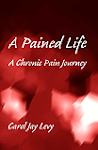
"Fascinating" Stephen S. Hall. writer, N.Y.Times magazine. "Hard to put down." A.C.P.A., American Chronic Pain Association.
Showing posts with label CRPS. Show all posts
Showing posts with label CRPS. Show all posts
Tuesday, August 20, 2013
THE PILL DILEMMA.
Only twice in my 30-plus years of living with chronic pain have I had a problem getting my narcotic medication.
The first time a relative lied to a doctor.
I was visiting from out-of-state. The pain was bad. I went to take a codeine pill and realized I had not brought enough with me.
Checking The Label“What if the pain gets out of control?” I cried. “What am I going to do?”
The relative called the doctor who was covering for my regular one.
“She’s ranting and raving about not having her drugs,” she told him.
He believed her. And he refused to write a new prescription. He also wrote in my chart: “Her behavior indicates she may be abusing her drugs.”
My regular doctor told me about the note. He added a larger one: “She has been taking this drug for years. She has never had a problem with it.”
The second episode again involved a doctor other than the one I usually saw.
I came in every 6 months to get my prescriptions, for another medication and for codeine.
“How often do you take the codeine?” he asked.
Not thinking I needed to be cautious I said, “About 3 pills a day.”
“I see your doctor gives you 120. I’m only giving you 90.”
“But three is an average. Some days I need more.”
“No. You said three.”
He didn’t care that it wasn’t enough. He didn’t notice 90 a month did not account for months with 31 days.
Again, my regular doctor took care of it.
Golf Pass
“I know you need 120 a month. Just make sure you only see me from now on,” he said.
It was astounding to me that after decades of taking this drug without any problem, I was questioned, disbelieved, and treated as a drug seeker rather than a patient with chronic pain.
I understand narcotics have a way of finding their way onto the streets and into the pockets of bad guys. I get that there are unscrupulous doctors and so-called “clinics” in it only for the money. But don’t presume me guilty. I should not feel humiliated because I asked for what I needed.
A friend asked me, “What happens to those in chronic pain if they can’t get the meds they need?”
I had no answer.
I have not heard of cancer patients being deprived of their pain pills. Diabetics are not told, “You have taken too much insulin this month so no more for you.”
Maybe the issue goes back, not only to the invisibility of pain, but to the subjectivity and concept of pain. Maybe the bias is innate in our health care system.
According to a recent study in The Journal of Pain, the annual cost of chronic pain is as high as $635 billion a year, which is more than the annual cost of cancer, heart disease and HIV/AIDS combined.
But where does the money go? Just one percent of research funding from the National Institutes of Health (NIH) is dedicated to pain research. Last year, the NIH spent $396 million on pain research, but $5.6 billion on cancer research.
It is time for the government to realize it can’t have it both ways; with the DEA working to decrease the ability of doctors to give opioid medications to chronic pain patients, while funding for pain research and finding alternatives to opioids remains miniscule compared to other disorders.
________________________________________________________________________
My latest column reposted from: http://americannewsreport.com/nationalpainreport/a-pained-life-the-pill-dilemma-8821321.html


Wednesday, July 10, 2013
TIMING MY PAIN.
I was sitting at a table with some people I knew, slightly.
I did not know how much of my situation they knew, but the issue came up about my not being able to work. I told them about the pain that comes from any consistent use of my eyes for more than 10 to 20 minutes before the pain becomes too severe for me to continue.
They immediately came up with suggestions, most of them centered on using a timer.
“Set it for 15 minutes so you will have to stop,” they suggested.
That’s a good idea. In fact, I came up it with a long time ago. The only problem is, it’s a lot easier in concept then reality.
I am reading a mystery, my favorite kind of story. The book is getting exciting, the clues mounting, the name of the person “who dunnit” to be disclosed in… wait, bringgg!
Off goes the timer. I can’t stop now. I have to find out who did it.
I know better, but I think, as I often do, five more minutes won’t make a difference.
But of course, it does.
Sometimes it is more important eye work, writing this column for instance. I cannot break off in the middle. I lose my train of thought and have to start over, which means going past the time limit the next time I work on it.
Sometimes I get to the point where I need to stop, but in order to not lose my concept, I continue making notes; which takes me past my time limit. The pain is then at the point of no return, at least for the next hour or more.
If I go to a store, I need more than 15 minutes to find what I need. I use my eyes the entire time. I cannot just stop.
The same is probably true for most of us. The time allotted before the pain becomes unmanageable is usually taken up with getting ready to do whatever task is at hand. By the time we are in the midst of doing what we set out to do, the time is up.
From the outside looking in, the answer to keeping the pain at an “acceptable” level is simple. Just stop. I daresay it would be easy if this was not our lives.
If it was just a a short term problem, a sprained ankle or a scratched cornea for instance, it is no big thing to keep our usage of the pained area to a minimum. When it’s a constant pain, the timed approach is not workable.
When I try to explain that to people, I see the eye rolling, the turning away: she doesn’t want our help. She doesn’t want to change her situation.
They have no idea how dearly I want that.
I wish we (I) could use the same tricks and ideas that work when pain is temporary.
But I don’t think we can.
The timer rang about 10 minutes ago. I added another 10 minutes so I could finish this column. And now I am paying the piper.
Do I regret forcing myself to continue past the time limit? Yes and no.
Yes, because now the pain is very bad.
And no, because I was able to finish what I started.
_______________________________________________________________________________________________________________________________
Reprinted from my column at National Pain Report http://americannewsreport.com/nationalpainreport/a-pained-life-timing-my-pain-8820790.html
Friday, May 31, 2013
TO BANQUET OR NOT TO BANQUET.
The choir banquet is coming up. I have gone to the last 3. They are nice. The restaurant is nice, the food okay, the company good.
But. The lights are bright. No matter where I sit I have to look to the left and to the right to talk to people. It is a codeine laden night.
Since my implant has died the pain from eye usage and movement has gotten worse, and worse. I find myself doing less and less because of the increase of pain and the decrease of eye usage time.
Choir rehearsal, and the church service is very hard for me. Rehearsal requires a lot of singing and a lot of looking at the sheet music. In addition, the room is very bright. Since it has gotten hotter there is also the movement of the fan. The eye responds in pain not only to my moving it but when something moves in front of it so the fan is an additional problem. The service is hard even though we only sing one song and 2 hymns (and an introit).
I do better after church when we go downstairs to 'fellowship'. The light is bright but I am not as close to them as I am in choir where the ceiling seems to be lower, in addition to sitting on a higher level so we are closer to the lights. There is no choir director to have to try and watch for movements to indicate when and how to sing. Nevertheless, if I talk to too many people I can be in trouble with the eye. The benefit is I can leave whenever I want.
The banquet requires too much of me. I am not sure why but I have never felt I am a fully accepted member of the choir. I try to talk to people or be involved in conversations but often am ignored. I am not sure if that is me or them. (Another topic for another post, do I give off the scent, "don't ask".) Going is an inclusion. The pain is an exclusion. In addition I cannot drive at night so I have to stay no matter how much trouble I am in with the pain.
This year I have made the decision. I am not going. I am giving in to the pain and the fear of the pain.
It is a decision I hate to make, it is a capitulation I abhor. And sometimes it is the hateful that is the right thing to do.
Saturday, May 18, 2013
NOT ALL CLICHES ARE OLDIES BUT GOODIES.
When someone hears my story about the medical malpractice that paralyzed my face, invariably they say, “What goes around comes around” or “He’ll get his.” Some talk about “payback” or say “Karma will get him in the end.” I get it. It’s a way to make me feel better. But it doesn’t.
It doesn’t because if he’ll “pay someday” or if life “takes care of it” then I have to ask the other side of the equation: Is my pain the result of my bad Karma? Is the malpractice, and the stopping of my life and dreams, my payback? After all, if he’s getting his, am I getting mine?
I think about the clichés people use when confronted with a situation they do not understand or know how to deal with.
“God never gives you more than you can handle.”
He doesn’t? Then why is my pain overwhelming? Why am I struggling so hard to live with it? Am I a failure because I can’t handle it?
“It could be worse.”
Worse then what? Cancer? Losing a loved one? Of course not. But you know what? Pain consumes our lives and it consumes my life. When it doesn’t, it stops me from being involved with life. It keeps me isolated and drugged.
No. I am sorry. I already know I have it better than many people.
I think of my eye, my face, as separate from my body. Many of my doctors also see it that way, saying “I can’t help you because your pain is above the neck.”
My body works. I can get out of bed in the morning, dress myself, walk, bend, do everything a body needs to do. That puts me ahead of many, including many who live with chronic pain.
I have a roof over my head and enough money to get by, at least in the short run. That puts me in a better position than many others who are not as fortunate. I try to remember that, but when you say to me “It could be worse,” I feel worse. I feel chastised.
I have had 12 brain surgeries to try and help the pain. My head is a mass of indentations, soft spots, scars, and additional problems because of the operations. A few years ago a friend told me, “You’re brain damaged.”
I was glad we were on the phone. I did not want her to see my reaction. I was appalled. And angry. How dare she say that! That expression is fraught with meaning, not a lot of it good. But wait. She was right. I am brain damaged.
I hate writing the sentence, much less acknowledging its truth.
“You need that like you need a hole in the head.” Oh please. Don’t say that.
As a result of a problem with another surgery, my neck “fell down.’ I now have 2 clamps and 12 screws holding my neck up and in place. “You have a screw loose.”
Even though it’s a joke, I flinch when someone who knows about my neck says it.
“You have it so much worse than I, so I can’t complain.” Sure you can. Your misery, while you have it, even if it is just a bad cold, is as awful for you as my pain is for me. I know a cold vs. chronic pain is a mismatch, heavyweight vs. lightweight, but my pain does not negate yours.
“Life isn’t fair.” “Whatever doesn’t kill you makes you stronger.” The first is definitely true, but the second? Maybe.
When life, your friends, even strangers, hand you a cliché, when lemons seem the order of the day, sometimes you just need to ignore it and do something nice for yourself.
Me? I think I’ll go make some lemonade
____________________________________________________________________
Reprinted from my column on National Pain Report.
( http://americannewsreport.com/nationalpainreport/a-pained-life-how-words-can-hurt-8819942.html )
Sunday, April 21, 2013
IDIOSYNCRASIES.
It occurred to me after reading the suggestions people gave me for how to deal with the issue of my eye pain being t riggered by a lit candle that one of the problems we face is the individuality of not only the pain, but the minute specifics of it.
The candle hurts my eye. Can you patch it? Can you wear sunglasses? That should fix it.
Normally, in the common world, it would. In my world, it does not.
It is not the brightness of the candle. Well, it is the brightness but not the brightness alone. The movement of the flame is the problem.
My eye cannot tolerate movement as I read or follow someone walking, for instance. For some reason, no one has figured out why, the pain is also quickly, immediately, triggered by movement in front of the eye, even if the eye itself is not moving.
There are some forms of M.S. where the person has trouble walking one day and the next they are fine (before it happens again)
You had the cane on Wednesday. You didn't need it on Thursday, so why are you using it today?
(When I used a walker for a few weeks, after a surgery that left me very weak and more balanced impaired then usual, I was very surprised when a man I vaguely knew from my apartment building saw me on the street. He stopped me. "I saw you in the foyer not using your walker. Why are you using it now?" I was flabbergasted, that he noticed and even more so that he questioned me about my use of it.)
Some days our pain is bad, or our physical abilities less then the day before.
I understand why someone might question what they do not get. Your eye is not moving. Why would watching someone fan themselves hurt your eye? You could get around yesterday but you can't today,. How come? You were able to bend down to tie your shoes an hour ago but you can't pick up the towel on the floor now? It does not make sense. I know even for me it sometimes seems surreal. But, it is real.
How do you explain? Do you need to explain?
Life is full of inconsistencies. Why should chronic pain be any different?
What do you think?
Monday, March 11, 2013
RESPONSE TO AN UNHAPPY DOCTOR.
I was surprised by the vehemence of a reply I received to my last posting.
The person who commented said he (she?) was a certified anaesthesiologist and pain specialist.
He said he gets "lied to and BS'd everyday by pain patients." who tell him how to do his job, meaning saying only oxycodone will help them. They are not interested in his prescriptions of diet, sleep changes, TENS unit, life changes of leaving an "abusive spouse" , job they hate, etc.
He feels that the "real injury" is a "broken soul".
I feel bad for this doctor, and for his patients.
He sounds burned out. Maybe he has been yanked over the coals by too many patients for too long. It is sad because the term "broken soul" says to me he has empathy and sensitivity to the emotional pain people experience. Or did have at one time.
This is one of the big problems with getting good treatment for our pain. A doctor sees enough of the fakers and poseurs and he has had enough of us. He then lumps us all together, those with legitimate pain and those who may have other agendas.
The point of the post was not the issue of money per se but that we need to be partners. I referred to the fact that since we pay the bill we are a doctor's employer. He tells me how much his education cost to "become your employee."
If I go to a lawyer I pay a fee. We do not discuss why he decided to go to law school, how much it cost or if he is still in debt. I hire him. Often the first meeting is without cost to see if we can work together or if he can help me. He either takes me on or he does not. If he does, I pay his fee and am his employer.
My friend owned a restaurant. She worked like a dog, each and everyday. She may have owned the business but the customers paid her for their food; they became her employer. If they complained she did not say "I was up at 4 am to get ready for you, this store cost me thousands of dollars to buy, you have no right to complain." She worked with them to make it right.
I get the issue of 'it cost me hundreds of thousands of dollars to go to school. I work to pay my loans back and then live a good life with the profit I make.' That is very legitimate. But.
But I did not make you go to medical school. I did not force you to choose your specialty. There is a sense of entitlement when you say I do not care if you pay me through insurance premiums or taking the money directly out of your wallet, I know better then you and there should be no issue of being partners in this endeavor to help you.
(I will write a part 2 about our responsibility in this relationship.)
Monday, March 4, 2013
DOCTOR , PATIENT,.AND (the unspoken) MONEY.
Sign in doc's office: "If you are a new patient and have a high deductible you will be required to pay $100.00 at your first visit."
I was incensed when I first saw it.
For the most part insurance keeps the money part of medical care invisible: some of us may have to pay a (usually) small deductible for each visit. Rarely do we have to pay a lot of money to our doctors, face to face, as it were. (But it rarely is, if ever.)
I started thinking about the sign. Wait a minute, they are saying they do not trust new patients: maybe they will cheat me if they have to pay a good deal of money because of the kind of insurance they have. I had better get at least some of it upfront.
But he (or she) is my doctor. This person, whom I am invited to call by his title but who usually calls me by my first name. This stranger who asks me to reveal what may be intimate information about my body, possibly about my life, but about whom I know nothing equally revealing.
We often feel like supplicants, begging, pleading to be healed, the doctor opening to us his font of knowledge and bag of balms. We lay ourselves bare, hope exuding from every pore. The relationship is slanted. Money makes it, well, icky.
It can be looked at as a form of prostitution; the referring doctor (or hospital friend, stranger, or even phone book) the pimp, the doctor the prostitute, and us - the client with a bodily need that requires a fix.
In that scenario money is always the motivating factor. (I know the analogy is off a little, kickbacks to referring doctors are illegal)
For those of us who see the relationship as a skewed one, usually in favor of the doctor, maybe it is time for us to remember the money we pay, whether it is $0.00 (but remembering the cost of our insurance premiums) , $15.00, $100.00, or more. This makes us his employer. It gives us a higher standing then a dependent 'help me' petitioner.
We need not necessarily like our doctor but at a minimum, hopefully, we respect his knowledge and ability. And we trust him.
The other side is that he must be someone who trusts us; our knowledge, intelligence, and autonomy as a person.
In most other business relationships there is an equality between the two parties.
We need to bring that to the medical relationship as well.
Monday, February 25, 2013
THE CAUTIONARY TALE. It doesn't work for us.
A member of the church came forward this past Sunday to speak about coronary artery disease and his experience with it. He told his story to remind people about the necessity of not ignoring signs and symptoms. His experience was a bad one (he came out of it doing well by all accounts, thankfully) and his point very well taken.
I was envious as I listened to him. Not of what he went through. Never. But of his coming forward.
I visualized myself, or someone else, with chronic pain doing the same thing. That did not work.
It is not a universal experience, in terms of having a cardiac problem or history. Almost everyone knows someone who does or did, or knows someone who knows someone.
I could not come forward and say, this was my experience and please heed it as a cautionary tale.
Saying "It is estimated that 116 million people live with chronic pain." is more or less meaningless. The concept of 'chronic" pain is foreign to most people. Acute pain everyone knows, and 'gets'. Weeks, then months, then years of pain. That does not make much sense. Pain is solvable. Your sprained ankle goes away, the broken arm mends, the appendix is removed. If it is a disease, the disease is treated, even if it is a chronic one. You may have to deal with the disease, take insulin, or undergo longterm treatments, but that is different then "just" having pain.
I sit through choir rehearsal or the church service. This is very painful for me: the use of my eyes to read, the bright light of the room or the sun shining in the sanctuary, looking up and down as we walk down the aisle singing. There is no one to whom I can turn and say "I am in so much pain."
Even if there was what can they do? Maybe a pat on the hand or an "I know. I'm sorry." or "I wish I could help." That would be nice. Honestly it would feel good to have an empathetic "I get it." How frustrating that might be though. To say the words but being impotent to do anything.
I am a 'doer'. It may be my projection, the inability to actively help being so passive as to make words feel worthless. Of course, they are not. I would love to have those words said to me. When they have been I feel an overwhelming sense of relief: "I am heard." Another day when I mention the pain, I get an opposite response and learn, anew, that an understanding of it does not mean 'I want to know about it."
If I say "I had heart disease. This is how it happened, this is what happened to me, and this is what you need to be on the watch for." people listen. After all, it could happen to them. If I say "I have chronic pain. This is why and how it happened." I cannot follow up with "and this is what you need to look for in yourself." And it is that last part that makes all the difference.
What do you think?
Tuesday, February 19, 2013
A SUMMARY OF MY JOURNEY.
I have not written about my personal journey.
One of the sites I frequent has some discussions ongoing about pain, pain treatment.
A few of the professional folks there espouse, strongly and without room for doubt, that chronic pain is the result of unresolved childhood conflicts or a body response to the need for better nutrition, hydration, and other homeopathic remedies.
They believe this regardless of the cause of the pain, unwilling to accept the reality that our bodies do have problems that require surgery, medication, other treatments, and may be unresolvable but hopefully still have the ability to be helped.
I am a big believer in an anecdote does not a population make. That being said this is what has been tried to help me with my pain*:
Non Jannetta Procedure MVD (a specific form of decompression using a pad placed between the trigeminal nerve and an artery or vein that may be pressing against the nerve) decompression left posterior fossa 1977 successful 99% for 3 mths.
Dozens of tiny vessels found throughout the area, from a partial birth defect called Sturge- Weber - Wyburn Mason
(Blood vessels grew back and 3 months later pain returned)
marcaine rhizolysis 1978 - no benefit (Killing the nerve, temporarily, with a novocaine type drug)
thermocoagulation rhizolysis, no benefit, addition pain V3, loss sensation V1, V2, V3, injury 44% to N.7 and damage N. 9 (99 +% resolved) (Killing the nerve with heat)
Jannetta Procedure (MVD) – no benefit, 100% paralysis (L) face Dr. Peter Jannetta
non MVD decompression posterior fossa (area of the brain) slight benefit
trigeminal tractotomy – approximately 5 year cessation spontaneous pains, side -effect- slight infrequent slight balance problems have persisted (Killing the nerve at the root)
Dorsal column stimulator implant – 85% benefit, (implant in the neck)
removal dorsal column stimulator implant 1986 infection (unrelated to implant)
Dorsal column stimulator implant – no benefit,
removal dorsal column stimulator implant 1987 infection (unrelated to implant)
(A,P clamps C2 – C5 (12 screws) 1998 Kyphosis (my neck "fell down") (2nd to laminectomy prep for trigeminal tractotomy 1980 - going through the spinal column to get to the brain))
sensory cortical stimulator implant 20 – 30% benefit 1991 (Implant attached to the covering of the brain)
(Failed in 2012, not sure why, currently remains implanted, have turned back on, waiting for benefit they have history of taking up to a few months before see a benefit.)
I have also been tried on many drugs including, but not limited to: tegretol, gabapentin, prolixin, elavil, prolixin and elavil in tandem, percodan, demerol, morphine, tincture of Opium, hydrocodeine, cymbalta, lyrica, haldol, reserpine, depakote, depakene, dilantin, vasodilators, baclofen, and many others. (been so many years since inception no longer recall many of the names)
It never hurts to eat better, to drink more liquids, to try alternative therapies. I have no problem with those who say "Have you tried (acupuncture (which I did to no avail), hypnosis (which I did to no avail), chiropractic, relaxation techniques, homeopathy meds, etc.?" I do have a problem with those who say this is all that is needed to treat chronic pain.
It is not. There are way too many of us to prove that thesis.
What do you think?
______________________________________________________________________
* (It would take way too much space to define all the terms so I will not but if you have questions I am happy to try and answer them. These are all brain surgeries.)
Trigeminal neuralgia has 3 areas, the forehead and eye and slightly under, That is V1. V2 is under the eye to midway tdown cheeck and V# middle of cheek to jaw. It is one sided although some can have it on both sides. Mine is on the left side V1 only.
Friday, January 4, 2013
WHAT'D THEYSAY? OOPS.
Many years ago my sister gave me a Christmas gift.
I opened the box, and saw the ugliest shirt I think I had ever seen. It was a hideous shade of green with some sort of ugly orange amd yellow design. There was also a ruffle somewhere if I recall.
I was staying at my mother's house. As soon as we got inside my mother broke into tears. "How could she be so nasty? That shirt is so ugly, there is no way she didn't mean it to be mean." I felt the same way. I did not cry but I was angry. Just don't give me anything then but why be mean about it.?
I put the shirt on, just for the heck of it. I looked in the mirror. "I'll be darned. It's not that ugly once it is on."
It became my favorite shirt. I almost always got compliments when I wore it. And I wore it until it wore out.
I went to a doctor's office a few weeks ago. The nurse wanted to weigh me. I got on the scale, putting one hand on the wall and the other on the scale to balance myself.
"You have to take your hands off so I can get your weight." she said in a way that made me bristle.
"I have a balance problem so it will take me a minute or two before I can let go." I said in a snarky voice.
"I'm sorry. I have never seen you before and did not know."
I jumped to the conclusion that she was being aggressive, the 'you have to' a provocation.
As I waited for the doctor the incident with the nurse made me think about the shirt. She forced me to defend myself, to defend something that embarrasses me, something I hate.
The shirt may have had other meaning for my sister. The enmity was there. The reality of the shirt, the piece of fabric in front of me, able to be seen in a new way once it took a different form, was a lesson, the opposite of the cliche 'you only get one chance to make a first impression.' Yes, there is only the one chance but it is important to give some things a second, third, even forth, chance sometimes.
I have written about how I feel about the pain, the disabilities and problems that have ensued. My family taught me - keep your mouth shut, do not complain, if you do we will not believe you. I am a malingerer, hypochondriac, etc, words, definitions, that are the opposite of my reality but words that took hold, words that continue to be my M.O.
"You need to..." I heard it one way but it took a different form once she explained why she had said it.
Too often we hear the first words, "You have to, why don't you, why can't you, couldn't you just...." and take them as fighting words. We do not listen to the next sentence. We may not question the person, ask them to explain. We may not take the sentences out of the box and see if the form is different, or can be made different.
As hard as it is to do we need to take a step back, breathe in and listen to the words. Hear the way the person reacts to your response.
Maybe, just maybe, what we heard was not really what they said, was not what they meant.
Sometimes talk can be clumsy, words tumble without balance, we catch them in the wrong way. As they topple we juggle to make them fit what we think the form is, when between the two of us we can work to make them upright, and uplift both of us in the process.
Saturday, November 24, 2012
PROSTITUTION AND CHRONIC PAIN. WHAT'S THE CONNECTION?
"For centuries, many people believed women turned to prostitution because they suffered from a genetic defect." *
I received a reply to my last post from someone I know from another site. He believes that chronic pain is the result of childhood emotional trauma. His position is that it is not in the body but only in the mind.
I thought about his reply and the response in context with the post itself.
The doctor who spoke at the trigeminal neuralgia support meeting I referenced in my last post, was not trying to sell us nutritional supplements or a regimen. That almost made it a little odder to me: he had nothing to sell but his belief that trigeminal neuralgia, and I am assuming (purely my speculation) other chronic pain disorders, will be bettered, if not cured, by taking large amounts of supplements. Some chronic pain may respond well to added nutrition, giving more energy, feeding the cells to help them replenish and recover for instance. That might help the pain by strenghtening the body. True trigeminal neuralgia does not work that way.
This is the problem of chronic pain.
People with degrees or practices have beliefs they conclude is the answer. They do not consider the repercussions for patients/clients.
When I read the the quote about prostitution it seemed to be the same type of claim. If there is no answer available you cling to the easiest, regardless of the truth of the problem, whether social, as with prostitution, or medical, as with chronic pain disorders.
Many of us have had doctors, despite outright proof of the what and why of our pain, still say "It is psychological."
These doctors and clinicians do not understand chronic pain or the pain disorders we bring to them. They resort instead to a shrugging of the shoulders combined with an inability to say "I don't know." By saying it is emotional or psychological they get to feel they have discharged their duty as a doctor or therapist - 'I gave her a reason for her complaints'.
I put this explanation into the same basket as 'you just need to deal with your pain through nutrition and supplements."
Neither has any basis in reality. There are no studies that prove better nutrition and megadoses of vitamins and minerals are an antidote. There are no studies that prove chronic pain is solely an emotional problem, or as the commenter wrote "Pain is a process of the mind following childhood emotional traumas, treatment resistant Pain is never in the body and the reason why it is so poorly understood and treated."
People with CRPS (chronic regional pain syndrome) for instance, don't have bruises, swellings, and discolorations as a result of repressed or active issues with childhood trauma. My problem, trigeminal neuralgia, has specificity to the way the pain occurs, how it starts, what triggers it,etc. These are all replicable among trigeminal neuralgia patients. If it was an issue of emotional trauma the signs and symptoms would not be consistent among the patient group.
To say that those in chronic pain would benefit greatly by supplementation or are suffering because of emotional trauma is no different then saying to someone with diabetes "It is all in your head. Deal with your emotional baggage from your youth, take these supplements. Your pancreas and sugar levels have nothing to do with it.'
Prostitution turned out to be a social disorder, maybe even an active decision - no matter how sad. The genetic "cause" was thrown away a long time ago. Trigeminal neuralgia has been known to be neurologically based for decades and first identified in 1773.** CRSP has been accepted as a physical disorder since the 1700's.***
Those who suffer from Lupus, M.S., rheumatoid arthritis, CRPS, trigeminal and other neuralgias, other chronic pain disorders or diseases that have chronic pain as a main or major component deserve the same legitimacy.
____________________________________________________________________________
*Cornwell, Patricia, PORTRAIT OF A KILLER, Berkley True Crime, NY. 2002.
** http://emedicine.medscape.com/article/1145144-overview
***http://www.rsdrx.com/history_of_rsd.htm
Tuesday, November 13, 2012
ARE ALONENESS AND CHRONIC PAIN ALIKE?
Recently the Minister talked in her sermon about the family, the community that we had in the church.
I told her that has not been my experience. She replied "You told me that already."
I went on to say "Especially with the holidays and my having no one, it feels even moreso."
There was more to the conversation but her remark, "you told me that already." started me thinking. It was dismissive, of me, of my feelings. (I don't think she realized it; this is not a 'smite down the minister post.').
Maybe aloneness, and lonliness, are not be all that distinct from chronic pain; both are invisible, subjective, and foreign to the experiences of most people.
You say "I am in (physical) pain." You will be believed, at least at first.
You say "I am alone." You may not have family, because they are far away, or deceased. Maybe it is a new city, you have not had the chance to make friends.
Three months later you say "I am still in pain." The looks become one of suspicion. "Really? It has been three months already." Six months and the questions, and disbelief, start. Years, even decades later, the disbelief often remains, friends and family gone by the wayside, we preferring not to remain with people who doubt the shaky waters on which we now live, they maybe deciding to abandon us first.
You say you are alone, only now it is months, years, maybe decades. The questions come, the above notwithstanding. "What did you do to make your family turn on you?" Despite my explanations, no rhyme or reason, a friend still said "Well, you had to have done something." No. It is freudian, but it is always easier to believe that people don't behave that way, without some reason.
"Why don't you have friends?" I know some of the reasons. I moved to a new state right before the pain started. I became virtually housebound, only able to go out for doctor's appointments, groceries, the bank. You cannot make friends if you rarely can leave your apartment or are in such horrific pain that it consumes you.
The first surgery worked. Completely. I got a job as soon as I was able and immediately made 2 friends. We had a lot in common and just plain liked each other. Three months later the pain came back. I was completely disabled by it again. The friendship evaporated, not having been alive long enough to sustain what the pain did to me and my ability to be 'a part of'.
Other friendships, most often one at a time, started primarily from proximity, and often equal instance of need rather then commonalities and like. They grew into like but over time the end of need became overshadowed by the awareness that need was what had kept us together and was no longer there, (irony at its best).
My last major friendship is still alive but she now lives 5 hours away. Phone is good but seeing, feeling, and being with is so vital to life, and so lacking in mine.
I have mentioned my nephew who bucked the family and on his own sought me out. He lives many states away. I am so very grateful to have him in my life but the lack, again, of someone to touch, see, feel is very hard to bear.
A reader of the blog asked how I cope with the heartbreak and marginalization of and by family.
My coping mechanism is not a healthy one. I try to deny it until something like the holidays come and then it hits me, hard, in my heart and in my soul.
Some people find they have lost family because their siblings and others do not want to deal with the constancy of the pain, and disability. Having pain makes them different, hard to fathom, accept, or believe.
In my case the pain has (had) nothing to do with it. I do not understand how siblings with whom one grew up, no matter what the relationship, can turn their backs on a disabled family member, can look the other way as they embark on brain surgery 1,2, and on through number 12. How they still see it as a fake and laziness. It is hard not to try and look for an answer, the answer, but sometimes that is the healthiest response. To accept that sometimes there is no answer.
The sad fact is that even when the relationships were good there is something about pain that can turn you into a pariah rather then the beloved sister,brother, aunt, mother, etc, you once were.
I wish I had the answers as to why, and how to overcome, the splitting off, of being cast aside..
I think being unable to partake in life, for me not being able to work, be where I can make my own family, is not an answer but at least an explanation. If the family into which we were born deserts us, if our friends walk away, we have to find new ways to replace them. Hopefully church, a workplace, a community center, school, or other places where folks congregate can lead us to the people who will embrace us and who we are, foibles, pain and all. And we can be there to embrace them as well.
Wednesday, November 7, 2012
A GROUP OF DOCTORS WANT TO DECIDE FOR ALL PAIN PATIENTS
"I could imagine the cocaine high. I hadn't touched the stuff for 6 months but I had never stopped craving it."
He took the cocaine, liquid on his tongue. "(His) anxiety melted away. (His) level of alertness rose." (from PROJECTION by Keith Ablow)
"I had to take codeine for the pain. My mouth is dry, my head feels fuzzy, and I just hate this feeling the drug gives me but I have to take it."
"I was on up to 14 grains a day for 12 years and the day after the pain stopped, I stopped taking the codeine and I was fine."
The first is addiction, from a novel.
The second is my experience. It is also what I read and hear all the time from other people with chronic pain. We hate the drug, we hate having to take them, and we hate the feeling. (My experience of getting off without problem may be an exceptional one, the chances of some form of physical dependence was certainly possible.)
Yet some doctors are trying to take away our physician's ability to write prescriptions for these drugs in the way they feel their patients need to have them. Some doctors want to take away prescriptive autonomy from physicians trying to care for their patients in the best way, and sometimes the only way, they know, the only way they have.
The Physicians For Responsible Opioid Prescribing has asked for the following changes to the way opiates are prescribed and for what type of pain:
"SPECIFIC ACTIONS REQUESTED FOR CHANGES TO OPIOID ANALGESIC LABELS:
1. Strike the term "moderate" from the indication for non-cancer pain.
2. Add a maximum daily dose, equivalent to 100 milligrams of morphine for non-cancer pain.
3. Add a maximum duration of 90-days for continuous (daily) use for non-cancer pain.
It continues with "STATEMENTS OF SCIENTIFIC BASIS FOR PETITION":
1. Over the past decade, a four-fold increase in prescribing of opioid analgesics has been associated with a four-fold increase in opioid related overdose deaths and a six-fold increase in individuals seeking treatment for addiction to opioid analgesics.5
2. Prescribing of opioids increased over the past 15 years in response to a campaign that minimized risks of long-term use for CNCP and exaggerated benefits.
3 Long-term safety and effectiveness of managing CNCP with opioids has not been established.
9 4. Recent surveys of CNCP patients receiving COT have shown that many continue to experience significant chronic pain and dysfunction.
5 surveys using DSM criteria found high rates of addiction in CNCP patients receiving COT.
6. A large sample of medical and pharmacy claims records found that two-thirds of patients who took opioids on a daily basis for 90 days were still taking opioids five years later.
7. Patients with mental health and substance abuse co-morbidities are more likely to receive COT than patients who lack these risk factors, a phenomenon referred to as
adverse selection.15
8. Three large observational studies published in 2010 and 2011 found dose-related overdose risk in CNCP patients on COT.
9.COT at high doses is associated with increased risk of overdose death18, emergency room visits19 and fractures in the elderly20. "
((http://www.citizen.org/documents/2048.pdf )
I cannot respond to all of it. I can to the issue of abuse and misuse, which is what they have been throwing at us (or against us) for some time now.
It is disturbing to me that the information they use is wrong.
Chronic pain patients rarely become addicted. they may become physically dependent which is a completely different animal. For instance one study found:
"The results of this evidence-based structured review indicate that COAT chronic opioid analgesic therapy) exposure will lead to abuse/addiction in a small percentage of CPPs (chronic pain patients), but a larger percentage will demonstrate ADRBs (abuse/addiction and aberrant drug-related behaviors) and illicit drug use. These percentages appear to be much less if CPPs are preselected for the absence of a current or past history of alcohol/illicit drug use or abuse/addiction."
(http://www.ncbi.nlm.nih.gov/pubmed/18489635 )
This is what most of us already know, a small number of people with chronic pain develop addiction and the larger number that they say abuse/use illicitly tend to have a history of abuse.
That leads (me) to the conclusion that it is not the majority of pain patients but a subset that most doctors should be already careful with because of their history of substance abuse.
They also rely on the statistics: "four-fold increase in opioid related overdose deaths and a six-fold increase in individuals seeking treatment for addiction to opioid analgesics."
Sounds scary but there is no proof or data included that makes it a 1 -1 relationship, that the increased number of people given the drug(s) are the same as the ones who are overdosing or seeking treatment for addiction. (And seeking treatment is not synonomous with being diagnosed as addicted or being treated for addiction/abuse.)
They also talk about overdose risk, that is the case with many medications, not just opiods. I am not aware (which does not mean it is not out there) of a similar petition from physicians that, say, psychiatric medications, or even aspirin or ibuprofen, be limited to 90 days and specific dosage because of the risk of overdose. All medications have an overdose risk, specifically if you give them to people that should not be receiving them in the first place.
That is part of a physician's job; to weed out those patients he sees as someone who would be at risk if given a certain drug, a specific dosage.
I find this petition appalling. Once again it is chronic pain patients who are under attack.
It seems more relegated to the fallacious War On Drugs, then a medical issue, even for these physicians behind the petition.
If you are concerned about this rrequest to the FDA you can make comments at this site: http://www.regulations.gov/#!submitComment;D=FDA-2012-P-0818-0001
Tuesday, September 25, 2012
UNHOOKING FROM THE PAST.
I just got an invitation in the mail to a college reunion. I was not much interested because it was such a big college (Temple Univ.) and the chances of seeing people I knew would be small.
The plus side was an invitation to meet with former chorus members and conductors.
There were only 600 people at the Ambler campus when I was there (1970 - 1975). My junior year they started a small chorus, conducted by a then newly minted chorus director. I would love to see him. I really liked him, but his name immediately evoked a memory that was not a happy one; that should have been a lifelong lesson but which I often forget: that the world is not necessarily my family.
..
I was young the first time my family taught me this lesson.
I had just come back from the doctor's office. I was 13, and diagnosed with mononucleosis. I was told I was to go to bed and stay there for 2 weeks. I did not feel horrible and going to bed was not what I wanted to do. My sister June (pseudonym) started yelling at me as though it was my fault I was sick. "Go to your room. This is going to be so much more work for everyone."
I stayed in my room, 2 weeks turning into 3. None of my siblings came to my room to see me or how I was doing. To make matters worse no one from school was calling or visiting. (I later found out word had spread I was a "bad" girl because I had the "kissing disease.")
I developed Hepatitis and the 3 weeks turnind ultimately into 3 months of being housebound. To compensate I took a big sheet and spread it out in the middle of the living room, thinking of it as my own little island. When anyone came home they had to walk right by and around me. I figured it was a way to get someone to pay attention to me. It required effort to ignore me but ignore me they did.
June's behavior was consistent for all of my family. I was treated as though I had done something wrong. When finally some kids from school did come to the house,on halloween night, instead of feeling excited and happy I hid, embarrassed that I was sick, embarrassed that they would see me as sick: the lesson my family pounded into me learned terribly well..
When I was 19 I developed a spontaneous clot in my left knee. There is a lot more to the story but for this post this is all that is germane. I had to use crutches and I was mortified by the visible proof of my disability.
Jeff, the college choir director, had assigned me a solo for our upcoming performance. I did not want to do it - I had stage fright - but I was honestly happy that he forced my hand by insisting I was the only one who could do it.
I was all set and then, instead, I was on crutches. How could I stand before an audience and have them see I was 'ill", that there was something wrong with me, with my body?
I refused to sing despite Jeff's assurances and reassurances that no one would care about anything but my singing.
I sat in the audience that night, listening to my replacement. I was mentally kicking myself, why aren't I up there? How could I let this opportunity pass? No one would have cared about the crutches. The last sentence immediately brought the pictures and words of my family to mind - oh yes they would, there is nothing wrong with you, you are just trying to bring attention to yourself.
I wrote my last post about the words of hurt that we often carry with us, pouncing on them when things are bad, using them to make ourselves feel even worse, being unable to let them go when we most need to.
It is so hard to let that go. It is even harder to let go of the lessons that we are taught as a result of the words. You are lazy, you are bad, you are an embarrassment, your situation is an humiliation and so on. So therefore you should not be seen, you should hide, you should mask your reality.
The invitation to the reunion reminded me. I have to repeatedly work to not let those people who worked so hard to hurt me, on a conscious or unconscious level, continue to work their havoc on me.
Pain may be invisible but that does not mean I have to feel I need to keep it that way. It is actually okay to say "I have pain." or "I need thus and so to help me.", or even "I can't right now". (Much, much easier said then done, I know, for many of us.)
Sunday, September 16, 2012
THE SLINGS AND ARROWS OF YESTERYEAR.
I was listening to my friend Nancy talk about her pain and how bad it was. The longer she talked the more upset she became and the more upset she became the more she added into the mix.
A lot of it was happening in the here and now: "My mother went to the store and never even bothered to ask me if I needed anything. She knows how much pain I am in. How could she?" The people she needed to help her seemed to be clueless and uncaring.
Then she thought about other times she had been in pain and needed help. "Remember when I sprained my ankle that time a few years back, she didn't even ask if I wanted her to come to the ER with me."
That took her back even further. "And remember how my aunt didn't even bother to call me when I had my appendix out when I was 12?" The more she recalled the more intense her anger, despair, and even pain, became.
Her tumble down memory lane was all too familiar to me. How many times has the pain been bad or I felt slighted because someone I thought should have been considerate of my situation was not, whose behavior has helped to make the physical pain worse (by insisting for instance that a tablecandle stay lit despite knowing the movement and brightness of the flame inflames my pain). And how many other instances of hurt, throughout my life, then crowd my thoughts?
What kind of siblings are they? How could they have never been there for me, not even once, not even a card or a phone call? Never mind that the last surgery was more then 12 years ago and the first slight by them over 33 years, no, even way before then, before the pain started. The psychic pain of no one being there for me for the surgeries, of acknowledging and believing the pain, usually tops the list of my litany of hurts. My mind becomes populated with people from now, people from then, people from decades ago, instances where my feelings were not just hurt but torn apart, trampled, and thrown away.
Pain and hurt beget pain and hurt, the despair and upset of today the rock that gathers more and more weight as it rolls down, through memory and recesses of mind.
"Wait a minute, Nancy." I say to her, really talking to myself. "Thinking about all this from other days and even years ago is of no help. All it does is make it harder to pull yourself out of feeling the way you do. You need to deal with the issue that is on the table now, not all the ones you have experienced throughout your life."
Closing down the feelings is never a good idea, it is a terrible way of dealing with our experiences (disclosure - I am a master at doing this) but there is a saying "you need to pick your battles".
Even when the battle is with ourselves/with the pain, we need to pick and choose - to put those that are not a part of the here and now into a mental box, ready to be dealt with when we are not so embroiled, emotionally and physically, with the pain.
Monday, September 10, 2012
PERFECT TIMING: PAIN AWARENESS MONTH AND DISBELIEF
I never thought a political debate online would lead to a post but I had a revelation the other day when someone who disagreed with me, after name-calling and using profanity told me, "I see you on facebook so obviously you are not disabled. You should be working."
Really??
This person, whom I knew slightly in high school, knew me now only through my facebook postings. He may have read some of my blog posts but has no day to day knowledge of me; and most probably about the history of my pain and where I am now with it.
"I see you on facebook all the time." (all the time? Funny, since I am not on it 'all the time') It took me back to the words of my father, whose insisted on his disbelief in the pain no matter the proof from the doctors. "I have seen you read so I know you can."
Yes I still read. I have to take narcotics to do it. 15 - 20 minutes, if I read or use my eyes consistently, causes such horrific pain that I become nauseated and have to stop using my eyes, sometimes for up to 1 -2 hours. To not use my eyes means doing nothing: even eating, cooking, little things, requires eye movement so I am down for the count if I push it (which I too often do).
It reminds me of others who write, in support groups, or to me personally, or on their own blogs, my ( ) does not believe I really have pain, or that it is 'really' that bad. When they write this it is often accompanied then and there, or in other comments at some point, by information that the person who said it does not like them, or is angry with them, or is someone with whom they have a bad relationship.
If you read me a lot you know that I tend to go to cancer as my analogy:rarely, if ever, do people say, in a fit of pique or anger, or disdain, "You do not have cancer, I know you are healthy."
Would he have written that to me, "I am against your political position, what you say is (&%$% and you are not disabled (sick with cancer). You should be working." No. I truly doube it would even have occurred to him.
Maybe, these words, "You are not really in pain" needs to be seen as a cry for help from the person who is using them, as a sign of their need to cut to the quick. They want to hurt the other person and going after the invisible illness, the disorder that often just relies on the statement "I am in pain" is the 'best' insult they can find.
It does hurt, it is bad enough to be in pain without having to deal with not only the disbelivers but those who want to use it to add hurt, but we also need to keep it in context, of remembering who said the words and what their intent was. It is hard to not feel the cut of the words: but the best thing we can do, when it happens, is look at it for the trash that it is, mentally squish it into a ball and throw it out into the universe, letting it become the nothing that it should always have been.
Sunday, August 26, 2012
LOOKING ASKANCE. IT'S A GOOD THING..
When I was younger (much) I hoped to be an actress/singer. Starting out I worked in the chorus of 2 shows in a dinner theater. The pay was less then the cost of the gas but it let me say I was a professional actor.
I was pretty much a namby pamby kind of gal: afraid of my own shadow, wanting to please, a go along to get along. I was in the chorus, a part of the whole. I did not need worry about being assertive or aggressive.
The first show was CAROUSEL. The choreographer, Bobbi, did not like me. Into astrology, she repeatedly said to me "You are not a Leo, I don't care if that is your sign. You have nothing in you like the power of the lion."
She was right.
Another dinner theater in the area and ours were at battle. The other theater management called the liquor control board and told them we had dancers under 18. Alcohol was served so all the younger dancers had to be fired, leaving a hole in the show..
I am not a dancer, and I was uncomfortable about and with my body. Anyone could tell that by the high necked, long sleeved, long baggy shirts I wore.
Bobbi took me aside. "Carol, since Gina, (the dancer who does the opening, a belly dance) was fired and you fit the costume you are now doing the belly dance."
"Oh no!, no! I can't do that, the outfit is so sheer, it's totally revealing and, I'm even not a dancer."
"I don't care. You're going to do it." she insisted.
I had no choice but to don the outfit, a very sheer top and separate bottom that showed my midriff. I was the first thing the audience would see.
Oh my word.
We rehearsed and the feared first night came.. The music starts. The lights comes up. A spotlight glows down, on me, belly dancing (or more like bump and grind as a male castmate said.)
I always felt that Bobbi forced me to do it because she did not like me, which was true. It annoyed her that I was a Leo but acted like a scared pussycat.
I changed because of the dance. Being in the outfit and the center of attention for the first few minutes of the show had an effect. I became somewhat more outspoken, less willing to be pushed around. The change was obvious, Bobbi seconding it one night, "Now you're acting like a Leo."
I was thinking about this when the second show I was cast in at the theater, HELLO DOLLY, was on TV.
I always wondered why Bobbi would sabotage a show because of personal animus. It felt like she was not thinking of the show: if I stunk that was okay, it would show me up.
Watching DOLLY, some 30+ years later, for some reason, the thought changed. Maybe she was trying to help me, forcing me to become who she thought I could be.
I have no way of knowing, after all it was decades ago. It does make me wonder how many other times I have misjudged someone's intentions or their words, how many instances where I relied on the memory of what someone said or did, family member, friend, enemy or even doctor and allowed myself to feel the hurt, anger, and resentment again, like a burp after a bad meal, letting the bad taste engulf me.
It is often an issue of choice. Do I choose to let this person hurt me again by looking at their behavior, rehashing their words, or do I take the opportunity to turn it around and see if there might have been a different intent?
It is said, you may hold onto the anger and other bad feelings but the person against whom it is held has probably forgotten about it years ago and could not care less.
It is worth putting whatever that held resentment and bad feeling is about into another light, twisting it to the right, and to the left, turning it upside down, spinning it around, and seeing if maybe, just maybe, another way of looking at it makes more sense.
Monday, August 6, 2012
WORDS, WORDS, WORDS.
We often do not think of the effect of our words. especially when they are written or said to someone who is peripheral to our lives.
One day, when I was about 24, I was in my living room thinking about making acting and singing my career, of making the gigantic step of moving to NYC. Looking around the room I happened to notice my high school yearbook sitting in the bookcase.
I took it out and started reading the little things people had written to, and about me, in their remember me messages.
I was particularly taken by the words written by Susie (pseudonym). We knew each other slightly, mostly from choir where I was known as the person most afraid of our choir director.
She wrote about my fear, how she thought my body would not be able to take the shaking each time we had a "purge". (Mr, ( ) made each of us, in turn, sing our voice part of one of the pieces of music. Afraid of him, petrified I would make a mistake, I sounded more like a lamb to slaughter, my shaking voice almost baaing.) "Remember the purges? I'll never forget the one where you really sang unbelievably." (That day, for some reason, I overcame the fear. I sang with no terror. The other choir members actually applauded when I was done.)
"I hope", she wrote "that kind of thing continues forever because if you show everyone what you showed him you'll make it anywhere."
Her words reverberated and stayed in my mind and brain. "You can do it" they reminded me, a version of the little engine that could.
I saw Susie a few years later, by happenstance.
I reminded her who I was and we shared some small talk. I told her she had a very big effect on my life because of the words she had written. She looked at me with a kind of strange expression, a "are you a little off?" moue of her lips, the lifting of a brow.
"This is somewhat what you wrote." I said summarizing it for her. "You wrote about showing everyone what I showed Mr ( ) that day of the purge. No one ever said that to me before, no one ever gave me the kind of encouragement, that the possibilities are there. I really want to thank you for that."
Her expression indicated she thought it was a strange thing for me to say, or maybe just that I was strange. We said our good byes. I have never seen her again.
It was, for her, a little thing. Maybe she grew up in a house where an "atta girl" and pat on the back was common. That was not the case for me. My impression was my remembering it, much less taking it to heart, was way beyond what she intended. She wrote what she thought at the time and never gave it another thought. I read what she wrote at the time, and gave it a lot of thought.
Words can hurt. Words can heal. They can encourage, or discourage. They can linger in the air, between people, reminders of their hurtfulness. They can settle in your heart and sing to you.
The little things, the thoughtful, and thoughtless, really do mean a lot.
I think of Susie's words now and again. They remind me that what I say may take only a few seconds but what you hear may last forever.
Monday, July 2, 2012
I FEEL YOUR PAIN TOO.
One of my old classmates got stung by a hornet. There was a picture and it looked really bad: very red, very swollen, and painful.
He posted a picture at our high school group page, writing "Sure can not compare this to Carol's pain..."
I appreciated the nod, especially since people there had been mad at me because my posts from here automatically post at that site. (In a way it is appropriate, it is my status update after all) One person wrote he felt bad for me but seeing the posts and reading about my pain was getting "old". (I reminded them they could delete it and not read it, reading it was a choice.) It was a kindness to acknowledge my experience.
It reminded me of the other side of having chronic pain, the other side of "I don't believe you".
I know people, and I am sure I am not alone in this, who preface everything they say about how they feel with, "I know this is not as bad as your pain". Granted a cold, or a cut finger does not rise to the level of trigeminal neuralgia or CRPS, etc. but when it happens to you it is the worst pain, at least for the moment when and while it is happening, and for as long as the pain and discomfort lasts.
It is a strange road to travel.
People tend to be with chronic pain like they are with their political party, one side or the other. It is okay to accept the level of pain in which most who have chronic intractable pain live with, we revel in those that understand and believe; who do not argue with the truth of it. And most of us are not breakable china dolls. You can have pain from an injury, the bite of an animal or a bug, or feel miserable from a horrid cold or allergies. You can tell us how truly awful you feel without feeling saying so negates our pain.
We want you to understand us. We also want you to know we understand and feel your pain, no matter what it is from or how long it may last.
And to my schoolmate - feel better real soon.
Sunday, June 17, 2012
LOSS OF THE APF (American Pain Foundation) AND WHAT NOW?
I am so unhappy that the American Pain Foundation (APF) closed down.
I understand the issues with the close ties to the pharmaceutical industry. My immediate reaction was so what? They are all we have. I questioned the basis behind the hoopla, especially when I found the article, written by Pro Publica, that seemed to initiate the investigation. The authors bias is apparent in the chosen title of the article: The Champion of Painkillers.(1)
In reading the article there are some things APF has done that do give me pause, a friends of the court brief, for instance, in support of a doctor who was prescribing up to 1600 pain pills in one day. Another friends brief backed Purdue Pharmaceuticals against pain patients who sued saying the company had hidden some of the risks associated with the drug OxyContin. The APF argued that all pain patients would be harmed if the patients won: the result would be all doctors afraid to prescribe opiate medication for pain patients.
I found that reasoning specious at best.
These are legitimate concerns. Maybe the ties were too close. There was also issue taken with the information they provided, some allegedly out of date or more positive towards narcotic meds then some research might suggest.
But where else would the money come from?
Many of those in chronic intractable pain cannot work, or on disability. We cannot afford to keep them afloat.
Many people do not believe there is a beast called chronic pain. They are not going to pony up.
People give to the cause of, say, cancer or muscular dystrophy because they have heard of these diseases most of their lives. They know cancer can happen to them, or has happened to them or someone they know. Jerry Lewis takes over the TV one weekend every September to raise money for the MDA (Muscular Dystrophy Association).
Celebrities come out to talk about their cancer or that of someone they love, During the telethon celebrities sing, or do a comedy act, or talk forcefully about the lives of those affected by MD.
We do not have that. Paula Abdul came on Dr. Oz. She has RSD. People in the pain world were excited. She will bring attention to our cause, they thought. I did not see the segment but all reports on the pain sites spoke of her ignoring RSD completely during the segment.
The trigeminal neuralgia association (now the facial pain associaion) had Kathryn Crosby (wife of Bing Crosby) as their spokesperson. When she went on TV, representing the TNA, she touted her book about life with Bing. Not a word uttered about trigeminal neuralgia.
What are we to do?
Many of the pain disorders have their own groups. The general pain groups that have given themselves names to imply a countrywide involvement, and do good work, work in only one or two states. As a women in pain awareness representative I have been able to get the Pa. state legislature to proclaim September as Women In Pain Awareness month (WIPA) for the last three years - but that is as far as it goes. Calls and emails to the media were always ignored.
It occurred to me a few days ago that the, I believe APF backed, National Pain Awareness Month, occurring every September, completely misses the mark. Everyone knows about pain, they do not know about chronic pain. I did the same when I requested the WIPA month. It did not occur to me to include the word chronic.
Whether the APF was wrong or not, whether the ties were so big and so close that they could not remain independent, I do not know.
I do know without them our loudest voice has been lost.
We need to find a way to come together and scream until we are heard once again.
--------------------------------------------------------------------------------------
1. http://www.propublica.org/article/the-champion-of-painkillers
Subscribe to:
Posts (Atom)