Taking the next step and asking for help. I read a post* about the first, and it started me thinking about the second.
The author of the post was writing about feeling afraid but doing it anyway.
She stood at the top of an escalator, the neck brace she was wearing making her nervous about safely navigating the moving stairs. She stood "paralyzed" for the seconds that always feel like forever. Finally she convinced herself to make her move.
She got on, and off, without anything bad happening. Taking that gigantic first step, putting her foot out onto something that seemed so dangerous (and well could have been given the neck brace) took a tremendous amount of courage.
It is scary to take a leap or at times even a small step. It took courage for her to do it.
Sometimes asking for help is taking the next or first step. Not gargantuan decision next steps, like getting therapy, or agreeing to new meds or surgery. No, I am talking about help for getting through the simple things in life.
I used to think the two were mutually exclusive. If I take that first step, or next step, it is on me. It is a sign of independence, an action that says, "I CAN do it myself."
I have gotten to the point where I can say to people, "May I sit in that seat?" when we go to a restaurant, as long as I feel I know them pretty well. I have even gotten brave enough to say after we are seated, at least some of the time, "Oh I'm sorry. This is not a good seat for me." Immediately people rise and say "We'll wait 'til you figure it out." If people care about you, or are decent they are not going to laugh in your face, argue with you, "I'm sure it is not that big a problem if the sun comes directly into your eyes." or refuse. They want to help, to make you feel comfortable so everyone can enjoy themselves.
I went to lunch last Sunday. I arrived late, and the people we were to meet were sitting where I would have chosen to sit, facing away from the window. They are elderly, the wife using a cane. I was not going to ask to change seats, in that case, it was taking the step of not being comfortable, their comfort more important.
When I went to lunch the other day with someone I did not know that well I was astounded when he asked, "Which is the better seat for you?" The question was an awareness that he knew the situation and had concern for my welfare. I was not aware of his knowledge, it was a sign he listened to me when I spoke, watched when I was comfortable, noticed when I was not.
Picking the seat has become my euphemism for other's comfort with me, and my comfort with them. It is a wonderful feeling when it happens, a next step well worth taking.
______________________________________________________________________________
*http://traceysolomon.wordpress.com/
My book.
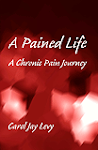
"Fascinating" Stephen S. Hall. writer, N.Y.Times magazine. "Hard to put down." A.C.P.A., American Chronic Pain Association.
Sunday, August 19, 2012


Sunday, August 12, 2012
SYNCHRONIZED SWIMMING-How does it relate to us?
It is truly beautiful, bodies moving in concert, gymnastics, strength, not breathing while doing twirls, faces in the water for what feels, even to me the watcher, like forever. It is an amazing demonstration of athleticism. And yet, I have often heard people say it should not be a part of the olympics, it is not a sport.
I beg to differ.
It is astounding. It looks like a bunch of women having a good time swimming around and doing tricks. The work that goes into it is invisible: who wants to know about the struggle, the difficulties and problems, the work that goes into creating the ultimate presentation?
How does that relate to us?
Many of us have dealt with people who disbelieve our pain, who insist we do things even after we say it is something that is beyond us because of the pain. We also know people who say 'because you look good, you must feel fine'.
We go out when we can, we do our hair, we get dressed, for those of us whose pain is so bad even getting out of bed in the morning can be beyond us on some days, we mount the fight. We get up, we go downstairs, we do our hair, we get dressed, go out in the world, and try and present a non pained face.
Most do not want to know the struggle, difficulties and problems, the decisions - can I wear the
shoes with the ties?, can I sit on this side of the church, can I go out today? - that went into our being a part of the world, a part of a family, and for those of us who can, a part of a workforce. They see the results, shoelaces tied, clothing clean, hair brushed, smiling face. Even if asked "How are you today?" most do not want to hear the full true answer, "I have pain but I got myself here".
The synchronized swimmers are rightfully proud of all the work they put into getting their wonderful end product. We need to own that pride too, in being able to get through the day, to be a part of.
The final result is well worth the effort, no matter what that is, even if 'only' starting the day. We rightfully deserve that pat on the back, the applause that is often missing.
The people who see the end result; the lack of understanding that what you see is only the tip of the swim, only the end result of the struggle with our pain, miss out on knowing a major part of us, the part that shows what kind of fighters we are.
I beg to differ.
It is astounding. It looks like a bunch of women having a good time swimming around and doing tricks. The work that goes into it is invisible: who wants to know about the struggle, the difficulties and problems, the work that goes into creating the ultimate presentation?
How does that relate to us?
Many of us have dealt with people who disbelieve our pain, who insist we do things even after we say it is something that is beyond us because of the pain. We also know people who say 'because you look good, you must feel fine'.
We go out when we can, we do our hair, we get dressed, for those of us whose pain is so bad even getting out of bed in the morning can be beyond us on some days, we mount the fight. We get up, we go downstairs, we do our hair, we get dressed, go out in the world, and try and present a non pained face.
Most do not want to know the struggle, difficulties and problems, the decisions - can I wear the
shoes with the ties?, can I sit on this side of the church, can I go out today? - that went into our being a part of the world, a part of a family, and for those of us who can, a part of a workforce. They see the results, shoelaces tied, clothing clean, hair brushed, smiling face. Even if asked "How are you today?" most do not want to hear the full true answer, "I have pain but I got myself here".
The synchronized swimmers are rightfully proud of all the work they put into getting their wonderful end product. We need to own that pride too, in being able to get through the day, to be a part of.
The final result is well worth the effort, no matter what that is, even if 'only' starting the day. We rightfully deserve that pat on the back, the applause that is often missing.
The people who see the end result; the lack of understanding that what you see is only the tip of the swim, only the end result of the struggle with our pain, miss out on knowing a major part of us, the part that shows what kind of fighters we are.
Friday, August 10, 2012
Monday, August 6, 2012
WORDS, WORDS, WORDS.
We often do not think of the effect of our words. especially when they are written or said to someone who is peripheral to our lives.
One day, when I was about 24, I was in my living room thinking about making acting and singing my career, of making the gigantic step of moving to NYC. Looking around the room I happened to notice my high school yearbook sitting in the bookcase.
I took it out and started reading the little things people had written to, and about me, in their remember me messages.
I was particularly taken by the words written by Susie (pseudonym). We knew each other slightly, mostly from choir where I was known as the person most afraid of our choir director.
She wrote about my fear, how she thought my body would not be able to take the shaking each time we had a "purge". (Mr, ( ) made each of us, in turn, sing our voice part of one of the pieces of music. Afraid of him, petrified I would make a mistake, I sounded more like a lamb to slaughter, my shaking voice almost baaing.) "Remember the purges? I'll never forget the one where you really sang unbelievably." (That day, for some reason, I overcame the fear. I sang with no terror. The other choir members actually applauded when I was done.)
"I hope", she wrote "that kind of thing continues forever because if you show everyone what you showed him you'll make it anywhere."
Her words reverberated and stayed in my mind and brain. "You can do it" they reminded me, a version of the little engine that could.
I saw Susie a few years later, by happenstance.
I reminded her who I was and we shared some small talk. I told her she had a very big effect on my life because of the words she had written. She looked at me with a kind of strange expression, a "are you a little off?" moue of her lips, the lifting of a brow.
"This is somewhat what you wrote." I said summarizing it for her. "You wrote about showing everyone what I showed Mr ( ) that day of the purge. No one ever said that to me before, no one ever gave me the kind of encouragement, that the possibilities are there. I really want to thank you for that."
Her expression indicated she thought it was a strange thing for me to say, or maybe just that I was strange. We said our good byes. I have never seen her again.
It was, for her, a little thing. Maybe she grew up in a house where an "atta girl" and pat on the back was common. That was not the case for me. My impression was my remembering it, much less taking it to heart, was way beyond what she intended. She wrote what she thought at the time and never gave it another thought. I read what she wrote at the time, and gave it a lot of thought.
Words can hurt. Words can heal. They can encourage, or discourage. They can linger in the air, between people, reminders of their hurtfulness. They can settle in your heart and sing to you.
The little things, the thoughtful, and thoughtless, really do mean a lot.
I think of Susie's words now and again. They remind me that what I say may take only a few seconds but what you hear may last forever.
One day, when I was about 24, I was in my living room thinking about making acting and singing my career, of making the gigantic step of moving to NYC. Looking around the room I happened to notice my high school yearbook sitting in the bookcase.
I took it out and started reading the little things people had written to, and about me, in their remember me messages.
I was particularly taken by the words written by Susie (pseudonym). We knew each other slightly, mostly from choir where I was known as the person most afraid of our choir director.
She wrote about my fear, how she thought my body would not be able to take the shaking each time we had a "purge". (Mr, ( ) made each of us, in turn, sing our voice part of one of the pieces of music. Afraid of him, petrified I would make a mistake, I sounded more like a lamb to slaughter, my shaking voice almost baaing.) "Remember the purges? I'll never forget the one where you really sang unbelievably." (That day, for some reason, I overcame the fear. I sang with no terror. The other choir members actually applauded when I was done.)
"I hope", she wrote "that kind of thing continues forever because if you show everyone what you showed him you'll make it anywhere."
Her words reverberated and stayed in my mind and brain. "You can do it" they reminded me, a version of the little engine that could.
I saw Susie a few years later, by happenstance.
I reminded her who I was and we shared some small talk. I told her she had a very big effect on my life because of the words she had written. She looked at me with a kind of strange expression, a "are you a little off?" moue of her lips, the lifting of a brow.
"This is somewhat what you wrote." I said summarizing it for her. "You wrote about showing everyone what I showed Mr ( ) that day of the purge. No one ever said that to me before, no one ever gave me the kind of encouragement, that the possibilities are there. I really want to thank you for that."
Her expression indicated she thought it was a strange thing for me to say, or maybe just that I was strange. We said our good byes. I have never seen her again.
It was, for her, a little thing. Maybe she grew up in a house where an "atta girl" and pat on the back was common. That was not the case for me. My impression was my remembering it, much less taking it to heart, was way beyond what she intended. She wrote what she thought at the time and never gave it another thought. I read what she wrote at the time, and gave it a lot of thought.
Words can hurt. Words can heal. They can encourage, or discourage. They can linger in the air, between people, reminders of their hurtfulness. They can settle in your heart and sing to you.
The little things, the thoughtful, and thoughtless, really do mean a lot.
I think of Susie's words now and again. They remind me that what I say may take only a few seconds but what you hear may last forever.
Sunday, July 29, 2012
THE CATCH 22 OF CHRONIC PAIN.
Someone wrote a comment in a support group about having to go to the ER because her pain was out of control. She was begging for morphine. At the same time she was telling them how much she hated the drug, taking it, and how it made her feel.
This, to me, is part of the bizarreness that is chronic intractable pain and it's treatment. We hate what helps us but we need it, a catch 22 that makes some docs question how bad our pain is.
Does this person really hate taking the opiates? If so, why is she asking, not just asking, begging, for it? If her pain is so bad why does she continue telling us how much she hates the drug? Is this an addict trying to convince me she has pain, trying to scam me, or is she truly a person in intractable pain who needs my help, in the form of the narcotic, even if it is something abhorrent to her?
It is the same struggle some of us find when we go to the doc.
I feel awful, the pain very bad, my need for his help great. I want to look good, for him to see me as someone who speaks well and looks good, who can adequately explain my situation and understand his instructions.
I feel awful, the pain very bad, my need for his help great. I want to look good but my body is not doing what I want. My hair is brushed but still unruly, my clothes somewhat wrinkled: it is too hard to use the iron. I can still explain myself, my pain, my symptoms, my problems. I can still understand his instructions.
In both instances there is a minefield: she looks good, how bad could her pain really be? She looks bad, she must be depressed.
The drug conundrum: she hates the drugs but she wants them. Is she an addict or someone honestly in severe debilitating pain?
I write about this now and again - the issue of "proof". How do you prove an invisible?
Bringing a diary or journal with you where the doctor can see what your daily struggle looks like may help. It is no longer just words without context but a calender, the days noted by how bad your pain was that day, what you could not (or could) do that day.
If you have someone who can come to the appointment with you, we should not need a 'witness' to our struggle but another voice cannot hurt, makes the result(s) of the pain more visible, because it is seen by another.
Ironically the facial paralysis from the medical malpractice is a benefit to me, I have a 'visible' sign, they see the damage, the assumption is made, something is wrong in her face. The lids of the bad eye are often swollen. They ask not "Do you have pain?" but "How bad is your pain?"
I hate how I look. I made the video for the Jennifer Grey CNN interview. I first did it without my sunglasses. I had no idea how I looked to others. I honestly thought my face looked close to normal. I was sickened by what I saw. Even wearing sunglasses the paralysis was obvious. The still photo was not much better.
But the paralysis is like the morphine, I hate the paralysis, the person who was begging for the morphine hates it, but, in both cases, it is something that benefits us.
It is not love/hate - there is no 'love' involved, but the dichotomy that we face is just one more aspect, and problem, of life with chronic pain.
This, to me, is part of the bizarreness that is chronic intractable pain and it's treatment. We hate what helps us but we need it, a catch 22 that makes some docs question how bad our pain is.
Does this person really hate taking the opiates? If so, why is she asking, not just asking, begging, for it? If her pain is so bad why does she continue telling us how much she hates the drug? Is this an addict trying to convince me she has pain, trying to scam me, or is she truly a person in intractable pain who needs my help, in the form of the narcotic, even if it is something abhorrent to her?
It is the same struggle some of us find when we go to the doc.
I feel awful, the pain very bad, my need for his help great. I want to look good, for him to see me as someone who speaks well and looks good, who can adequately explain my situation and understand his instructions.
I feel awful, the pain very bad, my need for his help great. I want to look good but my body is not doing what I want. My hair is brushed but still unruly, my clothes somewhat wrinkled: it is too hard to use the iron. I can still explain myself, my pain, my symptoms, my problems. I can still understand his instructions.
In both instances there is a minefield: she looks good, how bad could her pain really be? She looks bad, she must be depressed.
The drug conundrum: she hates the drugs but she wants them. Is she an addict or someone honestly in severe debilitating pain?
I write about this now and again - the issue of "proof". How do you prove an invisible?
Bringing a diary or journal with you where the doctor can see what your daily struggle looks like may help. It is no longer just words without context but a calender, the days noted by how bad your pain was that day, what you could not (or could) do that day.
If you have someone who can come to the appointment with you, we should not need a 'witness' to our struggle but another voice cannot hurt, makes the result(s) of the pain more visible, because it is seen by another.
Ironically the facial paralysis from the medical malpractice is a benefit to me, I have a 'visible' sign, they see the damage, the assumption is made, something is wrong in her face. The lids of the bad eye are often swollen. They ask not "Do you have pain?" but "How bad is your pain?"
I hate how I look. I made the video for the Jennifer Grey CNN interview. I first did it without my sunglasses. I had no idea how I looked to others. I honestly thought my face looked close to normal. I was sickened by what I saw. Even wearing sunglasses the paralysis was obvious. The still photo was not much better.
But the paralysis is like the morphine, I hate the paralysis, the person who was begging for the morphine hates it, but, in both cases, it is something that benefits us.
It is not love/hate - there is no 'love' involved, but the dichotomy that we face is just one more aspect, and problem, of life with chronic pain.
Monday, July 23, 2012
HOPE AND FEAR ARE BROTHERS
I read that line in a book. I always think of fear as something negative, even when it keeps you from doing something that may cause you harm.
Hope is always a positive word, a concept of good things that may happen, that are devoutly to be wished.
Many times I have said "Don't let your pain make the decisions for you." especially when you are considering treatments, options, and surgery in particular.
Maybe hope too should be silenced when you need to make the big decisions: I hope therefore it will (help, work, fix me).
How do we stay grounded? The pain is often so bad it is hard not to let it become the voice of reason; when by its presence reason is often absent.
My implant remains in me even though it failed a few months ago. I have written about it before.
Last week I called the company, for the second time, that makes it, after having seen my neurosurgeon once, talked with the neurosurg. who had placed it and lives a number of states away, and 2 representatives from the company that are trained to check the unit for problems. Everyone said "I'm sorry, there is nothing else to do." However...
The woman I last spoke with gave me different information then everyone else. Some of it made sense: maybe something is wrong with the battery that powers the unit. It is possible something is not registering when it is checked." I thought it was a good idea. I also thought it was a good idea when I first suggested it to the surgeon who said "No. It is fine."
She also gave me slightly different information about the wire connecting leads and how they could be changed without removing the unit. That was not the explanation I had previously gotten.
So hope comes in the door again. Fear resides here too.
The fear of removing the unit when it may be fixable is based on hope, hope that it can still be fixed.
Is there a point where the two need to be blocked? Can they exist alone or is it always the pair when decisions need to be made?
I do not know. Sometimes I do think my unfettered hope is a negative thing, but without hope what else is there?
I put the question out to you.
My reality, our reality of pain, is it inconsistent with hope, must it always be paired with fear?
Hope is always a positive word, a concept of good things that may happen, that are devoutly to be wished.
Many times I have said "Don't let your pain make the decisions for you." especially when you are considering treatments, options, and surgery in particular.
Maybe hope too should be silenced when you need to make the big decisions: I hope therefore it will (help, work, fix me).
How do we stay grounded? The pain is often so bad it is hard not to let it become the voice of reason; when by its presence reason is often absent.
My implant remains in me even though it failed a few months ago. I have written about it before.
Last week I called the company, for the second time, that makes it, after having seen my neurosurgeon once, talked with the neurosurg. who had placed it and lives a number of states away, and 2 representatives from the company that are trained to check the unit for problems. Everyone said "I'm sorry, there is nothing else to do." However...
The woman I last spoke with gave me different information then everyone else. Some of it made sense: maybe something is wrong with the battery that powers the unit. It is possible something is not registering when it is checked." I thought it was a good idea. I also thought it was a good idea when I first suggested it to the surgeon who said "No. It is fine."
She also gave me slightly different information about the wire connecting leads and how they could be changed without removing the unit. That was not the explanation I had previously gotten.
So hope comes in the door again. Fear resides here too.
The fear of removing the unit when it may be fixable is based on hope, hope that it can still be fixed.
Is there a point where the two need to be blocked? Can they exist alone or is it always the pair when decisions need to be made?
I do not know. Sometimes I do think my unfettered hope is a negative thing, but without hope what else is there?
I put the question out to you.
My reality, our reality of pain, is it inconsistent with hope, must it always be paired with fear?
Wednesday, July 18, 2012
JENNIFER GREY TO TALK ABOUT CHRONIC PAIN (maybe). Please click.
(I am mortified by my picture, just want to get that out of the way)
Jennifer Grey is the spokesperson for PARTNERS AGAINST PAIN>
CNNIreport has a site for questions for her.
I have put on my picture and question asking her how she will be spreading the word about chronic pain. The more clicks, favorited, shares and recommendations (takes a few seconds just to click on those boxes)the higher up I go on the page and the better the chance the question will get to her.
Here is the click: http://ireport.cnn.com/docs/DOC-812016
http://ireport.cnn.com/docs/DOC-812016
Thanks to all of you who click.
Jennifer Grey is the spokesperson for PARTNERS AGAINST PAIN>
CNNIreport has a site for questions for her.
I have put on my picture and question asking her how she will be spreading the word about chronic pain. The more clicks, favorited, shares and recommendations (takes a few seconds just to click on those boxes)the higher up I go on the page and the better the chance the question will get to her.
Here is the click: http://ireport.cnn.com/docs/DOC-812016
http://ireport.cnn.com/docs/DOC-812016
Thanks to all of you who click.
Subscribe to:
Comments (Atom)