I posted a video of a short version of my story.
http://ireport.cnn.com/docs/DOC-1032817
My book.
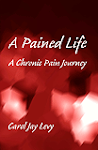
"Fascinating" Stephen S. Hall. writer, N.Y.Times magazine. "Hard to put down." A.C.P.A., American Chronic Pain Association.
Saturday, September 7, 2013


Friday, September 6, 2013
THE CONUNDRUM OF PAIN.
September is National Pain Awareness Month. In Pennsylvania it is also Women In Chronic Pain Month.
The latter is an easier concept. Bringing attention to the disparity and gender bias in treating chronic pain in women vs. men.
To my mind, the former is much more complicated.
First if all, I wish they had included the word “chronic” in the resolution and not merely the word “pain”. Everyone is in pain at some time or another. The issue is much greater than that. It goes directly to the kind and amount of research and research funding, as well as the treatment of those living with chronic pain.
There are many disorders and diseases with pain as the main or sole complaint. These are some of them: cranial nerve neuropathies (such as trigeminal or glossopharyngeal neuralgia), peripheral neuropathies, including phantom pain, CRPS (chronic regional pain syndrome), many of the auto immune disorders such as rheumatoid arthritis, and Lupus, and the list goes on and on.
Many of them have treatments, medications, and possibly surgeries, that are specific to the diagnosis. The one common denominator, absent the pain, is the use of prescribed opiates. Codeine, Vicodin, and others are prescribed mainly as an analgesic, since all they can hopefully do is anaesthetize the pain.
Many of us who live with daily and often constant pain tend to look at it as one main category: chronic pain. But putting it all in one basket or one name makes it harder to accept the difficulty in finding an appropriate treatment. There is not and probably cannot be just one answer, because there are too many disorders as the primary cause.
I have to admit I get frustrated when I see attention and publicity paid to a specific disease such as fibromyalgia or CRPS. I immediately think but that is only one illness, what about the rest of us?
My trigeminal neuralgia pain is not the same as the pain of someone who has CRPS or fibromyalgia. Of course it is different. Yet there is a debate ongoing as to whether chronic pain is a disease in and of itself.
How can it be a singular disorder? Pain, after all, is a symptom, a sign. It is not an entire entity.
But boy, I sure wish it was. Research and funds could be coordinated with one single goal; relieving the chronic pain of an estimated 100 million Americans.
It would be so easy, so wonderful to have the one- size- fits- all answer. It allows for hope. If all the money, all the studies and research were directed towards the one endpoint — the chances of a cure would be greater. Instead it is scattershot towards the individual illnesses.
It is National Pain Awareness Month. We need to bring attention to the month, to the numbers of people living with pain, to its disability and horrors. It is a time to announce the ills that cause the pain. It is also a time to remind ourselves that the answer may be a longer time in coming then we wish. The upside is that the research is ongoing for the singular illnesses.
And in that, there is hope.
________________________________________________
Reposted from my column: http://americannewsreport.com/nationalpainreport/pained-life-conundrum-pain-8821580.html
The latter is an easier concept. Bringing attention to the disparity and gender bias in treating chronic pain in women vs. men.
To my mind, the former is much more complicated.
First if all, I wish they had included the word “chronic” in the resolution and not merely the word “pain”. Everyone is in pain at some time or another. The issue is much greater than that. It goes directly to the kind and amount of research and research funding, as well as the treatment of those living with chronic pain.
There are many disorders and diseases with pain as the main or sole complaint. These are some of them: cranial nerve neuropathies (such as trigeminal or glossopharyngeal neuralgia), peripheral neuropathies, including phantom pain, CRPS (chronic regional pain syndrome), many of the auto immune disorders such as rheumatoid arthritis, and Lupus, and the list goes on and on.
Many of them have treatments, medications, and possibly surgeries, that are specific to the diagnosis. The one common denominator, absent the pain, is the use of prescribed opiates. Codeine, Vicodin, and others are prescribed mainly as an analgesic, since all they can hopefully do is anaesthetize the pain.
Many of us who live with daily and often constant pain tend to look at it as one main category: chronic pain. But putting it all in one basket or one name makes it harder to accept the difficulty in finding an appropriate treatment. There is not and probably cannot be just one answer, because there are too many disorders as the primary cause.
I have to admit I get frustrated when I see attention and publicity paid to a specific disease such as fibromyalgia or CRPS. I immediately think but that is only one illness, what about the rest of us?
My trigeminal neuralgia pain is not the same as the pain of someone who has CRPS or fibromyalgia. Of course it is different. Yet there is a debate ongoing as to whether chronic pain is a disease in and of itself.
How can it be a singular disorder? Pain, after all, is a symptom, a sign. It is not an entire entity.
But boy, I sure wish it was. Research and funds could be coordinated with one single goal; relieving the chronic pain of an estimated 100 million Americans.
It would be so easy, so wonderful to have the one- size- fits- all answer. It allows for hope. If all the money, all the studies and research were directed towards the one endpoint — the chances of a cure would be greater. Instead it is scattershot towards the individual illnesses.
It is National Pain Awareness Month. We need to bring attention to the month, to the numbers of people living with pain, to its disability and horrors. It is a time to announce the ills that cause the pain. It is also a time to remind ourselves that the answer may be a longer time in coming then we wish. The upside is that the research is ongoing for the singular illnesses.
And in that, there is hope.
________________________________________________
Reposted from my column: http://americannewsreport.com/nationalpainreport/pained-life-conundrum-pain-8821580.html
Saturday, August 31, 2013
A SONG OF TRIGEMINAL NEURALGIA, Homage to the fighters Damnation of the pain.
We who live with trigeminal neuralgia
Soldiers in a war.
Fighting an invisible enemy.
What is the fighting for?
Trigeminal neuralgia,
“the suicide disease”
The worst pain known to man,
Help us, find a cure fast please.
A knife, a lightning bolt
A slash across the face
It comes out of the blue and
Boom - facial pain is now your fate.
Nothing shows where the horror hit,
It lasts for such a short time,
It’s hard to believe such a pain exists
Yet somehow it becomes mine.
Any touch to the pained zone
An invitation to the nerve
A breeze, a wisp of hair
Its hard to stop the moans.
Then to finish it off,
for some the pain is constant,
No one can imagine the horror
Of the beast that walks in our conscious.
For me it’s been 12 brain surgeries,
And not one sibling came
They decided I was a fraud
Maybe because they couldn't see the pain.
Dr. Jewell Osterhom,
the first one to enter my brain
cut out a bunch of vessels
he found that were to blame.
The next surgeon, Peter Jannetta,
He paralyzed my face
When he did his self named surgery,
putting a Teflon pad in place.
The scar tissue left by him
Made all other options dim
Other surgeons tried to fix it
But the benefits were none or slim.
Even when I felt better
The better was quickly gone
The benefit more from staying in -
or good weather all but gone.
The pain always came back.
Vengeance was its goal
Everything I had or wanted
The pain and Dr. Jannetta stole.
Finally Dr. Barolat offered
Something I found unpalatable
But finally being choiceless
the choice was to be malleable.
I let him put inside me
some implants and a battery
None of them were lovely,
but the benefits from them godly.
Trigeminal neuralgia,
the suicide disease.
It makes us make choices
None of them serene.
For those of us who have found solace
In drugs, operations or ‘things’
There can be no finer feeling
Then when the monster is freed.
This ode I write to tell you
The good, the bad, the need
In hopes that it can help
those who suffer from this beast.
Even when things go wrong
The hope can still be there.
For you never know whats waiting
Right beyond the air.
Trigeminal neuralgia
A name that rhymes with nothing
An ogre that besets us
Our fight not one of bluffing.
I salute all of the sufferers
I know the abomination
The fight to be rid of this pain
A courage, a struggle brazen.
Here’s to you, all of my fellow fighters. against trigeminal neuralgia and all chronic pain.
Soldiers in a war.
Fighting an invisible enemy.
What is the fighting for?
Trigeminal neuralgia,
“the suicide disease”
The worst pain known to man,
Help us, find a cure fast please.
A knife, a lightning bolt
A slash across the face
It comes out of the blue and
Boom - facial pain is now your fate.
Nothing shows where the horror hit,
It lasts for such a short time,
It’s hard to believe such a pain exists
Yet somehow it becomes mine.
Any touch to the pained zone
An invitation to the nerve
A breeze, a wisp of hair
Its hard to stop the moans.
Then to finish it off,
for some the pain is constant,
No one can imagine the horror
Of the beast that walks in our conscious.
For me it’s been 12 brain surgeries,
And not one sibling came
They decided I was a fraud
Maybe because they couldn't see the pain.
Dr. Jewell Osterhom,
the first one to enter my brain
cut out a bunch of vessels
he found that were to blame.
The next surgeon, Peter Jannetta,
He paralyzed my face
When he did his self named surgery,
putting a Teflon pad in place.
The scar tissue left by him
Made all other options dim
Other surgeons tried to fix it
But the benefits were none or slim.
Even when I felt better
The better was quickly gone
The benefit more from staying in -
or good weather all but gone.
The pain always came back.
Vengeance was its goal
Everything I had or wanted
The pain and Dr. Jannetta stole.
Finally Dr. Barolat offered
Something I found unpalatable
But finally being choiceless
the choice was to be malleable.
I let him put inside me
some implants and a battery
None of them were lovely,
but the benefits from them godly.
Trigeminal neuralgia,
the suicide disease.
It makes us make choices
None of them serene.
For those of us who have found solace
In drugs, operations or ‘things’
There can be no finer feeling
Then when the monster is freed.
This ode I write to tell you
The good, the bad, the need
In hopes that it can help
those who suffer from this beast.
Even when things go wrong
The hope can still be there.
For you never know whats waiting
Right beyond the air.
Trigeminal neuralgia
A name that rhymes with nothing
An ogre that besets us
Our fight not one of bluffing.
I salute all of the sufferers
I know the abomination
The fight to be rid of this pain
A courage, a struggle brazen.
Here’s to you, all of my fellow fighters. against trigeminal neuralgia and all chronic pain.
Tuesday, August 20, 2013
THE PILL DILEMMA.
Only twice in my 30-plus years of living with chronic pain have I had a problem getting my narcotic medication.
The first time a relative lied to a doctor.
I was visiting from out-of-state. The pain was bad. I went to take a codeine pill and realized I had not brought enough with me.
Checking The Label“What if the pain gets out of control?” I cried. “What am I going to do?”
The relative called the doctor who was covering for my regular one.
“She’s ranting and raving about not having her drugs,” she told him.
He believed her. And he refused to write a new prescription. He also wrote in my chart: “Her behavior indicates she may be abusing her drugs.”
My regular doctor told me about the note. He added a larger one: “She has been taking this drug for years. She has never had a problem with it.”
The second episode again involved a doctor other than the one I usually saw.
I came in every 6 months to get my prescriptions, for another medication and for codeine.
“How often do you take the codeine?” he asked.
Not thinking I needed to be cautious I said, “About 3 pills a day.”
“I see your doctor gives you 120. I’m only giving you 90.”
“But three is an average. Some days I need more.”
“No. You said three.”
He didn’t care that it wasn’t enough. He didn’t notice 90 a month did not account for months with 31 days.
Again, my regular doctor took care of it.
Golf Pass
“I know you need 120 a month. Just make sure you only see me from now on,” he said.
It was astounding to me that after decades of taking this drug without any problem, I was questioned, disbelieved, and treated as a drug seeker rather than a patient with chronic pain.
I understand narcotics have a way of finding their way onto the streets and into the pockets of bad guys. I get that there are unscrupulous doctors and so-called “clinics” in it only for the money. But don’t presume me guilty. I should not feel humiliated because I asked for what I needed.
A friend asked me, “What happens to those in chronic pain if they can’t get the meds they need?”
I had no answer.
I have not heard of cancer patients being deprived of their pain pills. Diabetics are not told, “You have taken too much insulin this month so no more for you.”
Maybe the issue goes back, not only to the invisibility of pain, but to the subjectivity and concept of pain. Maybe the bias is innate in our health care system.
According to a recent study in The Journal of Pain, the annual cost of chronic pain is as high as $635 billion a year, which is more than the annual cost of cancer, heart disease and HIV/AIDS combined.
But where does the money go? Just one percent of research funding from the National Institutes of Health (NIH) is dedicated to pain research. Last year, the NIH spent $396 million on pain research, but $5.6 billion on cancer research.
It is time for the government to realize it can’t have it both ways; with the DEA working to decrease the ability of doctors to give opioid medications to chronic pain patients, while funding for pain research and finding alternatives to opioids remains miniscule compared to other disorders.
________________________________________________________________________
My latest column reposted from: http://americannewsreport.com/nationalpainreport/a-pained-life-the-pill-dilemma-8821321.html
Wednesday, August 7, 2013
LOSSES. They're not only physical.
I was watching the TV show Monk. I was captivated by the friendship and loyalty shown to Monk by the people with whom he used to work.
I used to work in a hospital. There was a sense of kinship and caring that we felt towards one another.
So many times I see posts in support groups talking about the losses someone has sustained because of the pain.
I have lost the ability to use my eyes for any length of time. I miss being able to read a book in one sitting. I miss remembering from one short scanning of a chapter (if I can get that far), until the next time I can pick up the book, who each character is and how they figure into the story.
I am very lucky. Unlike so many with chronic pain, I have not lost physical ability and agility. Getting out of bed, tying my shoes, and making it through the day.
We don’t often talk about the other losses.
I have written about my family abandoning me a long time ago, starting before the pain. I miss having family, but it is not an active loss — as it is for many who still have parents, siblings, cousins, etc., who doubt the validity of their pain.,
I have not been able to work since 1977, when the pain came back after a 3 month hiatus. While I was pain free, I began working in an office and quickly made two wonderful friends. But when the pain returned the three months of friendship were not enough to overcome the “I can’ts” of the pain.
The emotional and social losses that we incur are incalculable. I want, I need the person I can call and say, “Let’s go for coffee.” I had that person but she moved.
Now there is no one, no one who calls and asks, “How are you today?” “Is there anything you need?” Or “Wanna go for coffee?” My inability to get out and about, and work, keeps that from happening.
I found that without work, when I did make friends it was often with one other person whose neediness equaled mine. Maybe it was not from chronic pain, but from disability, social discomfort, or emotional problems.
Golf Pass
I recall one friend saying to her father, “Carol and I would never be friends under any other circumstances.” She was absolutely correct. The only thing we had in common was our pain; hers social and psychological, mine physical.
There are people, professionals, who talk about pain being a psychological issue, unresolved childhood conflicts and the like. But trigeminal neuralgia, CRPS, Lupus, etc. don’t happen as the result of psychological problems or emotional turmoil.
Even those who grew up in a Mary Poppins home get these diseases and disorders. They happen, simply, because of physiological processes gone awry.
The turmoil and problems come because of the effect the pain has on our lives.
Certainly our psychological makeup will affect the way we respond to the pain. But it is the losses because of the pain that need to be addressed. They are not just psychological or emotional. They are very real.
____________________________________________________________________________________________________________________________________
Reposted from: http://americannewsreport.com/nationalpainreport/a-pained-life-losses-8821183.html
Thursday, July 18, 2013
MEDICAL MARIJUANA. IS IT TIME?
A Pained Life: Changing Attitudes about Medical Marijuana
July 17th, 2013 by Carol Levy, Columnist
When I was in my early 20’s, years before the onset of my pain, I was offered a marijuana cigarette. I didn’t want it, but the pressure from my friend was so great I finally took it. I puffed on it once. I did not inhale.
I was not sure what effect it might have on me or how it might make me feel. I was afraid of it.
bigstock-The-words-medical-marijuana-su-17121803A few years ago, feeling desperate for anything that might help with the pain, I googled “medical marijuana.”
I found a site in Canada. The only requirement was that you send them a note with the name of your medical disorder. The seeds arrived in the mail and I planted them in the laundry room sink.
They were fast growers; within a week or so I had some beautiful plants.
I wasn’t sure how to use them. I also wasn’t sure I had the nerve. It turned out my worry was for naught.
On my way to check on the plants I walked into my living room. My cat Rooty was running around the room, really, really enjoying herself. That was out of character. As soon as I walked into the laundry room I saw why. All of the plants had been eaten down to the root.
It let me off the hook. I no longer needed to make an active decision about trying “pot” for my pain.
I have been sitting on the sidelines on this issue. Although it has disturbed me that, despite proof of the benefits for those with cancer pain, loss of appetite, HIV and other disorders, medical marijuana has remained illegal in most states. Even when I am asked to sign petitions about making it legal I have not done so, not being sure exactly where I stand on the issue.
But then my self-interest came into play.
I have “phantom pain” of my face (anaesthesia dolorosa). This is a neuropathic disorder. It often defies treatment.
A recent study published in The Journal of Pain about vaporized cannabis significant improving neuropathic pain changed my mind. Although I have not become an active advocate, at least not yet, I follow the debate over medical marijuana much more closely. I am more willing to add my name to the petitions for making it legal.
As chronic pain patients, we are under fire from the DEA. Their rules have made it more and more difficult to get the narcotic medications many of us, including me, need. It has also made it harder for some patients to find doctors willing to prescribe them. That makes it even more important that alternative therapies be found.
Marijuana is one of those therapies.
The study is a small one, only 39 subjects, but the researchers found a significant benefit for those patients who have treatment resistant neuropathy. That would be me.
I know there are many reasons and many people who do not want to see medical marijuana legalized.
However, for me and many others, it could mean the difference between staying disabled and being more able. Dare I hope, maybe even becoming “able.”
____________________________
Reposted from my column: http://americannewsreport.com/nationalpainreport/a-pained-life-changing-attitudes-about-medical-marijuana-8820892.html
July 17th, 2013 by Carol Levy, Columnist
When I was in my early 20’s, years before the onset of my pain, I was offered a marijuana cigarette. I didn’t want it, but the pressure from my friend was so great I finally took it. I puffed on it once. I did not inhale.
I was not sure what effect it might have on me or how it might make me feel. I was afraid of it.
bigstock-The-words-medical-marijuana-su-17121803A few years ago, feeling desperate for anything that might help with the pain, I googled “medical marijuana.”
I found a site in Canada. The only requirement was that you send them a note with the name of your medical disorder. The seeds arrived in the mail and I planted them in the laundry room sink.
They were fast growers; within a week or so I had some beautiful plants.
I wasn’t sure how to use them. I also wasn’t sure I had the nerve. It turned out my worry was for naught.
On my way to check on the plants I walked into my living room. My cat Rooty was running around the room, really, really enjoying herself. That was out of character. As soon as I walked into the laundry room I saw why. All of the plants had been eaten down to the root.
It let me off the hook. I no longer needed to make an active decision about trying “pot” for my pain.
I have been sitting on the sidelines on this issue. Although it has disturbed me that, despite proof of the benefits for those with cancer pain, loss of appetite, HIV and other disorders, medical marijuana has remained illegal in most states. Even when I am asked to sign petitions about making it legal I have not done so, not being sure exactly where I stand on the issue.
But then my self-interest came into play.
I have “phantom pain” of my face (anaesthesia dolorosa). This is a neuropathic disorder. It often defies treatment.
A recent study published in The Journal of Pain about vaporized cannabis significant improving neuropathic pain changed my mind. Although I have not become an active advocate, at least not yet, I follow the debate over medical marijuana much more closely. I am more willing to add my name to the petitions for making it legal.
As chronic pain patients, we are under fire from the DEA. Their rules have made it more and more difficult to get the narcotic medications many of us, including me, need. It has also made it harder for some patients to find doctors willing to prescribe them. That makes it even more important that alternative therapies be found.
Marijuana is one of those therapies.
The study is a small one, only 39 subjects, but the researchers found a significant benefit for those patients who have treatment resistant neuropathy. That would be me.
I know there are many reasons and many people who do not want to see medical marijuana legalized.
However, for me and many others, it could mean the difference between staying disabled and being more able. Dare I hope, maybe even becoming “able.”
____________________________
Reposted from my column: http://americannewsreport.com/nationalpainreport/a-pained-life-changing-attitudes-about-medical-marijuana-8820892.html
Wednesday, July 10, 2013
TIMING MY PAIN.
I was sitting at a table with some people I knew, slightly.
I did not know how much of my situation they knew, but the issue came up about my not being able to work. I told them about the pain that comes from any consistent use of my eyes for more than 10 to 20 minutes before the pain becomes too severe for me to continue.
They immediately came up with suggestions, most of them centered on using a timer.
“Set it for 15 minutes so you will have to stop,” they suggested.
That’s a good idea. In fact, I came up it with a long time ago. The only problem is, it’s a lot easier in concept then reality.
I am reading a mystery, my favorite kind of story. The book is getting exciting, the clues mounting, the name of the person “who dunnit” to be disclosed in… wait, bringgg!
Off goes the timer. I can’t stop now. I have to find out who did it.
I know better, but I think, as I often do, five more minutes won’t make a difference.
But of course, it does.
Sometimes it is more important eye work, writing this column for instance. I cannot break off in the middle. I lose my train of thought and have to start over, which means going past the time limit the next time I work on it.
Sometimes I get to the point where I need to stop, but in order to not lose my concept, I continue making notes; which takes me past my time limit. The pain is then at the point of no return, at least for the next hour or more.
If I go to a store, I need more than 15 minutes to find what I need. I use my eyes the entire time. I cannot just stop.
The same is probably true for most of us. The time allotted before the pain becomes unmanageable is usually taken up with getting ready to do whatever task is at hand. By the time we are in the midst of doing what we set out to do, the time is up.
From the outside looking in, the answer to keeping the pain at an “acceptable” level is simple. Just stop. I daresay it would be easy if this was not our lives.
If it was just a a short term problem, a sprained ankle or a scratched cornea for instance, it is no big thing to keep our usage of the pained area to a minimum. When it’s a constant pain, the timed approach is not workable.
When I try to explain that to people, I see the eye rolling, the turning away: she doesn’t want our help. She doesn’t want to change her situation.
They have no idea how dearly I want that.
I wish we (I) could use the same tricks and ideas that work when pain is temporary.
But I don’t think we can.
The timer rang about 10 minutes ago. I added another 10 minutes so I could finish this column. And now I am paying the piper.
Do I regret forcing myself to continue past the time limit? Yes and no.
Yes, because now the pain is very bad.
And no, because I was able to finish what I started.
_______________________________________________________________________________________________________________________________
Reprinted from my column at National Pain Report http://americannewsreport.com/nationalpainreport/a-pained-life-timing-my-pain-8820790.html
Subscribe to:
Posts (Atom)