I was at church and someone started taking pictures with a flash camera.
My eye cannot tolerate bright light, especially when I am unprepared for it. My entire body recoiled, pain searing my eye as the flash lit up the sanctuary.
Fearfully I kept my head down, staring into my lap. Minutes passed and no more photos were taken. I felt safe enough to chance looking up.
691px-Fawn_in_Forest_editI found myself constantly checking the pews, feeling like a trapped animal. Where is he? Where will the danger come from, left, right, the middle? Will it happen again? When? Will it be soon?
How often do we feel like this? How often is it that the predator is not someone or something, but the pain itself?
It’s a good day. I am reading, fooling around on the computer, or at a store shopping. Doing things that are my triggers. My eye is doing well, feeling pretty good. The pain is not being set off, at least not enough to make me sit up and take notice, take a pill, or stop.
I continue what I am doing, not paying attention. Suddenly the pain comes. It forces me to stop, screaming at me, “Ha! Got ya!”
I am the prey, sipping gently at the stream, not paying attention, just being. The pain is the predator, hiding in the bushes, waiting until I am most vulnerable, relaxed, unprepared.
I think the pain angers me the most when it is set off by things I cannot predict.
It is bad enough when I do the behaviors and actions that I know will cause the pain to start, to build up, and get to the point where it is uncontrollable. I can at least blame myself for the pain being set off or made worse.
It is the complete lack of control over things like the flash of the camera that is harder to deal with, because then it is not only the pain over which I have no rein. It is over that which set it off.
Golf Pass
For many of us, we know exactly what makes the pain worse and what makes it better. We strive to be the overlords of those things. But life is uncertain, and so too are the unexpected triggers.
An animal of prey does not take itself to task for getting in the way of the predator hidden in the bushes. He runs as fast as he can to get away. He’s glad when he makes it. Sometimes he is not fast enough and gets hurt. The lucky ones do not get killed.
They say what doesn’t kill us makes us stronger. The pain, as horrendous as it is, does not kill us.
Even when triggered by that which was hiding, even when we get caught and the pain is very bad as a result, it does not kill us.
We cannot control everything that makes our pain worse. But we can accept that sometimes there is a predator called pain. And even when we’re caught in its grasp we do not have to stay there.
_________________________________________________________________________________________________________________________
Reprinted from: http://americannewsreport.com/nationalpainreport/pained-life-predat...
My book.
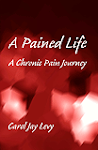
"Fascinating" Stephen S. Hall. writer, N.Y.Times magazine. "Hard to put down." A.C.P.A., American Chronic Pain Association.
Showing posts with label .neurology. Show all posts
Showing posts with label .neurology. Show all posts
Tuesday, September 17, 2013


Saturday, August 31, 2013
A SONG OF TRIGEMINAL NEURALGIA, Homage to the fighters Damnation of the pain.
We who live with trigeminal neuralgia
Soldiers in a war.
Fighting an invisible enemy.
What is the fighting for?
Trigeminal neuralgia,
“the suicide disease”
The worst pain known to man,
Help us, find a cure fast please.
A knife, a lightning bolt
A slash across the face
It comes out of the blue and
Boom - facial pain is now your fate.
Nothing shows where the horror hit,
It lasts for such a short time,
It’s hard to believe such a pain exists
Yet somehow it becomes mine.
Any touch to the pained zone
An invitation to the nerve
A breeze, a wisp of hair
Its hard to stop the moans.
Then to finish it off,
for some the pain is constant,
No one can imagine the horror
Of the beast that walks in our conscious.
For me it’s been 12 brain surgeries,
And not one sibling came
They decided I was a fraud
Maybe because they couldn't see the pain.
Dr. Jewell Osterhom,
the first one to enter my brain
cut out a bunch of vessels
he found that were to blame.
The next surgeon, Peter Jannetta,
He paralyzed my face
When he did his self named surgery,
putting a Teflon pad in place.
The scar tissue left by him
Made all other options dim
Other surgeons tried to fix it
But the benefits were none or slim.
Even when I felt better
The better was quickly gone
The benefit more from staying in -
or good weather all but gone.
The pain always came back.
Vengeance was its goal
Everything I had or wanted
The pain and Dr. Jannetta stole.
Finally Dr. Barolat offered
Something I found unpalatable
But finally being choiceless
the choice was to be malleable.
I let him put inside me
some implants and a battery
None of them were lovely,
but the benefits from them godly.
Trigeminal neuralgia,
the suicide disease.
It makes us make choices
None of them serene.
For those of us who have found solace
In drugs, operations or ‘things’
There can be no finer feeling
Then when the monster is freed.
This ode I write to tell you
The good, the bad, the need
In hopes that it can help
those who suffer from this beast.
Even when things go wrong
The hope can still be there.
For you never know whats waiting
Right beyond the air.
Trigeminal neuralgia
A name that rhymes with nothing
An ogre that besets us
Our fight not one of bluffing.
I salute all of the sufferers
I know the abomination
The fight to be rid of this pain
A courage, a struggle brazen.
Here’s to you, all of my fellow fighters. against trigeminal neuralgia and all chronic pain.
Soldiers in a war.
Fighting an invisible enemy.
What is the fighting for?
Trigeminal neuralgia,
“the suicide disease”
The worst pain known to man,
Help us, find a cure fast please.
A knife, a lightning bolt
A slash across the face
It comes out of the blue and
Boom - facial pain is now your fate.
Nothing shows where the horror hit,
It lasts for such a short time,
It’s hard to believe such a pain exists
Yet somehow it becomes mine.
Any touch to the pained zone
An invitation to the nerve
A breeze, a wisp of hair
Its hard to stop the moans.
Then to finish it off,
for some the pain is constant,
No one can imagine the horror
Of the beast that walks in our conscious.
For me it’s been 12 brain surgeries,
And not one sibling came
They decided I was a fraud
Maybe because they couldn't see the pain.
Dr. Jewell Osterhom,
the first one to enter my brain
cut out a bunch of vessels
he found that were to blame.
The next surgeon, Peter Jannetta,
He paralyzed my face
When he did his self named surgery,
putting a Teflon pad in place.
The scar tissue left by him
Made all other options dim
Other surgeons tried to fix it
But the benefits were none or slim.
Even when I felt better
The better was quickly gone
The benefit more from staying in -
or good weather all but gone.
The pain always came back.
Vengeance was its goal
Everything I had or wanted
The pain and Dr. Jannetta stole.
Finally Dr. Barolat offered
Something I found unpalatable
But finally being choiceless
the choice was to be malleable.
I let him put inside me
some implants and a battery
None of them were lovely,
but the benefits from them godly.
Trigeminal neuralgia,
the suicide disease.
It makes us make choices
None of them serene.
For those of us who have found solace
In drugs, operations or ‘things’
There can be no finer feeling
Then when the monster is freed.
This ode I write to tell you
The good, the bad, the need
In hopes that it can help
those who suffer from this beast.
Even when things go wrong
The hope can still be there.
For you never know whats waiting
Right beyond the air.
Trigeminal neuralgia
A name that rhymes with nothing
An ogre that besets us
Our fight not one of bluffing.
I salute all of the sufferers
I know the abomination
The fight to be rid of this pain
A courage, a struggle brazen.
Here’s to you, all of my fellow fighters. against trigeminal neuralgia and all chronic pain.
Tuesday, November 15, 2011
A PAINED EXPRESSION.
I noticed a person at church a few Sundays ago. His expression was one of pain; the hard seat, other things on his mind, wanting to be anywhere else then there or who knows what. Immediately the expression, a pained expression, came to mind. And my mind wandered to the meaning of that phrase.
I think I often wear a pained expression even when I do not want anyone to know I am in physical pain. The body often belies what you want to keep locked away.
I do not want people to know I am in pain; it puts them off, they do not know what to say, it makes them uncomfortable. I think my family history, of being treated very poorly when I was ill or in pain, adds to that need to keep it tucked within myself.
The last church I was in was very small. When I joined the choir there were only 12 of us.
At that time I had all of the pain, the touch pain, the constant, and the triggered as well as the eye pain.
Every rehearsal I started out okay, the pain manageable. I smiled and was nice, even jokey. I joined in the conversations, laughed at other's jokes. And then, 20 minutes, a half hour into it I withdrew, completely. I looked at no one, my head was down, I pretty much ignored the music. The pain was overwhelming but I thought I was keeping it secret.
"Did we do something to you?" asked one of the members. "Are you mad at us?"
I was dumbfounded. Why would they think that? When I asked the answer was simple. "Your head is down and you stop talking or even acting like part of the group." Oh. My whole body had taken on a pained expression whether I wanted to show pain or not. Once I explained everyone was very kind and sweet about it. The pain was no longer an issue. It was okay to be in pain.
But I think about it now when I wonder why I have so much trouble making friends, being included. I know people see that my eye usually looks 'off' but - Do I wear a pained expression? Do I look like I am in physical pain? Do I look like I am unpleasant? Do I wear the corners of my mouth turned down or my jaw clenched? Can people tell the difference between a pained expression; I am in pain vs. a pained expression, I am unhappy, unpleasant, sad, etc? And does the reason for the expression make a difference?
It definitely does not in the beginning, after all how would someone know the why? Maybe after folks get to know you a constant pained expression from indifference or disinterest, etc., sends them away.
The question is, after they get to know you, does an expression of real physical pain, the constant of real physical pain, is that a turnoff too?
I think I often wear a pained expression even when I do not want anyone to know I am in physical pain. The body often belies what you want to keep locked away.
I do not want people to know I am in pain; it puts them off, they do not know what to say, it makes them uncomfortable. I think my family history, of being treated very poorly when I was ill or in pain, adds to that need to keep it tucked within myself.
The last church I was in was very small. When I joined the choir there were only 12 of us.
At that time I had all of the pain, the touch pain, the constant, and the triggered as well as the eye pain.
Every rehearsal I started out okay, the pain manageable. I smiled and was nice, even jokey. I joined in the conversations, laughed at other's jokes. And then, 20 minutes, a half hour into it I withdrew, completely. I looked at no one, my head was down, I pretty much ignored the music. The pain was overwhelming but I thought I was keeping it secret.
"Did we do something to you?" asked one of the members. "Are you mad at us?"
I was dumbfounded. Why would they think that? When I asked the answer was simple. "Your head is down and you stop talking or even acting like part of the group." Oh. My whole body had taken on a pained expression whether I wanted to show pain or not. Once I explained everyone was very kind and sweet about it. The pain was no longer an issue. It was okay to be in pain.
But I think about it now when I wonder why I have so much trouble making friends, being included. I know people see that my eye usually looks 'off' but - Do I wear a pained expression? Do I look like I am in physical pain? Do I look like I am unpleasant? Do I wear the corners of my mouth turned down or my jaw clenched? Can people tell the difference between a pained expression; I am in pain vs. a pained expression, I am unhappy, unpleasant, sad, etc? And does the reason for the expression make a difference?
It definitely does not in the beginning, after all how would someone know the why? Maybe after folks get to know you a constant pained expression from indifference or disinterest, etc., sends them away.
The question is, after they get to know you, does an expression of real physical pain, the constant of real physical pain, is that a turnoff too?
Monday, October 10, 2011
What am I?
I was at the Occupy Philadelphia rally last week. A reporter, Sara, and I talked, and she decided she would interview me. (She was from CNN. I don't know if the interview was shown or not.)
The camerawoman turned on the camera and Sara took out her reporter's notebook.
"What is your name?" I answered that one easily.
Then the question that always stumps me. (I think I have written about this before, either here or at the old Women In Pain Awareness site so please bear with me if I am repeating myself somewhat. Age, you know, is my joke but it is more what my friend always says of me, "You never learn your lesson.")
"What do you do?"
I thought for a second. Did my usual hemming and hawing dance, more inside my head then vocally, I hope.
Then I said "I am disabled."
I hate saying that. Those of us with pain or other invisible disabilities fear the look that we sometimes get, the one that says 'Oh yeah, sure, I see how disabled you are. (In fact there have been 2 comments recently under the post Pain vs. Cancer. The commenter lets me know very loudly how untrue chronic pain is as a disease and how we are all nothing but drug users, lazy, etc. - Please feel free to reply to him.) Sara had no response to that, nor did I see disbelief in her face (but she is a reporter, trained not to show reactions.)
I stayed at the rally as long as I could then took the train to get back to my house. As I rode along, I thought about the interview. And emotionally kicked myself.
An online friend and fellow pain sufferer said, a long time ago, you (meaning me and disabled others in general) are much more than your disability. You are mothers and daughters, writers and singers, students and teachers. Disability is a small part of who you are as a person.
She was right. I should have said I was an author, or hypnotherapist, or teacher.
I am published and even though I rarely see clients or teach, I am and do both of those as well.
My life revolves around the things I cannot do. The things I can do fade in the background.
Maybe by letting them fade I make myself less, not only to the world but to myself. And maybe that is one of the biggest disservices I do to me.
The camerawoman turned on the camera and Sara took out her reporter's notebook.
"What is your name?" I answered that one easily.
Then the question that always stumps me. (I think I have written about this before, either here or at the old Women In Pain Awareness site so please bear with me if I am repeating myself somewhat. Age, you know, is my joke but it is more what my friend always says of me, "You never learn your lesson.")
"What do you do?"
I thought for a second. Did my usual hemming and hawing dance, more inside my head then vocally, I hope.
Then I said "I am disabled."
I hate saying that. Those of us with pain or other invisible disabilities fear the look that we sometimes get, the one that says 'Oh yeah, sure, I see how disabled you are. (In fact there have been 2 comments recently under the post Pain vs. Cancer. The commenter lets me know very loudly how untrue chronic pain is as a disease and how we are all nothing but drug users, lazy, etc. - Please feel free to reply to him.) Sara had no response to that, nor did I see disbelief in her face (but she is a reporter, trained not to show reactions.)
I stayed at the rally as long as I could then took the train to get back to my house. As I rode along, I thought about the interview. And emotionally kicked myself.
An online friend and fellow pain sufferer said, a long time ago, you (meaning me and disabled others in general) are much more than your disability. You are mothers and daughters, writers and singers, students and teachers. Disability is a small part of who you are as a person.
She was right. I should have said I was an author, or hypnotherapist, or teacher.
I am published and even though I rarely see clients or teach, I am and do both of those as well.
My life revolves around the things I cannot do. The things I can do fade in the background.
Maybe by letting them fade I make myself less, not only to the world but to myself. And maybe that is one of the biggest disservices I do to me.
Subscribe to:
Posts (Atom)