BKQ4UV4G2AQ
My book.
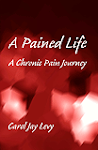
"Fascinating" Stephen S. Hall. writer, N.Y.Times magazine. "Hard to put down." A.C.P.A., American Chronic Pain Association.
Friday, August 10, 2012


Monday, August 6, 2012
WORDS, WORDS, WORDS.
We often do not think of the effect of our words. especially when they are written or said to someone who is peripheral to our lives.
One day, when I was about 24, I was in my living room thinking about making acting and singing my career, of making the gigantic step of moving to NYC. Looking around the room I happened to notice my high school yearbook sitting in the bookcase.
I took it out and started reading the little things people had written to, and about me, in their remember me messages.
I was particularly taken by the words written by Susie (pseudonym). We knew each other slightly, mostly from choir where I was known as the person most afraid of our choir director.
She wrote about my fear, how she thought my body would not be able to take the shaking each time we had a "purge". (Mr, ( ) made each of us, in turn, sing our voice part of one of the pieces of music. Afraid of him, petrified I would make a mistake, I sounded more like a lamb to slaughter, my shaking voice almost baaing.) "Remember the purges? I'll never forget the one where you really sang unbelievably." (That day, for some reason, I overcame the fear. I sang with no terror. The other choir members actually applauded when I was done.)
"I hope", she wrote "that kind of thing continues forever because if you show everyone what you showed him you'll make it anywhere."
Her words reverberated and stayed in my mind and brain. "You can do it" they reminded me, a version of the little engine that could.
I saw Susie a few years later, by happenstance.
I reminded her who I was and we shared some small talk. I told her she had a very big effect on my life because of the words she had written. She looked at me with a kind of strange expression, a "are you a little off?" moue of her lips, the lifting of a brow.
"This is somewhat what you wrote." I said summarizing it for her. "You wrote about showing everyone what I showed Mr ( ) that day of the purge. No one ever said that to me before, no one ever gave me the kind of encouragement, that the possibilities are there. I really want to thank you for that."
Her expression indicated she thought it was a strange thing for me to say, or maybe just that I was strange. We said our good byes. I have never seen her again.
It was, for her, a little thing. Maybe she grew up in a house where an "atta girl" and pat on the back was common. That was not the case for me. My impression was my remembering it, much less taking it to heart, was way beyond what she intended. She wrote what she thought at the time and never gave it another thought. I read what she wrote at the time, and gave it a lot of thought.
Words can hurt. Words can heal. They can encourage, or discourage. They can linger in the air, between people, reminders of their hurtfulness. They can settle in your heart and sing to you.
The little things, the thoughtful, and thoughtless, really do mean a lot.
I think of Susie's words now and again. They remind me that what I say may take only a few seconds but what you hear may last forever.
One day, when I was about 24, I was in my living room thinking about making acting and singing my career, of making the gigantic step of moving to NYC. Looking around the room I happened to notice my high school yearbook sitting in the bookcase.
I took it out and started reading the little things people had written to, and about me, in their remember me messages.
I was particularly taken by the words written by Susie (pseudonym). We knew each other slightly, mostly from choir where I was known as the person most afraid of our choir director.
She wrote about my fear, how she thought my body would not be able to take the shaking each time we had a "purge". (Mr, ( ) made each of us, in turn, sing our voice part of one of the pieces of music. Afraid of him, petrified I would make a mistake, I sounded more like a lamb to slaughter, my shaking voice almost baaing.) "Remember the purges? I'll never forget the one where you really sang unbelievably." (That day, for some reason, I overcame the fear. I sang with no terror. The other choir members actually applauded when I was done.)
"I hope", she wrote "that kind of thing continues forever because if you show everyone what you showed him you'll make it anywhere."
Her words reverberated and stayed in my mind and brain. "You can do it" they reminded me, a version of the little engine that could.
I saw Susie a few years later, by happenstance.
I reminded her who I was and we shared some small talk. I told her she had a very big effect on my life because of the words she had written. She looked at me with a kind of strange expression, a "are you a little off?" moue of her lips, the lifting of a brow.
"This is somewhat what you wrote." I said summarizing it for her. "You wrote about showing everyone what I showed Mr ( ) that day of the purge. No one ever said that to me before, no one ever gave me the kind of encouragement, that the possibilities are there. I really want to thank you for that."
Her expression indicated she thought it was a strange thing for me to say, or maybe just that I was strange. We said our good byes. I have never seen her again.
It was, for her, a little thing. Maybe she grew up in a house where an "atta girl" and pat on the back was common. That was not the case for me. My impression was my remembering it, much less taking it to heart, was way beyond what she intended. She wrote what she thought at the time and never gave it another thought. I read what she wrote at the time, and gave it a lot of thought.
Words can hurt. Words can heal. They can encourage, or discourage. They can linger in the air, between people, reminders of their hurtfulness. They can settle in your heart and sing to you.
The little things, the thoughtful, and thoughtless, really do mean a lot.
I think of Susie's words now and again. They remind me that what I say may take only a few seconds but what you hear may last forever.
Sunday, July 29, 2012
THE CATCH 22 OF CHRONIC PAIN.
Someone wrote a comment in a support group about having to go to the ER because her pain was out of control. She was begging for morphine. At the same time she was telling them how much she hated the drug, taking it, and how it made her feel.
This, to me, is part of the bizarreness that is chronic intractable pain and it's treatment. We hate what helps us but we need it, a catch 22 that makes some docs question how bad our pain is.
Does this person really hate taking the opiates? If so, why is she asking, not just asking, begging, for it? If her pain is so bad why does she continue telling us how much she hates the drug? Is this an addict trying to convince me she has pain, trying to scam me, or is she truly a person in intractable pain who needs my help, in the form of the narcotic, even if it is something abhorrent to her?
It is the same struggle some of us find when we go to the doc.
I feel awful, the pain very bad, my need for his help great. I want to look good, for him to see me as someone who speaks well and looks good, who can adequately explain my situation and understand his instructions.
I feel awful, the pain very bad, my need for his help great. I want to look good but my body is not doing what I want. My hair is brushed but still unruly, my clothes somewhat wrinkled: it is too hard to use the iron. I can still explain myself, my pain, my symptoms, my problems. I can still understand his instructions.
In both instances there is a minefield: she looks good, how bad could her pain really be? She looks bad, she must be depressed.
The drug conundrum: she hates the drugs but she wants them. Is she an addict or someone honestly in severe debilitating pain?
I write about this now and again - the issue of "proof". How do you prove an invisible?
Bringing a diary or journal with you where the doctor can see what your daily struggle looks like may help. It is no longer just words without context but a calender, the days noted by how bad your pain was that day, what you could not (or could) do that day.
If you have someone who can come to the appointment with you, we should not need a 'witness' to our struggle but another voice cannot hurt, makes the result(s) of the pain more visible, because it is seen by another.
Ironically the facial paralysis from the medical malpractice is a benefit to me, I have a 'visible' sign, they see the damage, the assumption is made, something is wrong in her face. The lids of the bad eye are often swollen. They ask not "Do you have pain?" but "How bad is your pain?"
I hate how I look. I made the video for the Jennifer Grey CNN interview. I first did it without my sunglasses. I had no idea how I looked to others. I honestly thought my face looked close to normal. I was sickened by what I saw. Even wearing sunglasses the paralysis was obvious. The still photo was not much better.
But the paralysis is like the morphine, I hate the paralysis, the person who was begging for the morphine hates it, but, in both cases, it is something that benefits us.
It is not love/hate - there is no 'love' involved, but the dichotomy that we face is just one more aspect, and problem, of life with chronic pain.
This, to me, is part of the bizarreness that is chronic intractable pain and it's treatment. We hate what helps us but we need it, a catch 22 that makes some docs question how bad our pain is.
Does this person really hate taking the opiates? If so, why is she asking, not just asking, begging, for it? If her pain is so bad why does she continue telling us how much she hates the drug? Is this an addict trying to convince me she has pain, trying to scam me, or is she truly a person in intractable pain who needs my help, in the form of the narcotic, even if it is something abhorrent to her?
It is the same struggle some of us find when we go to the doc.
I feel awful, the pain very bad, my need for his help great. I want to look good, for him to see me as someone who speaks well and looks good, who can adequately explain my situation and understand his instructions.
I feel awful, the pain very bad, my need for his help great. I want to look good but my body is not doing what I want. My hair is brushed but still unruly, my clothes somewhat wrinkled: it is too hard to use the iron. I can still explain myself, my pain, my symptoms, my problems. I can still understand his instructions.
In both instances there is a minefield: she looks good, how bad could her pain really be? She looks bad, she must be depressed.
The drug conundrum: she hates the drugs but she wants them. Is she an addict or someone honestly in severe debilitating pain?
I write about this now and again - the issue of "proof". How do you prove an invisible?
Bringing a diary or journal with you where the doctor can see what your daily struggle looks like may help. It is no longer just words without context but a calender, the days noted by how bad your pain was that day, what you could not (or could) do that day.
If you have someone who can come to the appointment with you, we should not need a 'witness' to our struggle but another voice cannot hurt, makes the result(s) of the pain more visible, because it is seen by another.
Ironically the facial paralysis from the medical malpractice is a benefit to me, I have a 'visible' sign, they see the damage, the assumption is made, something is wrong in her face. The lids of the bad eye are often swollen. They ask not "Do you have pain?" but "How bad is your pain?"
I hate how I look. I made the video for the Jennifer Grey CNN interview. I first did it without my sunglasses. I had no idea how I looked to others. I honestly thought my face looked close to normal. I was sickened by what I saw. Even wearing sunglasses the paralysis was obvious. The still photo was not much better.
But the paralysis is like the morphine, I hate the paralysis, the person who was begging for the morphine hates it, but, in both cases, it is something that benefits us.
It is not love/hate - there is no 'love' involved, but the dichotomy that we face is just one more aspect, and problem, of life with chronic pain.
Monday, July 23, 2012
HOPE AND FEAR ARE BROTHERS
I read that line in a book. I always think of fear as something negative, even when it keeps you from doing something that may cause you harm.
Hope is always a positive word, a concept of good things that may happen, that are devoutly to be wished.
Many times I have said "Don't let your pain make the decisions for you." especially when you are considering treatments, options, and surgery in particular.
Maybe hope too should be silenced when you need to make the big decisions: I hope therefore it will (help, work, fix me).
How do we stay grounded? The pain is often so bad it is hard not to let it become the voice of reason; when by its presence reason is often absent.
My implant remains in me even though it failed a few months ago. I have written about it before.
Last week I called the company, for the second time, that makes it, after having seen my neurosurgeon once, talked with the neurosurg. who had placed it and lives a number of states away, and 2 representatives from the company that are trained to check the unit for problems. Everyone said "I'm sorry, there is nothing else to do." However...
The woman I last spoke with gave me different information then everyone else. Some of it made sense: maybe something is wrong with the battery that powers the unit. It is possible something is not registering when it is checked." I thought it was a good idea. I also thought it was a good idea when I first suggested it to the surgeon who said "No. It is fine."
She also gave me slightly different information about the wire connecting leads and how they could be changed without removing the unit. That was not the explanation I had previously gotten.
So hope comes in the door again. Fear resides here too.
The fear of removing the unit when it may be fixable is based on hope, hope that it can still be fixed.
Is there a point where the two need to be blocked? Can they exist alone or is it always the pair when decisions need to be made?
I do not know. Sometimes I do think my unfettered hope is a negative thing, but without hope what else is there?
I put the question out to you.
My reality, our reality of pain, is it inconsistent with hope, must it always be paired with fear?
Hope is always a positive word, a concept of good things that may happen, that are devoutly to be wished.
Many times I have said "Don't let your pain make the decisions for you." especially when you are considering treatments, options, and surgery in particular.
Maybe hope too should be silenced when you need to make the big decisions: I hope therefore it will (help, work, fix me).
How do we stay grounded? The pain is often so bad it is hard not to let it become the voice of reason; when by its presence reason is often absent.
My implant remains in me even though it failed a few months ago. I have written about it before.
Last week I called the company, for the second time, that makes it, after having seen my neurosurgeon once, talked with the neurosurg. who had placed it and lives a number of states away, and 2 representatives from the company that are trained to check the unit for problems. Everyone said "I'm sorry, there is nothing else to do." However...
The woman I last spoke with gave me different information then everyone else. Some of it made sense: maybe something is wrong with the battery that powers the unit. It is possible something is not registering when it is checked." I thought it was a good idea. I also thought it was a good idea when I first suggested it to the surgeon who said "No. It is fine."
She also gave me slightly different information about the wire connecting leads and how they could be changed without removing the unit. That was not the explanation I had previously gotten.
So hope comes in the door again. Fear resides here too.
The fear of removing the unit when it may be fixable is based on hope, hope that it can still be fixed.
Is there a point where the two need to be blocked? Can they exist alone or is it always the pair when decisions need to be made?
I do not know. Sometimes I do think my unfettered hope is a negative thing, but without hope what else is there?
I put the question out to you.
My reality, our reality of pain, is it inconsistent with hope, must it always be paired with fear?
Wednesday, July 18, 2012
JENNIFER GREY TO TALK ABOUT CHRONIC PAIN (maybe). Please click.
(I am mortified by my picture, just want to get that out of the way)
Jennifer Grey is the spokesperson for PARTNERS AGAINST PAIN>
CNNIreport has a site for questions for her.
I have put on my picture and question asking her how she will be spreading the word about chronic pain. The more clicks, favorited, shares and recommendations (takes a few seconds just to click on those boxes)the higher up I go on the page and the better the chance the question will get to her.
Here is the click: http://ireport.cnn.com/docs/DOC-812016
http://ireport.cnn.com/docs/DOC-812016
Thanks to all of you who click.
Jennifer Grey is the spokesperson for PARTNERS AGAINST PAIN>
CNNIreport has a site for questions for her.
I have put on my picture and question asking her how she will be spreading the word about chronic pain. The more clicks, favorited, shares and recommendations (takes a few seconds just to click on those boxes)the higher up I go on the page and the better the chance the question will get to her.
Here is the click: http://ireport.cnn.com/docs/DOC-812016
http://ireport.cnn.com/docs/DOC-812016
Thanks to all of you who click.
Sunday, July 15, 2012
WHERE SHOULD I SIT?
Choir is over for the summer. If I go to church I have to sit with the congregation. My choice of seat is a problem. I want to sit with others but the best place, in terms of the pain, is in the back, on the left side where less people tend to sit.
Sitting there last week, I started to think about my choice of area. After all I complain about being alone and yet my choice of seating invariably ends up with my sitting by myself.
I pick a pew that is not parallel to a window. That keeps the light from coming into my eye which is extremely painful. The windows and way the seats are situated make sitting towards the back the best way to accomplish this. If I sit on the right side of the church there is a much better chance the sun will beam in towards me, even though it comes from across the room. Okay the left side still makes sense.
I sit in the back. Maybe I could sit up closer, even a pew or two.
Sally asked me to come sit with them. "You shouldn't be sitting my yourself." She doesn;t know all the intricasies (well, most don't, I think) that go into little decisions like where to sit and I did not want to go into it (and time did not allow it anyway) so I moved over to sit with her and her family.
It was not as bad as I expected, and also not a bright sunshining into the room kind of day. I also started to notice that I mostly kept my head down and tried not to watch what was going on in the front. Nevertheless I wondered if I had been too fearful of my sitting choice.
No. I was not.
The lights from the ceiling are in the center of the sanctuary, along the line of the pews, left and right side. There are none on the aisle sides. The farther away I sit from the center, the less brightness there is.
It hurts my eye more to turn them to the left then to the right. I am not sure why, maybe something to do with the pulling sensation. The left sided pew makes it easier to look when the minister is on the right side of the podium.
Sitting far back keeps me farther away from the lit candles. The movement of the flame hurts my eye. Not in the back it doesn't.
I do wear my sunglasses in the sanctuary but I do not when I go down to fellowship. It is just as bright, in fact brighter, down there but I have to use my eyes a lot less. I talk to one, maybe 2 people at a time. They are right in front of me, it is not necessary to keep moving my eyes. I do not have to do any reading like I do during the service, wanting to sing the hymns and say the congregational prayer.
There is even more minutiae involved with the choice but you get the point.
How much struggle do you go through to make the decisions that allow you to get through the day, to do the one, two, or many things you accomplish each day?
People with chronic pain deserve gigantic pats on the back that rarely come. Our struggles often look like anything but.
Bill Clinton used to say "I feel your pain."
Maybe we make it too easy for others to not feel it; by denying it or acting like what we are doing requires nothing more then simply doing it.
Sitting there last week, I started to think about my choice of area. After all I complain about being alone and yet my choice of seating invariably ends up with my sitting by myself.
I pick a pew that is not parallel to a window. That keeps the light from coming into my eye which is extremely painful. The windows and way the seats are situated make sitting towards the back the best way to accomplish this. If I sit on the right side of the church there is a much better chance the sun will beam in towards me, even though it comes from across the room. Okay the left side still makes sense.
I sit in the back. Maybe I could sit up closer, even a pew or two.
Sally asked me to come sit with them. "You shouldn't be sitting my yourself." She doesn;t know all the intricasies (well, most don't, I think) that go into little decisions like where to sit and I did not want to go into it (and time did not allow it anyway) so I moved over to sit with her and her family.
It was not as bad as I expected, and also not a bright sunshining into the room kind of day. I also started to notice that I mostly kept my head down and tried not to watch what was going on in the front. Nevertheless I wondered if I had been too fearful of my sitting choice.
No. I was not.
The lights from the ceiling are in the center of the sanctuary, along the line of the pews, left and right side. There are none on the aisle sides. The farther away I sit from the center, the less brightness there is.
It hurts my eye more to turn them to the left then to the right. I am not sure why, maybe something to do with the pulling sensation. The left sided pew makes it easier to look when the minister is on the right side of the podium.
Sitting far back keeps me farther away from the lit candles. The movement of the flame hurts my eye. Not in the back it doesn't.
I do wear my sunglasses in the sanctuary but I do not when I go down to fellowship. It is just as bright, in fact brighter, down there but I have to use my eyes a lot less. I talk to one, maybe 2 people at a time. They are right in front of me, it is not necessary to keep moving my eyes. I do not have to do any reading like I do during the service, wanting to sing the hymns and say the congregational prayer.
There is even more minutiae involved with the choice but you get the point.
How much struggle do you go through to make the decisions that allow you to get through the day, to do the one, two, or many things you accomplish each day?
People with chronic pain deserve gigantic pats on the back that rarely come. Our struggles often look like anything but.
Bill Clinton used to say "I feel your pain."
Maybe we make it too easy for others to not feel it; by denying it or acting like what we are doing requires nothing more then simply doing it.
Tuesday, July 10, 2012
WHERE'S THE REST OF THE CONVERSATION?
I turned on a morning show just as a doctor and interviewer were ending thier segment on prescription/opiod drug abuse. It was only in the last 2 sentences that the question was asked about chronic pain vs. acute. The doctor responded that opiods were given when someone has a sprained ankle, which was not appropriate. Chronic pain was more like with migraines or chronic lower back pain. Then the segment ended.
I see article after article on TV and the internet. Magazines have opiod abuse as their cover stories.
Sometimes the author will differentiate between acute pain and chronic pain. It seems it is more rare when they have some of us with chronic pain talk about the pain, its effect on our lives, and how we feel about taking narcotics for the pain.
What they tend to miss, and I think I may well be speaking for a majority of us, is that we hate these drugs. We do not like the way they make us feel. I hate the codeine headache I get when I have to take an extra pill, I hate how dry my mouth always is, I abhor the feeling of groggyness, I cannot stand that it does not help much, sometimes it feels not at all, but, but that is all there is.
I can hear people replying "Then don't take it." After all if I am not sure it is helping why would I take something I say I hate?
I will tell you why. I continue to take it because it is the only time I feel like I am exercising some power over the pain, that there is something I can do to help myself.
I would prefer it not be a narcotic. I have been given everything from the smallest dose of codeine to morphine and even tincture of opium. Nothing has had much success. Very rarely I will ask for something stronger but I never stay on it. The side effects, for me, are worse, and the gain, nothing more then what the codeine gives me. And the codeine now and again does seem to help. I am not going to stop taking something that may, at some level, and at one time or another, actually help.
Go to the support groups or chronic pain sites and read the stories of those who have CRPS, MS, RA, other chronic pain diseases. It is heartwrenching to see what the pain does to people. It is even more painful to see what happens when medication is withheld or reduced because their doctors, or the DEA, is afraid they may abuse the drug. Drugs which, for the vast majority of those in chronic pain, do not get abused. We work to be able to think the best we can, do the most we can, over medication only dulls this.
The drugs if they help are necessary. Why would someone sell medication that may be all that allows them to get out of bed in the morning or if they are really lucky allows you to work?
We are the rest of the conversation. Somehow we need to get our voices heard.
I see article after article on TV and the internet. Magazines have opiod abuse as their cover stories.
Sometimes the author will differentiate between acute pain and chronic pain. It seems it is more rare when they have some of us with chronic pain talk about the pain, its effect on our lives, and how we feel about taking narcotics for the pain.
What they tend to miss, and I think I may well be speaking for a majority of us, is that we hate these drugs. We do not like the way they make us feel. I hate the codeine headache I get when I have to take an extra pill, I hate how dry my mouth always is, I abhor the feeling of groggyness, I cannot stand that it does not help much, sometimes it feels not at all, but, but that is all there is.
I can hear people replying "Then don't take it." After all if I am not sure it is helping why would I take something I say I hate?
I will tell you why. I continue to take it because it is the only time I feel like I am exercising some power over the pain, that there is something I can do to help myself.
I would prefer it not be a narcotic. I have been given everything from the smallest dose of codeine to morphine and even tincture of opium. Nothing has had much success. Very rarely I will ask for something stronger but I never stay on it. The side effects, for me, are worse, and the gain, nothing more then what the codeine gives me. And the codeine now and again does seem to help. I am not going to stop taking something that may, at some level, and at one time or another, actually help.
Go to the support groups or chronic pain sites and read the stories of those who have CRPS, MS, RA, other chronic pain diseases. It is heartwrenching to see what the pain does to people. It is even more painful to see what happens when medication is withheld or reduced because their doctors, or the DEA, is afraid they may abuse the drug. Drugs which, for the vast majority of those in chronic pain, do not get abused. We work to be able to think the best we can, do the most we can, over medication only dulls this.
The drugs if they help are necessary. Why would someone sell medication that may be all that allows them to get out of bed in the morning or if they are really lucky allows you to work?
We are the rest of the conversation. Somehow we need to get our voices heard.
Subscribe to:
Posts (Atom)