We learned a song in church chorus the other night. Part of the verse went "You have given to me all the love I have found, I want to thank you Lord."
I like the song and found myself humming it alot, coming back to the words again and again. They rattled around in my mind, The longer I thought about them the angrier and more depressed I felt. "For all the love I have found"? How can I say 'thanks' for that?
My family abandoned me, I have no family of my own (husband, children). I have a sad life history, as a result I have never even had a first love, much less a second or more. That stinks. "Love I have found? Yeah. Right.
Wait a minute. Does it have to be bad? I have not found love so gee, thanks a lot. The people who are supposed to be my family turned their backs on me. I never had that high school or college sweetheart. I have no family to lovingly take care of and to lovingly take care of me. (Heck, on many days I would take unlovingly - but only in theory.)
For the love I have found -
My nephew loves me, and I him, but we live far apart. It is a relationship forged only a few years ago. We email alot, sometimes once, even twice a day. But he is not here in front of me, to hug and talk with, to look at eye to eye, expression to expression. That does not dilute the love. That does not make it absent.
My best friend moved away. I think we can say we love each other although it is the same as with my nephew. It is not in the here and now, right in front of you, so near it is touchable. Does that negate it? Of course not.
Even my cats. I love my cats. They're cats. They have food and litter and warmth, and even cuddles; at their sole discretion. It may not be doglove but I think it is still a form of love.
It is not a life of hollywood love and relationships, of Jane Austen and Little Women family and romance, but there is love.
It is so easy to see things in the negative, in the absent. Turn it around, inside out and upside down, and it may turn out the positive was there - in front of you - all the time.
My book.
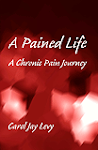
"Fascinating" Stephen S. Hall. writer, N.Y.Times magazine. "Hard to put down." A.C.P.A., American Chronic Pain Association.
Friday, January 20, 2012


Wednesday, January 18, 2012
ERRORS IN THINKING. (Mine is missing from the list)
This list comes from cognitve therapy.
Many of us in pain are prone to one, some, or even all of them.
Cognitive therapy believes recognizing these 'mistakes' helps you to overcome the habit of the erroneous thinking.
All or nothing - everything is black or white, One mistake and you feel like a complete failure. The treatment did not work. It is me, I am the failure, not the treatment.
Overgeneralization - If it happened once, it will always happen. If one treatment did not work, none will. Ever.
Mental filter - filtering out the positive. My ( ) was nasty to me about the pain. You ignore the people who have been kind and understanding.
Disqualifying the positive - Hearing the negative even in a positive statement. "You look nice today." Instead of accepting it you think they mean "I don't look like I have pain and he does not believe me.
Jumping to conclusions, Fortune telling - Imagining something bad: the pain will only get worse, I will become completely disabled and unable to do anything.
Mind reading - Someone ignores you. Immediately you think 'they do not like me.', or 'they think I am a malingerer or hypochondriac'.
Magnification, minimization - making things too big, or too small. I have a new symptom or pain. It is all you can concentrate on, making it bigger and bigger in your mind. Or, I have a new symptom or pain. My research or knowledge lets me know I need to have it checked out but I am going to ignore it because I know it is nothing.
Emotional Reasoning - Emotions are reality - I feel like no one believes me, therefore I am a fake, my pain is not real.
Shoulding - I should go to the party. I should be able to (tie my shoes, walk to the store, etc.) When you know you cannot do it you feel guilty, bad, angry, and other negative emotions, despite the fact that this is something you truly could not do.
Labeling and mislabeling - Big overgeneralization, calling yourself names. The pain stops me from doing ( ). Since I cannot I am a loser. I call myself that when thinking about who I am.
Personalization - deciding that you are responsible for something that you did not do. The doctor did not give me a name for what I have or a treatment, I must be a lousy patient. It is my fault she could not help me.
I am a practitioner of way too many of these.
Strangely, although I think I am a pessimistic person, mostly by virtue of my life experiences, I cling to pollyanna thoughts, a number of these 'errors' rolled into one main construct: The first surgery worked so there should be, in fact I know there is, the one thing (meds, surgery) out there that will "fix" me. All or nothing, shoulding, overgeneralization, jumping to conclusions, magnification, emotional reasoning.
As I write these words, I realize my error in thinking has one name. Hope.
Is that an 'error', a mistake?
I often hear, "You need to accept the pain, the disability. It's hard but it would help take you to a place of peace, and centeredness."
Maybe that is true; but I feel like it is the giving up of hope if I accept the pain, accept my situation.
My 'error' is not in the list.
Accepting 2 realities at once - Hope, and the current truth. And knowing one does not cancel out the other.
Many of us in pain are prone to one, some, or even all of them.
Cognitive therapy believes recognizing these 'mistakes' helps you to overcome the habit of the erroneous thinking.
All or nothing - everything is black or white, One mistake and you feel like a complete failure. The treatment did not work. It is me, I am the failure, not the treatment.
Overgeneralization - If it happened once, it will always happen. If one treatment did not work, none will. Ever.
Mental filter - filtering out the positive. My ( ) was nasty to me about the pain. You ignore the people who have been kind and understanding.
Disqualifying the positive - Hearing the negative even in a positive statement. "You look nice today." Instead of accepting it you think they mean "I don't look like I have pain and he does not believe me.
Jumping to conclusions, Fortune telling - Imagining something bad: the pain will only get worse, I will become completely disabled and unable to do anything.
Mind reading - Someone ignores you. Immediately you think 'they do not like me.', or 'they think I am a malingerer or hypochondriac'.
Magnification, minimization - making things too big, or too small. I have a new symptom or pain. It is all you can concentrate on, making it bigger and bigger in your mind. Or, I have a new symptom or pain. My research or knowledge lets me know I need to have it checked out but I am going to ignore it because I know it is nothing.
Emotional Reasoning - Emotions are reality - I feel like no one believes me, therefore I am a fake, my pain is not real.
Shoulding - I should go to the party. I should be able to (tie my shoes, walk to the store, etc.) When you know you cannot do it you feel guilty, bad, angry, and other negative emotions, despite the fact that this is something you truly could not do.
Labeling and mislabeling - Big overgeneralization, calling yourself names. The pain stops me from doing ( ). Since I cannot I am a loser. I call myself that when thinking about who I am.
Personalization - deciding that you are responsible for something that you did not do. The doctor did not give me a name for what I have or a treatment, I must be a lousy patient. It is my fault she could not help me.
I am a practitioner of way too many of these.
Strangely, although I think I am a pessimistic person, mostly by virtue of my life experiences, I cling to pollyanna thoughts, a number of these 'errors' rolled into one main construct: The first surgery worked so there should be, in fact I know there is, the one thing (meds, surgery) out there that will "fix" me. All or nothing, shoulding, overgeneralization, jumping to conclusions, magnification, emotional reasoning.
As I write these words, I realize my error in thinking has one name. Hope.
Is that an 'error', a mistake?
I often hear, "You need to accept the pain, the disability. It's hard but it would help take you to a place of peace, and centeredness."
Maybe that is true; but I feel like it is the giving up of hope if I accept the pain, accept my situation.
My 'error' is not in the list.
Accepting 2 realities at once - Hope, and the current truth. And knowing one does not cancel out the other.
Monday, January 16, 2012
ONWARD!
I saw the neurosurgeon last week about the problems with my stimulator.
I sat next to the company representative as she spoke on the phone with a company engineer. I could not tell what the other person was saying but Susan's (pseudonym) expression gave me an idea of the the way the conversation went.
Susan: "When I check out her stimulator using the main computer I get numbers that don't make sense."
Engineer: "Hmmm"
Susan: "She had that terrible burst of stimulation a while back and has been afraid of it happening again. "
Engineer: "Hmmm"
Susan: "Since I am getting information when I check it that does not seem to make sense, can you give me an idea what might be wrong or what we should do about it?"
Engineer: "Hmmm"
Susan: "Thank you."
Me to Susan: "So?"
Susan: "He said, 'If it is working, it is working. And if it isn't, it
isn't."
Oh. Okay. That did not put me much further ahead then all the times my questions have been answered with the all-purpose "Idontknow."
"Why do I still have the eye pain? Will the stimulator help? Are there drugs or other treatments? There must be at least one other person who has this eye pain, what do they do?
I know the doctors and surgeons do not enjoy, at least most of them, saying they have no idea how to fix me or why the pain remains. Nevertheless the ubiquitous "Idontknow." is usually there, and very frustrating.
When I had my first implant, in 1986, I was given a main computer that usually only the doctors have. That lets me change a number of the parameters: how fast the stimulation, how wide apart the pulsing, the strength of the stimulation. Because I can program it myself I am trying new combinations I have never tried before. One change, making the pulses much more close together, has changed where I feel the stimulation. It may finally be getting to the eye and eyelids, something it has never done before.
This is one of those, "You can turn it up if you want, change what you want because we have no clue of or what might work for you using it." or "Idontknow. Do what you feel okay doing."
It is also what many of us say or feel. "I am used to what I am doing for the pain. It seems to be working so why change it?" (or for me: "I am not sure it is helping but in case it is I do not want to make any big change.")
A few months ago, when out of the blue I had this terrible surge of stimulation, so strong it scared me; enough that I was afraid to have the unit on for more then the minutest of stimulation, I was afraid to increase it, at all. I did not know if I would ever have the nerve to turn it higher, or get a new one put in if I had to.
But.
Now I have made the 'big change" I feel okay. I can feel the tingling; but it is not bad and should go away with time.
I have to admit even though I seem fine, I am afraid of it. When you have one of these implants you are supposed to always carry a magnet with you. This lets you turn it off immediately, in case of trouble. (You hold the magnet up to the battery and it turns off the entire unit.) I stopped carrying mine years ago. Now I never leave home without it. It is my 'just in case' talisman.
I held onto the tried and true and known to me treatment while fearing to make any changes.
It looks like the change(s) I made may help. Sometimes as fearful as it feels, it is necessary to brave the fright and forge ahead. You never know if the right treatment, drug, even surgery, may be right around the corner.
Gritting your teeth and letting go. Sometimes the best plan of all.
I sat next to the company representative as she spoke on the phone with a company engineer. I could not tell what the other person was saying but Susan's (pseudonym) expression gave me an idea of the the way the conversation went.
Susan: "When I check out her stimulator using the main computer I get numbers that don't make sense."
Engineer: "Hmmm"
Susan: "She had that terrible burst of stimulation a while back and has been afraid of it happening again. "
Engineer: "Hmmm"
Susan: "Since I am getting information when I check it that does not seem to make sense, can you give me an idea what might be wrong or what we should do about it?"
Engineer: "Hmmm"
Susan: "Thank you."
Me to Susan: "So?"
Susan: "He said, 'If it is working, it is working. And if it isn't, it
isn't."
Oh. Okay. That did not put me much further ahead then all the times my questions have been answered with the all-purpose "Idontknow."
"Why do I still have the eye pain? Will the stimulator help? Are there drugs or other treatments? There must be at least one other person who has this eye pain, what do they do?
I know the doctors and surgeons do not enjoy, at least most of them, saying they have no idea how to fix me or why the pain remains. Nevertheless the ubiquitous "Idontknow." is usually there, and very frustrating.
When I had my first implant, in 1986, I was given a main computer that usually only the doctors have. That lets me change a number of the parameters: how fast the stimulation, how wide apart the pulsing, the strength of the stimulation. Because I can program it myself I am trying new combinations I have never tried before. One change, making the pulses much more close together, has changed where I feel the stimulation. It may finally be getting to the eye and eyelids, something it has never done before.
This is one of those, "You can turn it up if you want, change what you want because we have no clue of or what might work for you using it." or "Idontknow. Do what you feel okay doing."
It is also what many of us say or feel. "I am used to what I am doing for the pain. It seems to be working so why change it?" (or for me: "I am not sure it is helping but in case it is I do not want to make any big change.")
A few months ago, when out of the blue I had this terrible surge of stimulation, so strong it scared me; enough that I was afraid to have the unit on for more then the minutest of stimulation, I was afraid to increase it, at all. I did not know if I would ever have the nerve to turn it higher, or get a new one put in if I had to.
But.
Now I have made the 'big change" I feel okay. I can feel the tingling; but it is not bad and should go away with time.
I have to admit even though I seem fine, I am afraid of it. When you have one of these implants you are supposed to always carry a magnet with you. This lets you turn it off immediately, in case of trouble. (You hold the magnet up to the battery and it turns off the entire unit.) I stopped carrying mine years ago. Now I never leave home without it. It is my 'just in case' talisman.
I held onto the tried and true and known to me treatment while fearing to make any changes.
It looks like the change(s) I made may help. Sometimes as fearful as it feels, it is necessary to brave the fright and forge ahead. You never know if the right treatment, drug, even surgery, may be right around the corner.
Gritting your teeth and letting go. Sometimes the best plan of all.
Thursday, January 12, 2012
WHO'S IN CHARGE HERE?
My first doctor wrote this line in my chart, "She is becoming psychologically victimized by her pain."
That seemed like such an odd thing to say. I had never heard of that concept; it did not make much sense to me.
It was within a year of when the pain started. I was virtually housebound. I had pain all day long, absent when I slept, and the spontaneous and triggered pain, caused by any and all touch as well. I was a mess. But a victim?
"...a person or thing that suffers harm...from some adverse act, circumstance, etc. e.g. victims of tyranny." The pain was a tyrant. It did have "Absolute power." It was "exercised unjustly (and) cruelly:" (The Free Dictionary)
The pain singled me out, coming after me with a vengeance. A definition of victimization: "Unwarranted singling out of an individual ... for unfair treatment..."
"Unfair treatment"? It was a lot more then that. It was in control, it held all the cards, controlling me, forcing me to bend to its will. It was torturer, bully, devil. It imprisoned me. The tower named PAIN, the chains called trigeminal neuralgia. It held me, squeezed me, deflated me, deformed me.
The treatments and tests were a rack, pulling me in 20 different directions. Surgeries making me worse, medications befuddling my mind, filling my mouth with the feel of cotton, drying me out like an old raisin. Tests causing more pain, more questions, more need to defend myself. Hope seeping out like helium in a pin pricked balloon as it folds into itself, sinking to the ground.
How to stop it from strangling me, tying me in knots, chaining me to the feeling?
Sometimes I think it just happens.
I know that is the easy way out.
But honestly, once the rhythm sets in, doctor, medication, surgery, whatever it is for this day, this week, this month, it becomes habit I think: just a part of your life, your routine. It is pain but it is also the brushing of your teeth or the Monday morning ironing of your clothes each week. Time to take the pills, to go to physical therapy, to sit in the dark and wait for the worst part of it to pass so you can come out into the light, be a part of life again, at least for the time you can get by without it screaming inside of you, without the pain raising a ruckus.
It starts out running roughshod - over you, your life, your plans, your dreams. Slowly it becomes a part of them as they change, as you change, accomodating it, bringing it into who you are, who you have morphed into being because it is there.
If and when we are lucky, when karma comes our way or the stars align just right, we get better, the pain releasing us, going away, evaporating into the air, letting us breathe freely again. And even if some of the pain refuses to go, the lessening of it makes its presence more bearable, more tolerable.
As the time passes, no matter what else there is to do, the pain must be tamed: to take away its status of giant, proprietress, dictator.
We have the ability, the strength, the tenacity. I know you do, even I do, because we are still here. We struggle, we fight, we are vicous in our effort to kill it, to diminsh it, and its hold on us.
"Victimized" by the pain? No, you say to it. I say to it. I am the one in control here.
That seemed like such an odd thing to say. I had never heard of that concept; it did not make much sense to me.
It was within a year of when the pain started. I was virtually housebound. I had pain all day long, absent when I slept, and the spontaneous and triggered pain, caused by any and all touch as well. I was a mess. But a victim?
"...a person or thing that suffers harm...from some adverse act, circumstance, etc. e.g. victims of tyranny." The pain was a tyrant. It did have "Absolute power." It was "exercised unjustly (and) cruelly:" (The Free Dictionary)
The pain singled me out, coming after me with a vengeance. A definition of victimization: "Unwarranted singling out of an individual ... for unfair treatment..."
"Unfair treatment"? It was a lot more then that. It was in control, it held all the cards, controlling me, forcing me to bend to its will. It was torturer, bully, devil. It imprisoned me. The tower named PAIN, the chains called trigeminal neuralgia. It held me, squeezed me, deflated me, deformed me.
The treatments and tests were a rack, pulling me in 20 different directions. Surgeries making me worse, medications befuddling my mind, filling my mouth with the feel of cotton, drying me out like an old raisin. Tests causing more pain, more questions, more need to defend myself. Hope seeping out like helium in a pin pricked balloon as it folds into itself, sinking to the ground.
How to stop it from strangling me, tying me in knots, chaining me to the feeling?
Sometimes I think it just happens.
I know that is the easy way out.
But honestly, once the rhythm sets in, doctor, medication, surgery, whatever it is for this day, this week, this month, it becomes habit I think: just a part of your life, your routine. It is pain but it is also the brushing of your teeth or the Monday morning ironing of your clothes each week. Time to take the pills, to go to physical therapy, to sit in the dark and wait for the worst part of it to pass so you can come out into the light, be a part of life again, at least for the time you can get by without it screaming inside of you, without the pain raising a ruckus.
It starts out running roughshod - over you, your life, your plans, your dreams. Slowly it becomes a part of them as they change, as you change, accomodating it, bringing it into who you are, who you have morphed into being because it is there.
If and when we are lucky, when karma comes our way or the stars align just right, we get better, the pain releasing us, going away, evaporating into the air, letting us breathe freely again. And even if some of the pain refuses to go, the lessening of it makes its presence more bearable, more tolerable.
As the time passes, no matter what else there is to do, the pain must be tamed: to take away its status of giant, proprietress, dictator.
We have the ability, the strength, the tenacity. I know you do, even I do, because we are still here. We struggle, we fight, we are vicous in our effort to kill it, to diminsh it, and its hold on us.
"Victimized" by the pain? No, you say to it. I say to it. I am the one in control here.
Monday, January 2, 2012
HAPPY NEW YEAR
I hope you had a good holiday and that the new year will be a good one for you.
My wish for all of us is less pain when possible and easier days all year.
To all my readers, old, new, and future, I am glad you found the blog.
My wish for all of us is less pain when possible and easier days all year.
To all my readers, old, new, and future, I am glad you found the blog.
Friday, December 23, 2011
DAMNED IF YOU DO. DAMNED IF YOU DON'T. DAMN THE PAIN.
I wanted to just be positive here, before the holiday, but as I thought about it those of us in pain often have this hurtful (in many ways) quandry.
Christmas Eve is our candlelight service at Church. The choir will be singing a number of songs. We will also be doing a little 'choreography', fanning out along the side aisles to help light the candles of the congregation.
Candles and I are not friends. The flickering hurts my left eye, the movement sets off the pain. The turning on and off of the lights are also a source of pain as the eye reacts to the light, dark, light again.
Using the eye to read the music, the opening of my mouth to sing pulling on the whole side of my face (because of the tightness from the paralysis), even the walking, watching where I am moving, a use of the eye rarely considered. These all have one result. Pain.
I take the codeine more often now that the stimulator is not working. To go the service will mean a lot of codeine. A lot of feeling cloudy, a little slowing of my responses, and worse for singing, a mouth as dry as a bale of cotton.
I want to do this service. It is, essentially, my Christmas.
I sent a few gifts off in the mail but I have noone here, in front of me, to gift or to gift me, or to eat breakfast or dinner with. That is nothing new anymore. I have somewhat come to acceptance with that. Christmas has a bigger meaning, if you are Christian, and I try to keep to that notion. It helps, a lot.
But I miss the beauty of Christmas and a big part of that is the candlelight service. All of us with chronic pain have the situation when the question becomes gigantic. Can I do (thus and so)? I want to, I look forward to it, it is a major event for me. But can I do it? Can I stand the increased pain I know it will cause? Will the pain interfere to where it takes me to the edge of the tolerable level of pain? Will the drug ruin it for me anyway?
I want to do this service. Badly. This is one of the times where the question has to be asked.
Does the pain make my decision or do I overrule the pain and accept the repercussions?
Christmas Eve is our candlelight service at Church. The choir will be singing a number of songs. We will also be doing a little 'choreography', fanning out along the side aisles to help light the candles of the congregation.
Candles and I are not friends. The flickering hurts my left eye, the movement sets off the pain. The turning on and off of the lights are also a source of pain as the eye reacts to the light, dark, light again.
Using the eye to read the music, the opening of my mouth to sing pulling on the whole side of my face (because of the tightness from the paralysis), even the walking, watching where I am moving, a use of the eye rarely considered. These all have one result. Pain.
I take the codeine more often now that the stimulator is not working. To go the service will mean a lot of codeine. A lot of feeling cloudy, a little slowing of my responses, and worse for singing, a mouth as dry as a bale of cotton.
I want to do this service. It is, essentially, my Christmas.
I sent a few gifts off in the mail but I have noone here, in front of me, to gift or to gift me, or to eat breakfast or dinner with. That is nothing new anymore. I have somewhat come to acceptance with that. Christmas has a bigger meaning, if you are Christian, and I try to keep to that notion. It helps, a lot.
But I miss the beauty of Christmas and a big part of that is the candlelight service. All of us with chronic pain have the situation when the question becomes gigantic. Can I do (thus and so)? I want to, I look forward to it, it is a major event for me. But can I do it? Can I stand the increased pain I know it will cause? Will the pain interfere to where it takes me to the edge of the tolerable level of pain? Will the drug ruin it for me anyway?
I want to do this service. Badly. This is one of the times where the question has to be asked.
Does the pain make my decision or do I overrule the pain and accept the repercussions?
Tuesday, December 20, 2011
IT REALLY WORKED?.
I sang a solo last weekend at our annual women's Christmas Tea.
The choir director picked I WONDER AS I WANDER.
I have always had stage fright. I hoped that it would not effect me as much this time.
As they say, those who can do, those who can't teach.
I have taught a few people ways to get over their performance fears.
"Bend your knees slightly. It relaxes your body as you sing.", usually my first instruction to my students. A tiny thing but a gigantic payoff. Other suggestions were similar. "Let your shoulders fall naturally. Don't hold them up to your ears." And so on.
I did not remember to do any of it. David, the choir director, spent a lot of time helping me to prepare, telling me, "bemd your knees. Relax your body." I laughed. "Oh boy I teach others to do it but I completely forgot about it." I bent my knees, lowered my shoulders, opened my fists. It helped. A lot.
I practiced at home. I visualized the room. I imagined the people. This would be different for me; the first time I would be able to see right into the faces of my audience.
My hope for my life had been to do just this; a cabaret moment. Telling a story to an audience through song. I wondered as I wandered. And this is what I thought about. This was my chance to do what I expected to do with my life.
I stood before the audience. I felt okay, no shakes. David played the piano introduction. The first word came out of my mouth. Immediately my body started shaking, my voice warbled.
The more I thought,Okay, calm down, these people are your friends, people you know, and you know the song. Enjoy it. the more I shook.
I continued to sing. I hit my notes. I felt I got some of the story out the way I meant to, emphasizing some worda and ideas, deemphasizing others.
I wondered though. How bad did it sound to them? How bad did it look?
"You were wonderful." they said. Nice, but these were nice people.
"How bad was it? How scared did I seem and sound?", I asked someone I trusted to answer honestly.
"Scared?" Martha looked at me with surprise. "You looked so calm and comfortable. I was amazed how relaxed you seemed."
It is funny how people's perception is so different from what we feel, or even what is really happening.
I love telling this story:
When I was in dinner theater we did CAROUSEL. Instead of an orchestra the producers decided to use a tape for the music.
It was the finale, the song When You Walk Through A Storm. It was a heavyduty moment, the memorial service for the character Billy Bigelow. We stood and the music did not start. We continued to stand, waiting. Nothing. The lead started to sing, in the wrong key. Some tried to join in but it was pretty bad. And then the music started. At the beginning. We started anew. And then the tape stopped. We started to sing. And then it stopped. We stopped. It started again. We started again. And this time got through the song. It was a debacle. So embarrassing.
And I cannot tell you how many people later came up to us and said "The finale was so moving. The most emotional of any CAROUSEL I have seen."
Amazing.
What you see and what they get. What you feel, what they get from it.
Cool.
The choir director picked I WONDER AS I WANDER.
I have always had stage fright. I hoped that it would not effect me as much this time.
As they say, those who can do, those who can't teach.
I have taught a few people ways to get over their performance fears.
"Bend your knees slightly. It relaxes your body as you sing.", usually my first instruction to my students. A tiny thing but a gigantic payoff. Other suggestions were similar. "Let your shoulders fall naturally. Don't hold them up to your ears." And so on.
I did not remember to do any of it. David, the choir director, spent a lot of time helping me to prepare, telling me, "bemd your knees. Relax your body." I laughed. "Oh boy I teach others to do it but I completely forgot about it." I bent my knees, lowered my shoulders, opened my fists. It helped. A lot.
I practiced at home. I visualized the room. I imagined the people. This would be different for me; the first time I would be able to see right into the faces of my audience.
My hope for my life had been to do just this; a cabaret moment. Telling a story to an audience through song. I wondered as I wandered. And this is what I thought about. This was my chance to do what I expected to do with my life.
I stood before the audience. I felt okay, no shakes. David played the piano introduction. The first word came out of my mouth. Immediately my body started shaking, my voice warbled.
The more I thought,Okay, calm down, these people are your friends, people you know, and you know the song. Enjoy it. the more I shook.
I continued to sing. I hit my notes. I felt I got some of the story out the way I meant to, emphasizing some worda and ideas, deemphasizing others.
I wondered though. How bad did it sound to them? How bad did it look?
"You were wonderful." they said. Nice, but these were nice people.
"How bad was it? How scared did I seem and sound?", I asked someone I trusted to answer honestly.
"Scared?" Martha looked at me with surprise. "You looked so calm and comfortable. I was amazed how relaxed you seemed."
It is funny how people's perception is so different from what we feel, or even what is really happening.
I love telling this story:
When I was in dinner theater we did CAROUSEL. Instead of an orchestra the producers decided to use a tape for the music.
It was the finale, the song When You Walk Through A Storm. It was a heavyduty moment, the memorial service for the character Billy Bigelow. We stood and the music did not start. We continued to stand, waiting. Nothing. The lead started to sing, in the wrong key. Some tried to join in but it was pretty bad. And then the music started. At the beginning. We started anew. And then the tape stopped. We started to sing. And then it stopped. We stopped. It started again. We started again. And this time got through the song. It was a debacle. So embarrassing.
And I cannot tell you how many people later came up to us and said "The finale was so moving. The most emotional of any CAROUSEL I have seen."
Amazing.
What you see and what they get. What you feel, what they get from it.
Cool.
Subscribe to:
Posts (Atom)