They say if you have very strong feelings about something someone has done to you write a letter but do not send it. I wish I had kept that counsel.
I wrote a letter to my brother in law. Could you tell me why my sister Cynthia (pseudonym) treated me in the way she did?
When I was cast in my first show, CAROUSEL (lowest of the low professional-nonunion dinner theater) she promised me she would come. The show ran every weekend, Friday, Saturday, and Sunday, for 3 months. The second show, HELLO DOLLY, also ran for 3 months. She never came but repeatedly renewed her promise that she would.
Once I moved to NYC I never heard from her other than to be invited to her house for Christmas. I came but was not received warmly.
The pain had started and I was having all my surgeries, treatments, and procedures. Cynthia was offended by how I looked when I was bald from the first surgery. She insisted I put on my wig before she would come into the room where I was staying.
After the facial paralysis and sewing closed of my left eye she told me "If you take off your sunglasses (which I wore to cover the way I looked when I went outside) in front of my son you will never be able to see him again."
She used to work in a hospital. Often she would see people in terrible distress, broken bones, bleeding, etc. To be offended by the way I looked was offensive but there was nothing I could do. I did show her son how I looked because he was so curious, always talking to me looking only at the hidden left eye. He was fine, Cynthia was livid.
Each year I made a pinata for the kids. The worst year was the one she told me "Take the pinata in the room off the garage. Make sure you clean it all up after they open it. I don't want a mess." She did not come in to watch, willing to not see her kids have a good time if it meant she was able to hurt me.
Ironically the one other time she called (other than the Xmas invites) was to ask me to do a favor for her. She wanted me to talk to her grandmother (we were half siblings, this woman was no relation to me) with whom she had not spoken nor seen since she was a little girl (she was now in her 40's). She wanted me to show this woman pictures of the grandchildren. I am not sure why - either why she wanted her to see the pics or why I agreed to do it, but I did.
It did not go well. "You are the issue of the new husband." she said to me. I showed her the pictures. "I do not know these children and it is too late now." It was sad but I had done what Cynthia asked. I told her what the grandmother said. She did not thank me or call again.
Years passed and I was no longer even being invited for Christmas. I was essentially a non entity to her.
I cannot go into everything that happened related to my mother. Suffice it to say I was asked by the family trustee to find a placement for her. She was in rehab and had to be out in 3 days or the insurance would no longer pay. I found a very good facility for her. Instead of the 3 half siblings being grateful that they did not have to do it and glad that she was in a good setting they told others I did it so I could take her car and wanted her money.
My mother was starting to do better but needed to stay there. Nevertheless they removed her from the facility. I was not told but found out when I went to visit. "Your siblings took her out. The doctors told her it was against medical advice but they did it anyway. They told us not to call you." Sometime later, I believe it was months, she had a stroke. She was in the hospital and dying, but no one called me. The day after she was admitted her home health aide called to tell me.
I went to the hospital. She had a second stroke and was in coma. In one of those strange things that happen: one afternoon she opened her eyes and was awake and aware, even being able to sit in a chair.
The sisters were there. I came into the room and started to talk to her. They and my brother had done their job well. Instead of her being happy to see me she looked at me with abject hatred. They had succeeded in convincing her I was out to steal everything I could from her. I do not think I have ever been so hurt in my life.
At my mother's funeral people who used to know me and like me were outright nasty or ignored me completely. Friends of this one sister were the nastiest.
A few years later I received an email from my brother. "Cynthia has cancer and does not have a long time left."
I knew there would be no point in calling. Instead I went to her house and left the card and gift I had bought for her. I never received any acknowledgement, from anyone, about my having been there or what I left.
I was invited to the funeral. Strangely one person told me "Cynthia liked the gift you gave her." Why would she tell someone else but not let me know? Very odd.
Cynthia's treatment of me gnawed at me. The hurt and anger festered until I decided to sit down and write a letter. I thought let me address it to her husband because if I was to send it, which I won't, I will never get a reply.
John (pseudonym) and I had not talked in ages. He and I had never been close even when his wife and I still were. (I used to babysit the kids, be there for holidays, even stay over at her house at times.)
The letter included the question: can you give me some idea of why Cynthia treated me the way she did? From not coming to the theater to not being there for any of my surgeries?
I looked at it in my 'draft folder'. Day after day. And then one day I said "The heck with it. He will never answer me." and sent it to him through facebook. To my amazement he replied.
He wrote "It was an accumulation of her reactions to you." It was also related to the way I treated our parents, he added. Hmmmm. My father was there for 3 of the first 6 brain surgeries, my mother for only 2 of them. Cynthia was there for none of them.
When I started to have memories of abuse as a child I sent her an email asking about it. She replied, circumstantially verifying that I had been abused as a child. ("You were precious and then suddenly you became very hostile to the both of them.") The way I treated her, and them? How about the way they and she treated me? How about the lies she told about me to her friends and her children (Cynthia's one grown child was outright rude to me, and the other barely acknowledged me, despite the very close relationship we had when they were children.)
The anger remained and festered. Now I had an answer that hurt me even more, because it was not true and put it completely on me. You cannot refute this sort of thing. No one really wants to know the truth.
I think this post is supposed to a cathartic one. I am not sure it is but maybe a start (I hope) on letting the anger and hurt go.
I have written before that I like to have some kind of moral or something to make this blog, and the posts, more than just one of confessional pieces.
Here is the lesson: The folks who say "Don't send it." are right.
My book.
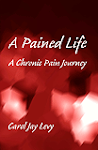
"Fascinating" Stephen S. Hall. writer, N.Y.Times magazine. "Hard to put down." A.C.P.A., American Chronic Pain Association.
Monday, July 11, 2011


Saturday, July 9, 2011
Pain screams, cajoles, and inveigles.
The first surgery worked, wonderfully. I was ecstatic, and stayed ecstatic. My neurosurgeon, Dr. Osterholm, told me to give it 6 weeks of recovery before getting back into life. 6 weeks to the day I went out looking for a job. I interviewed at 3 places and accepted a job as a clerk at HOUSE BEAUTIFUL magazine. Everything was on track. I liked the job. I quickly made 2 friends. As soon as my hair grew back (they had shaved me bald) I intended to start auditioning and taking classes again. The blood vessels in that area of my brain had a different plan. They grew back, and the pain attacked me with the same suddenness and ferocity as it had the first time.
To this day I say if I were to meet Dr. Osterholm in the street and he said "I know how to fix the pain." I would lie down in the middle of the road with my arms out wide. "Go ahead." My trust in him then, and now, is complete and total.
I felt the opposite about his resident, Dr. Martinez. I did not like him and the feeliing was mutual. He was not a nice man. He was someone in whom I had no faith.
Why then did I agree to let him operate on me despite knowing it was a terrible decision?
After the pain returned Dr. Osterholm said he would admit me to the hospital for a reoperation. Once I got there he decided that was not the safest way to go. Instead he wanted me to have the thermorhizolysis procedure. (I had had a similar procedure done about a year prior to this. It was done in NYC. The surgeon did it with me awake and used a novocaine type medication instead of heat. It was torture, total and complete torture. It was of no benefit. The upside was there were no side effects.)
"I don't know how to turn on the rhizolysis machine. Only Dr. Martinez can do it." Dr. Osterholm told me. I knew that a reoperation made the most sense. After all it worked the first time. Dr. Osterholm insisted this was safer. I truly believe, then and now, he was looking out for my safety and best interest.
I knew in my heart of hearts this would be a disaster.
I could not get Dr. Osterholm to budge. It was the procedure performed by Dr. Martinez or nothing. No one suggested any other or that it might be worth getting another opinion. (Had my family been interested enough or involved enough maybe someone might have thought of this idea. I was too embroiled in the pain to be able to look past one minute to the next.)
Choiceless, or at least convinced I was, I agreed. I did not want it, I definitely did not want Dr. Martinez to do it but...what else was there?
The pain screamed at me. "Do something!! Stop me!!" I listened to the pain. I should have listened to my heart, my logic and intelligence.
Within a few hours after the procedure the whole side of my face was numb. Numbness was a risk but supposedly only in the affected area. Instead I lost all feeling forehead to jaw. I was told I could lose the feeling in my eye. I did. I was never told TN pain could be added to the part of my face where it had not been. It was. I was never told I could lose the taste in my left mouth and tongue. I did. (This is a partial list.)
Pain screams, cajoles, and inveigles. Logic and intelligence are not as cunning.
When it comes to making the decisions that will affect the trajectory of the pain and the rest of your life, the volume knob of pain needs to be turned to mute. Only then can you hear the soft whisperings of sense.
To this day I say if I were to meet Dr. Osterholm in the street and he said "I know how to fix the pain." I would lie down in the middle of the road with my arms out wide. "Go ahead." My trust in him then, and now, is complete and total.
I felt the opposite about his resident, Dr. Martinez. I did not like him and the feeliing was mutual. He was not a nice man. He was someone in whom I had no faith.
Why then did I agree to let him operate on me despite knowing it was a terrible decision?
After the pain returned Dr. Osterholm said he would admit me to the hospital for a reoperation. Once I got there he decided that was not the safest way to go. Instead he wanted me to have the thermorhizolysis procedure. (I had had a similar procedure done about a year prior to this. It was done in NYC. The surgeon did it with me awake and used a novocaine type medication instead of heat. It was torture, total and complete torture. It was of no benefit. The upside was there were no side effects.)
"I don't know how to turn on the rhizolysis machine. Only Dr. Martinez can do it." Dr. Osterholm told me. I knew that a reoperation made the most sense. After all it worked the first time. Dr. Osterholm insisted this was safer. I truly believe, then and now, he was looking out for my safety and best interest.
I knew in my heart of hearts this would be a disaster.
I could not get Dr. Osterholm to budge. It was the procedure performed by Dr. Martinez or nothing. No one suggested any other or that it might be worth getting another opinion. (Had my family been interested enough or involved enough maybe someone might have thought of this idea. I was too embroiled in the pain to be able to look past one minute to the next.)
Choiceless, or at least convinced I was, I agreed. I did not want it, I definitely did not want Dr. Martinez to do it but...what else was there?
The pain screamed at me. "Do something!! Stop me!!" I listened to the pain. I should have listened to my heart, my logic and intelligence.
Within a few hours after the procedure the whole side of my face was numb. Numbness was a risk but supposedly only in the affected area. Instead I lost all feeling forehead to jaw. I was told I could lose the feeling in my eye. I did. I was never told TN pain could be added to the part of my face where it had not been. It was. I was never told I could lose the taste in my left mouth and tongue. I did. (This is a partial list.)
Pain screams, cajoles, and inveigles. Logic and intelligence are not as cunning.
When it comes to making the decisions that will affect the trajectory of the pain and the rest of your life, the volume knob of pain needs to be turned to mute. Only then can you hear the soft whisperings of sense.
Thursday, July 7, 2011
re Banned book.
The fact that the trigeminal neuralgia assocation would be more concerned about their doctor than their mission is outrageous.
The irony is that I never talked about the malpractice case against Dr. Jannetta when I wrote the book.
It is time to do so now.
I had one procedure that worked but then the blood vessels grew back that were the cause of my pain. Not the artery falling against the nerve that is the Jannetta theory however.
I have a birth defect, a sturge-Weber syndrome (partial) identified by my neuroophthalmologist. It was easily diagnosed. I have a birthmark that turns redder with any emotion. Most birthmarks do not have a blood supply. The change in color was evidence of the extra vessels in my brain. It covered, exactly, the pained area.
Dr. Osterholm, the first neurosurgeon, cleared out as much of the extra vessels as he could. I awakened completely painhfree. Unfortunately left was a tiny red area, about the size of a dime. It was a sign some vessles were left. It grew and grew til the whole area was covered again; and the pain came back just like it had the first time. Suddenly, and without warning, a knife through my temple.
Dr. Osterholm had another surgeon do a procedure I was not happy about, feeling it was safer so I agreed to have it done. Dr. Martinez, his colleague, did a thermocoagulation rhizolysis, using a heated needle to try and burn the nerve to death.
Somehow instead of just getting the fifth nerve (trigeminal) he also got the 9th (glossopharyngeal - I had trouble swallowing) and the 7th (facial nerve). The whole left side of my face was numb, including my eye (the eye was a known side effects as was losing the feeling in the affected area. Losing the feeling in the whole face was not.) I also had no feeling or taste in the left side of my mough and tongue, from the facial nerve, a nerve he was supposedly nowhere near.
Three months later I was sent to see Dr. Jannetta - because he was the authority. His surgery was known as the Jannetta Procedure.
I will not go into item by item but I wanted to be an actress, that was why I had moved to NYC. With no feeling in my face I worried can my face be visibly injured?
I asked Dr. Jannetta, and his resident "Can my face be injured in any way?"
"I promise you" said Dr. Jannetta, "your face cannot be injured in any way."
I asked a number of times. My parents were there for this surgery. They asked too and were given the same promise. "Her face cannot be paralyzed."
I awakened in the NICU (neurosurgical intensive care). The left side of my face was paralyzed 100%.
Dr. Jannetta came to the NICU. He stood over me. 4 times he rubbed his fingers together next to my ear. "Can you hear this?" I could, each time. He said nothing about my face. And then he left. Literally. He left the country to give a lecture in Germany. I would not see him again until 8 weeks later, in his office.
At no time did he, or his residents in his absence, suggest physical therapy or anything that might help the paralysis to recover.
Instead I was discharged from the hospital with no instructions other than to keep a watch on my eye. I had lost all the feeling in it from the last procedure. Now it had no feeling and could not close. The jeopardy to it was great. So great that within a day of coming back to my parents home to recuperate I was at Wills Eye Hospital having to have the eye closed (sewn shut with sutures, called a tarsorrharphy)) in an emergency procedure. I was told that it would have to remain closed permanently. I had it opened a few months later against medical advice. I could not tolerate the way I looked, the paralysis was bad enough but the eye being closed added to the nausea quotient. As a result I was getting infections or drying out to a dangerous level, sometimes weekly. I have had to have repeated tarsorrharphies over the years.)
I looked disgusting but became even more disgusted and sickened when I read the hospitl chart I got from the hospital when I decided to sue.
Dr. Mark May, a facial nerve specialist, saw me after the surgery. He wrote in the chart that a defensive test on the facial nerve, taken BEFORE the surgery showed 44% impairment of my facial nerve. That was the loss of taste. No one ever asked me about that part of the problem from the last procedure. The impairment shown by the test was a good sign that paralysis could happen.
In addition I read Dr. Jannetta's research papers. He wrote reoperations, especially after rhizolysis) are much more dangerous to the patient. The chance of side effects were much higher and should be done with reticence, if at all.
He has written in his biography WORKING IN A VERY SMALL PLACE about letting a resident operate on a woman with a brain tumor. He did not think she should have the surgery: she was pregnant so the risks were higher. Nevertheless he told the resident to operate. The patient died on the table. When informed Dr. Jannetta writes he had to come into the hospital as he was not only not in the OR he was not in the hospital. In my case his son was having an emergency appendectomy at the same time I was in the OR. The evidence, records and surgical reports, indicate he did not do my surgery.
He lied about the risks, in fact in two depositions he said facial paralysis was "a major and common complication." On the stand he said it was "unknown". (The Pa. Superior Court his testimony perjurious stating: "We have little difficulty in concluding that Dr. Jannetta's testimony at deposition was different than, or inconsistent with, the testimony at trial." Levy v Jannetta, CCP Allegheny County, GD 81-7689; appeal -J. A370017/92 Levy v Jannetta et al, No. 00150 Pittsburgh, 1992. settled, 1995.)
He ignored a defensive pre op test.
It appears he did not do the operation. He never saw me again while I was in the hospital. He never suggested any kind of rehabilitation.
A number of years ago I saw him when I went to a trigeminal neuralgia association meeting.
"Excuse me, Dr. Jannetta." I said. "I wanted you to know because of the paralysis I have had to have 4 fscelifts, a browlift, we took off a part of my mouth, all to try and mimic age symmetry between the two sides." As I continued, "I had them open my eye against their advice but because if that have had to have many tarsorrharphies." His response was to pick up the newspaper sitting on the chair next to him. He turned away from me and put it up to his face and appeared to be reading it.
This is the man who is more important than the members of the trigeminal neuralgia association.
If they truly wanted to get the word out about trigeminal neuralgia, to members and the general population my book is (and was) the way to do it.
I am sorry that partisan self serving interests trumped their lofty mission.
(This is their publishing policy, sent to me by a board member. My book was solely about my experience with TN, the fight to live with it and struggle against it, and has a happy ending. It falls directly into the policy, but for Jannetta.)
The Board of TNA determined that there was a need among patients to have access to published works specifically related to TN and other facial pain which works are informative, timely, accurate and supportive. A Publishing Committee was charged with implementing that policy and specific works have been published by TNA which meet that policy and others are in production, including a book which will include numerous patients’ stories about their battles with TN. TNA also sells books which are not directly related to facial pain but which have been determined to be inspirational or of other interest to our patients. In the case of your own book, since it deals with the subject of TN, our decision whether or not to offer it for sale was based upon whether the book meets our own publishing criteria. We determined that it did not meet our publishing criteria and, therefore, we declined to offer your book for sale."
The irony is that I never talked about the malpractice case against Dr. Jannetta when I wrote the book.
It is time to do so now.
I had one procedure that worked but then the blood vessels grew back that were the cause of my pain. Not the artery falling against the nerve that is the Jannetta theory however.
I have a birth defect, a sturge-Weber syndrome (partial) identified by my neuroophthalmologist. It was easily diagnosed. I have a birthmark that turns redder with any emotion. Most birthmarks do not have a blood supply. The change in color was evidence of the extra vessels in my brain. It covered, exactly, the pained area.
Dr. Osterholm, the first neurosurgeon, cleared out as much of the extra vessels as he could. I awakened completely painhfree. Unfortunately left was a tiny red area, about the size of a dime. It was a sign some vessles were left. It grew and grew til the whole area was covered again; and the pain came back just like it had the first time. Suddenly, and without warning, a knife through my temple.
Dr. Osterholm had another surgeon do a procedure I was not happy about, feeling it was safer so I agreed to have it done. Dr. Martinez, his colleague, did a thermocoagulation rhizolysis, using a heated needle to try and burn the nerve to death.
Somehow instead of just getting the fifth nerve (trigeminal) he also got the 9th (glossopharyngeal - I had trouble swallowing) and the 7th (facial nerve). The whole left side of my face was numb, including my eye (the eye was a known side effects as was losing the feeling in the affected area. Losing the feeling in the whole face was not.) I also had no feeling or taste in the left side of my mough and tongue, from the facial nerve, a nerve he was supposedly nowhere near.
Three months later I was sent to see Dr. Jannetta - because he was the authority. His surgery was known as the Jannetta Procedure.
I will not go into item by item but I wanted to be an actress, that was why I had moved to NYC. With no feeling in my face I worried can my face be visibly injured?
I asked Dr. Jannetta, and his resident "Can my face be injured in any way?"
"I promise you" said Dr. Jannetta, "your face cannot be injured in any way."
I asked a number of times. My parents were there for this surgery. They asked too and were given the same promise. "Her face cannot be paralyzed."
I awakened in the NICU (neurosurgical intensive care). The left side of my face was paralyzed 100%.
Dr. Jannetta came to the NICU. He stood over me. 4 times he rubbed his fingers together next to my ear. "Can you hear this?" I could, each time. He said nothing about my face. And then he left. Literally. He left the country to give a lecture in Germany. I would not see him again until 8 weeks later, in his office.
At no time did he, or his residents in his absence, suggest physical therapy or anything that might help the paralysis to recover.
Instead I was discharged from the hospital with no instructions other than to keep a watch on my eye. I had lost all the feeling in it from the last procedure. Now it had no feeling and could not close. The jeopardy to it was great. So great that within a day of coming back to my parents home to recuperate I was at Wills Eye Hospital having to have the eye closed (sewn shut with sutures, called a tarsorrharphy)) in an emergency procedure. I was told that it would have to remain closed permanently. I had it opened a few months later against medical advice. I could not tolerate the way I looked, the paralysis was bad enough but the eye being closed added to the nausea quotient. As a result I was getting infections or drying out to a dangerous level, sometimes weekly. I have had to have repeated tarsorrharphies over the years.)
I looked disgusting but became even more disgusted and sickened when I read the hospitl chart I got from the hospital when I decided to sue.
Dr. Mark May, a facial nerve specialist, saw me after the surgery. He wrote in the chart that a defensive test on the facial nerve, taken BEFORE the surgery showed 44% impairment of my facial nerve. That was the loss of taste. No one ever asked me about that part of the problem from the last procedure. The impairment shown by the test was a good sign that paralysis could happen.
In addition I read Dr. Jannetta's research papers. He wrote reoperations, especially after rhizolysis) are much more dangerous to the patient. The chance of side effects were much higher and should be done with reticence, if at all.
He has written in his biography WORKING IN A VERY SMALL PLACE about letting a resident operate on a woman with a brain tumor. He did not think she should have the surgery: she was pregnant so the risks were higher. Nevertheless he told the resident to operate. The patient died on the table. When informed Dr. Jannetta writes he had to come into the hospital as he was not only not in the OR he was not in the hospital. In my case his son was having an emergency appendectomy at the same time I was in the OR. The evidence, records and surgical reports, indicate he did not do my surgery.
He lied about the risks, in fact in two depositions he said facial paralysis was "a major and common complication." On the stand he said it was "unknown". (The Pa. Superior Court his testimony perjurious stating: "We have little difficulty in concluding that Dr. Jannetta's testimony at deposition was different than, or inconsistent with, the testimony at trial." Levy v Jannetta, CCP Allegheny County, GD 81-7689; appeal -J. A370017/92 Levy v Jannetta et al, No. 00150 Pittsburgh, 1992. settled, 1995.)
He ignored a defensive pre op test.
It appears he did not do the operation. He never saw me again while I was in the hospital. He never suggested any kind of rehabilitation.
A number of years ago I saw him when I went to a trigeminal neuralgia association meeting.
"Excuse me, Dr. Jannetta." I said. "I wanted you to know because of the paralysis I have had to have 4 fscelifts, a browlift, we took off a part of my mouth, all to try and mimic age symmetry between the two sides." As I continued, "I had them open my eye against their advice but because if that have had to have many tarsorrharphies." His response was to pick up the newspaper sitting on the chair next to him. He turned away from me and put it up to his face and appeared to be reading it.
This is the man who is more important than the members of the trigeminal neuralgia association.
If they truly wanted to get the word out about trigeminal neuralgia, to members and the general population my book is (and was) the way to do it.
I am sorry that partisan self serving interests trumped their lofty mission.
(This is their publishing policy, sent to me by a board member. My book was solely about my experience with TN, the fight to live with it and struggle against it, and has a happy ending. It falls directly into the policy, but for Jannetta.)
The Board of TNA determined that there was a need among patients to have access to published works specifically related to TN and other facial pain which works are informative, timely, accurate and supportive. A Publishing Committee was charged with implementing that policy and specific works have been published by TNA which meet that policy and others are in production, including a book which will include numerous patients’ stories about their battles with TN. TNA also sells books which are not directly related to facial pain but which have been determined to be inspirational or of other interest to our patients. In the case of your own book, since it deals with the subject of TN, our decision whether or not to offer it for sale was based upon whether the book meets our own publishing criteria. We determined that it did not meet our publishing criteria and, therefore, we declined to offer your book for sale."
Wednesday, July 6, 2011
My book was banned.
After my book was published I expected that, if no one else, the Trigeminal Neuralgia Association (TNA) would be excited that someone had written a book about their personal TN experience. There was no other book out there. Trigeminal neuralgia was, absent a storyline once on Matlock and once on The Bold Ones a pretty much unknown disorder. I know I had long despaired of finding others who had it. I looked for books, thinking I could at least read about someone else's pain. The only way that would happen was if I wrote one.
I wrote to the TNA after it was first published. My story was too harrowing, they said, but worse still, the doctor who paralyzed my face as a result of medical malpractice, Peter J. Jannetta, was on their medical board. It was much more important to not let their members know about a book written by one of their own if it protected someone of more import: a board member.
Why write about this now?
I have been letting a few chronic pain and trigeminal neuralgia sites know about the book and this blog. It never occurred to me to go back to the TNA site until a friend told me that there had been a board member change at the TNA (now called the Facial Pain Association). One of the people who refused the book was now gone. I presumed that meant maybe they were now open to letting the membership know.
It seems that is still not the case.
They have a FB page. I "liked" the page but they have blocked me from writing on their wall. That precludes me from writing or posting anything. Unfortunately it also disallows me from commenting on posts, such as the one from a woman who posted about a treatment that sounded promising against the eye pain, information very important to me. I guess they decided they still did not want their membership, those who suffer from TN and facial pain, to know that a book is out there. My truth about one person's fight against and struggle to live with this devastating pain threatens them. I had hoped by now their concern would be about getting the word out, not still protecting themselves and their group.
It bothers me that the powers that be are often, as in this case, more concerned with protecting their own to the potential detriment, or at least loss, to their membership, the ones who suffer with tn and facial pain.
(BTW, I wrote to them twice about my inability to post to the FB page but never received a reply.)
I wrote to the TNA after it was first published. My story was too harrowing, they said, but worse still, the doctor who paralyzed my face as a result of medical malpractice, Peter J. Jannetta, was on their medical board. It was much more important to not let their members know about a book written by one of their own if it protected someone of more import: a board member.
Why write about this now?
I have been letting a few chronic pain and trigeminal neuralgia sites know about the book and this blog. It never occurred to me to go back to the TNA site until a friend told me that there had been a board member change at the TNA (now called the Facial Pain Association). One of the people who refused the book was now gone. I presumed that meant maybe they were now open to letting the membership know.
It seems that is still not the case.
They have a FB page. I "liked" the page but they have blocked me from writing on their wall. That precludes me from writing or posting anything. Unfortunately it also disallows me from commenting on posts, such as the one from a woman who posted about a treatment that sounded promising against the eye pain, information very important to me. I guess they decided they still did not want their membership, those who suffer from TN and facial pain, to know that a book is out there. My truth about one person's fight against and struggle to live with this devastating pain threatens them. I had hoped by now their concern would be about getting the word out, not still protecting themselves and their group.
It bothers me that the powers that be are often, as in this case, more concerned with protecting their own to the potential detriment, or at least loss, to their membership, the ones who suffer with tn and facial pain.
(BTW, I wrote to them twice about my inability to post to the FB page but never received a reply.)
Monday, July 4, 2011
Where's my seat?
I went to church yesterday. The choir no longer sings for the next few weeks so I have to sit in the regular pews.
Usually when this happens I look for a couple I have gotten into the habit of sitting behind. That pew is one of the few that is not close to a stained window. I want to sit with people I know but my main objective is always to do whatever will minimize the pain. Being away from a window and the chance the sun will start streaming into the aisle and into my eye is of paramount importance.
John and Martha (pseudonyms) were not there. I had to figure out where my 'favorite' pew was on my own. I looked at the windows and thought I had the right pew. Nope, the window was lined up with the end of the row. Up I rose. I picked another seat. I was happy in this one. Two members of choir were sitting next to me. We were happy to see each other. I turned away from them and sat looking forward: nope, this one was also where the sun would set off the pain. "The sun is too much here." I felt I needed to explain to them as I looked around to see where I was supposed to sit.
I got up. I found another row. This one had to be it. It was, but by now I was feeling like an idiot. Did anyone see me going from row to row to row? Just in case I turned to the person next to me. "I need to be where the window isn't. I'm feeling a little like Goldilocks." He smiled. I had no idea if he had a clue as to what I was even talking about.
Without family or friends nearby church is my main place to go to be with people. Without choir rehearsal on Thursday and singing on Sunday, going to services is the only time of the week I get to see people I know, even if they are not 'friends'; very friendly, many of them, yes, but not friends, not someone I could call or who call me to say Hi or suggest getting a cup of coffee. The pain makes even this one day a fight.
Do I sit with people I know despite the sun making the pain worse? Church is already, at a minimum, a one codeine experience, even if all I do is sit in the pew and listen. Your eyes still move, to find the pew, to sit down, stand up, sit down again, acknowledge the people who do say "Hi." or talk to you. The pain comes without the addition of sun, of sitting with people you know and with whom you will have an active conversation.
Invariably I leave church more frustrated than when I arrived. All I wanted to do was be with people but being with them means the pain is worse, not only the emotional: talk revolves around the plans folks have for the weekend, the week, the holiday, their work, their children, their grandchildren but the physical too. It becomes the question that has plagued me all along, maybe even far back before the pain started. Where do I belong?
The holidays always make me think about the people who were supposed to be my family. It has taken me a long time but they are less and less in my thoughts despite living only minutes away. Their indifference made them and makes them a million miles away. But at a time when family is the emphasis of almost everything I hear and see it is hard to put them behind me right now.
Where do I belong? You know, right now I do not have a clue.
(As I write this I reread my words, pity, yes. Annoyance and anger? Yes. But I think it also speaks for most of us with chronic pain.
Where do we belong? We are marginalized by the media, the law, and by some in the medical community. We are looked at as hypochondriacs, drug seekers and abusers, addicts, as one person wrote me, lazy. We are victimized by the 'war on drugs". Where, do we, as people in chronic intractable pain, belong? I would like to think we belong with everyone else who requires ongoing medical care and therapies, including opiod when necessary. I would like to think we belong. Period.)
Usually when this happens I look for a couple I have gotten into the habit of sitting behind. That pew is one of the few that is not close to a stained window. I want to sit with people I know but my main objective is always to do whatever will minimize the pain. Being away from a window and the chance the sun will start streaming into the aisle and into my eye is of paramount importance.
John and Martha (pseudonyms) were not there. I had to figure out where my 'favorite' pew was on my own. I looked at the windows and thought I had the right pew. Nope, the window was lined up with the end of the row. Up I rose. I picked another seat. I was happy in this one. Two members of choir were sitting next to me. We were happy to see each other. I turned away from them and sat looking forward: nope, this one was also where the sun would set off the pain. "The sun is too much here." I felt I needed to explain to them as I looked around to see where I was supposed to sit.
I got up. I found another row. This one had to be it. It was, but by now I was feeling like an idiot. Did anyone see me going from row to row to row? Just in case I turned to the person next to me. "I need to be where the window isn't. I'm feeling a little like Goldilocks." He smiled. I had no idea if he had a clue as to what I was even talking about.
Without family or friends nearby church is my main place to go to be with people. Without choir rehearsal on Thursday and singing on Sunday, going to services is the only time of the week I get to see people I know, even if they are not 'friends'; very friendly, many of them, yes, but not friends, not someone I could call or who call me to say Hi or suggest getting a cup of coffee. The pain makes even this one day a fight.
Do I sit with people I know despite the sun making the pain worse? Church is already, at a minimum, a one codeine experience, even if all I do is sit in the pew and listen. Your eyes still move, to find the pew, to sit down, stand up, sit down again, acknowledge the people who do say "Hi." or talk to you. The pain comes without the addition of sun, of sitting with people you know and with whom you will have an active conversation.
Invariably I leave church more frustrated than when I arrived. All I wanted to do was be with people but being with them means the pain is worse, not only the emotional: talk revolves around the plans folks have for the weekend, the week, the holiday, their work, their children, their grandchildren but the physical too. It becomes the question that has plagued me all along, maybe even far back before the pain started. Where do I belong?
The holidays always make me think about the people who were supposed to be my family. It has taken me a long time but they are less and less in my thoughts despite living only minutes away. Their indifference made them and makes them a million miles away. But at a time when family is the emphasis of almost everything I hear and see it is hard to put them behind me right now.
Where do I belong? You know, right now I do not have a clue.
(As I write this I reread my words, pity, yes. Annoyance and anger? Yes. But I think it also speaks for most of us with chronic pain.
Where do we belong? We are marginalized by the media, the law, and by some in the medical community. We are looked at as hypochondriacs, drug seekers and abusers, addicts, as one person wrote me, lazy. We are victimized by the 'war on drugs". Where, do we, as people in chronic intractable pain, belong? I would like to think we belong with everyone else who requires ongoing medical care and therapies, including opiod when necessary. I would like to think we belong. Period.)
Saturday, July 2, 2011
"Narcotics are bad for you so they should be banned."
I wrote a post a few days back about opiod contracts. Since then 2 things have come to my attention. Otherwise I would let the subject go (at least for a while.)
There is a new drug Abstral. It is a pain medication, an opiod. The prescribing information states it is fentynel based, a Schedule II opiod, the highest level. The instruictions state it has "as an abuse liability similar to other opioid analgesics. ABSTRAL can be abused in a manner similar to other opioid agonists, legal or illicit. Schedule II opioid substances which include morphine, oxycodone, hydromorphone, oxymorphone, and methadone have the highest potential for abuse and risk of fatal overdose due to respiratory depression."
What makes it different from the other opiates? This one comes with a contract from the pharmacy, mandated by the government. In fact if you refuse to sign the release of information portion of the contract you will not be able to get the medication.
This is part of the FDA REMS (risk and management program). What makes it of concern to me is that now the consultation room has the government and the pharmacy in there along with you and the doctor. Since when was that room open to any and all comers at the behest of the government?
"Some people abuse pain meds, so you shouldn't have them." I was reminded of this mantra by one of our commenters here. (Please see her comment in the last blog. I am not my disease
I have seen this said in many posts and articles throughout the last few years. Sometimes it is said indirectly. Other times it is written outright: narcotics are bad for you, people abuse and misuse them, therefore they should be banned.
Invariably this is written by those who do not (thankfully) know chronic pain firsthand (or most probably even very severe acute pain.).
Insulin and steroids have been abused by athletes. Does this mean they should be banned altogether? Ask a patient with lupus, arthritis, asthma, MS, if steroids should no longer be available. Their answer would be the same as ours.
"I need the medication to help me cope with and live with my illness."
Guess what. So do we.
There is a new drug Abstral. It is a pain medication, an opiod. The prescribing information states it is fentynel based, a Schedule II opiod, the highest level. The instruictions state it has "as an abuse liability similar to other opioid analgesics. ABSTRAL can be abused in a manner similar to other opioid agonists, legal or illicit. Schedule II opioid substances which include morphine, oxycodone, hydromorphone, oxymorphone, and methadone have the highest potential for abuse and risk of fatal overdose due to respiratory depression."
What makes it different from the other opiates? This one comes with a contract from the pharmacy, mandated by the government. In fact if you refuse to sign the release of information portion of the contract you will not be able to get the medication.
This is part of the FDA REMS (risk and management program). What makes it of concern to me is that now the consultation room has the government and the pharmacy in there along with you and the doctor. Since when was that room open to any and all comers at the behest of the government?
"Some people abuse pain meds, so you shouldn't have them." I was reminded of this mantra by one of our commenters here. (Please see her comment in the last blog. I am not my disease
I have seen this said in many posts and articles throughout the last few years. Sometimes it is said indirectly. Other times it is written outright: narcotics are bad for you, people abuse and misuse them, therefore they should be banned.
Invariably this is written by those who do not (thankfully) know chronic pain firsthand (or most probably even very severe acute pain.).
Insulin and steroids have been abused by athletes. Does this mean they should be banned altogether? Ask a patient with lupus, arthritis, asthma, MS, if steroids should no longer be available. Their answer would be the same as ours.
"I need the medication to help me cope with and live with my illness."
Guess what. So do we.
Wednesday, June 29, 2011
I am not my disease.
I am listening to the TV show ROYAL PAINS. A character is making a speech about his having MS. "I am not my disease." he proclaims. "No one is."
He is right. Of course there is so much more to us than our illnesses, or in this case, my pain.
The doctor, Dr. Hank I think he is called, tells this character, "Maybe it is not MS. It could be Lyme disease." And this man, the face of MS (for the purpose of the show) and the face of 'my disease is not me." yells at Dr. Hank. "Yes it is. I am MS. I am my disease." A very quick change of truth, or an acknowledgement of what he knows in his heart of hearts.
I do not say to someone I have just met "Hi. My name is Carol and I have chronic pain." anymore than most people would announce they have MS, or cancer, or even, unless it is an explanation about why they do not want to shake hands, a cold.
It can come up pretty quickly though. "What do you do?" "Where do you work?" Those are usually the first questions asked of someone new. A way to get to know them through their job title. And are we not described by our job titles? "I am a doctor." "I am a teacher" "I am disabled."
The first two answers tend to get an "Oh really, how interesting." The doc is asked if he has a specialty (and hopefully not can you look at this rash on my hand?"). The teacher gets the query: "What grade do you teach?" The "disabled" does not get the same interested reply. "Oh, I am so sorry." Sometimes it is the awkward "But you do not look disabled." The naming damage is done. I am not the interesting one, the creative one, the funny one. I am the disabled one.
The titles skew every relationship, at least at the beginning. The doc is treated with more respect, not because of who he is but what he is. The teacher looked at as a helper to children, someone with a definite place in the community. The disabled as someone who needs to be treated with kid gloves or sometimes just ignored or marginalized. After all what questions can you ask us? Not the same as the starting questions you ask of the professionals. "What do you do?" you can still ask me. "I make greeting cards." "I sing in the choir." I speak 7 languages (no, not me but someone.)
The pain, the disability is not me. There are times when I feel or am made to feel I have to say it louder, when it must be proclaimed: "I have a disability." "I am disabled."
Not to make it my self definition but for you to accept what I cannot do, as much as I hope you will accept all I can do. And me.
He is right. Of course there is so much more to us than our illnesses, or in this case, my pain.
The doctor, Dr. Hank I think he is called, tells this character, "Maybe it is not MS. It could be Lyme disease." And this man, the face of MS (for the purpose of the show) and the face of 'my disease is not me." yells at Dr. Hank. "Yes it is. I am MS. I am my disease." A very quick change of truth, or an acknowledgement of what he knows in his heart of hearts.
I do not say to someone I have just met "Hi. My name is Carol and I have chronic pain." anymore than most people would announce they have MS, or cancer, or even, unless it is an explanation about why they do not want to shake hands, a cold.
It can come up pretty quickly though. "What do you do?" "Where do you work?" Those are usually the first questions asked of someone new. A way to get to know them through their job title. And are we not described by our job titles? "I am a doctor." "I am a teacher" "I am disabled."
The first two answers tend to get an "Oh really, how interesting." The doc is asked if he has a specialty (and hopefully not can you look at this rash on my hand?"). The teacher gets the query: "What grade do you teach?" The "disabled" does not get the same interested reply. "Oh, I am so sorry." Sometimes it is the awkward "But you do not look disabled." The naming damage is done. I am not the interesting one, the creative one, the funny one. I am the disabled one.
The titles skew every relationship, at least at the beginning. The doc is treated with more respect, not because of who he is but what he is. The teacher looked at as a helper to children, someone with a definite place in the community. The disabled as someone who needs to be treated with kid gloves or sometimes just ignored or marginalized. After all what questions can you ask us? Not the same as the starting questions you ask of the professionals. "What do you do?" you can still ask me. "I make greeting cards." "I sing in the choir." I speak 7 languages (no, not me but someone.)
The pain, the disability is not me. There are times when I feel or am made to feel I have to say it louder, when it must be proclaimed: "I have a disability." "I am disabled."
Not to make it my self definition but for you to accept what I cannot do, as much as I hope you will accept all I can do. And me.
Subscribe to:
Posts (Atom)