A story in Time magazine was called The Optimism Bias*. It spoke to what I see happen in my life, much of the time.
I wake up. I have yet to use my eyes. I feel fine. It's today. Today it will be fine. Today I will be fine. Then I stretch. As I do my eyes move in the direction of one of my arms and then up to the ceiling. Oh no, I think as my face scrunches up in an expression of distaste, hurt, disbelief, some anger (some days more than some). The pain is still there. But it was supposed to be gone by today.
Most of my life is also like Groundhog Day, the movie.
I want to have somewhere to go, someone to play with, somebody to do things with. I want those things but I also do not want the pain.
I am finding as I get older I am more loathe to do things that I know will bring on the pain. Go to the store today? Even though it is only by myself, I find the answer is often a No. I do not want to go, look at all that is there and by doing so set off the pain. I hate staying in but I hate the pain and the drugged sensation even more. So today I stay in. Tomorrow I have somewhere I must go, and want to go. It is to a picnic but the dread is also there. How painful is this going to be?
Everyday, the same. I have the hope but I cannot repress the truth. I put it out to the Universe: Please, let the pain not be there tomorrow. The Universe does not answer, not about this part of the pain.
So it is strange. Because I still go to bed each night, expecting that I will wake the next morning, that expectation an article of faith, an act of optimism. Unless we are at the deepest level of despair the thought of another day brings the chance of new experiences, new possibilities, new life, a day without the pain. Optimism.
My optimism goes even further. I see what I often think of as an idiocy inside myself. How can I still think tomorrow will be different? And sometimes an even stranger and more optimistic thought: It will be over, almost as if none of this had ever happened. I will be back to where I was when it started. Not necessarily 30 years younger, which would be nice, but at a point where most of life's possibilities still stretch before me.
Even when it seems the stupidest of thoughts, it is the optimism that lets us, that lets me, put my one foot in front of the other.
--------------------------------------------------------------------------
*Here is the full article:
http://www.time.com/time/health/article/0,8599,2074067,00.html
My book.
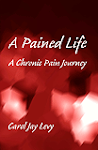
"Fascinating" Stephen S. Hall. writer, N.Y.Times magazine. "Hard to put down." A.C.P.A., American Chronic Pain Association.
Friday, June 10, 2011


Wednesday, June 8, 2011
Interpretations.
I lost my singing voice after the neck surgery I mentioned a few posts back (My neck is held up with 2 clamps and 12 pins). I was a soprano who sang in the high range. After the surgery I was a very, very deep bass.
A number of years ago I visited a friend of mine and her husband. He likes shooting guns. I am very pro-gun control. John (pseudonym) insisted "How can you be against guns when you have never shot one?" I refused but, after his dogged persistence, I took the gun. I pulled the trigger, at the sound of the Bang! my right ear immediately started ringing. It continued for about half an hour. I lost most of the hearing in it. It was only when I realized I had become one of those people who smiled and said "That's wonderful." only to find out the person with whom I was speaking had told me their dog had died.
I went to an ENT doctor (ear, nose and throat). I told him my story: I shot a gun and I could no longer sing a solo in the church choir.
I read his chart note a few years later. "She no longer accepts singing engagements. ... She lost her hearing in a gun shooting incident." Who is that person? A woman who sings professionally and was involved in some sort of gunplay? Instead of a woman who sings in church and once shot a gun I sounded like a woman of romance, intrigue and mystery. I wish that was me.
My left eye usually has a lot of lubricant underneath it. It dries out because of the paralysis and inability to close well. I use artificial tears sometimes up to 10 - 15 times a day.
"Do you want a tissue, your eye is tearing?" "Please don't cry." "I had Pink Eye. Have you tried (this drug?)." One woman took my arm and helped me off the train, deciding, for some reason, I was blind. I did not know what to do so I let her and then thanked her, very much.
When the pain gets worse for some reason the eye opens wider. Sometimes the eye looks good and feels good but usually the more open the greater the pain.
"You're eye is really open today. I am so glad you're feeling better." "Your eye must be doing really well it looks so good and open."
Everything is interpretation. Do I take the time to explain? Do I make them feel bad by saying "I'm not blind." "I'm not crying." "No. You're wrong, I am really having pain. This is a very bad eye day for me."?
Do I bite my tongue and let them have their joy at feeling I am better?
Bottom line, do I become a lady of mystery, and lie? And if I lie, am I helping them, hurting myself, or both? (And, in the end, does it matter?)
A number of years ago I visited a friend of mine and her husband. He likes shooting guns. I am very pro-gun control. John (pseudonym) insisted "How can you be against guns when you have never shot one?" I refused but, after his dogged persistence, I took the gun. I pulled the trigger, at the sound of the Bang! my right ear immediately started ringing. It continued for about half an hour. I lost most of the hearing in it. It was only when I realized I had become one of those people who smiled and said "That's wonderful." only to find out the person with whom I was speaking had told me their dog had died.
I went to an ENT doctor (ear, nose and throat). I told him my story: I shot a gun and I could no longer sing a solo in the church choir.
I read his chart note a few years later. "She no longer accepts singing engagements. ... She lost her hearing in a gun shooting incident." Who is that person? A woman who sings professionally and was involved in some sort of gunplay? Instead of a woman who sings in church and once shot a gun I sounded like a woman of romance, intrigue and mystery. I wish that was me.
My left eye usually has a lot of lubricant underneath it. It dries out because of the paralysis and inability to close well. I use artificial tears sometimes up to 10 - 15 times a day.
"Do you want a tissue, your eye is tearing?" "Please don't cry." "I had Pink Eye. Have you tried (this drug?)." One woman took my arm and helped me off the train, deciding, for some reason, I was blind. I did not know what to do so I let her and then thanked her, very much.
When the pain gets worse for some reason the eye opens wider. Sometimes the eye looks good and feels good but usually the more open the greater the pain.
"You're eye is really open today. I am so glad you're feeling better." "Your eye must be doing really well it looks so good and open."
Everything is interpretation. Do I take the time to explain? Do I make them feel bad by saying "I'm not blind." "I'm not crying." "No. You're wrong, I am really having pain. This is a very bad eye day for me."?
Do I bite my tongue and let them have their joy at feeling I am better?
Bottom line, do I become a lady of mystery, and lie? And if I lie, am I helping them, hurting myself, or both? (And, in the end, does it matter?)
Monday, June 6, 2011
Migraine ad - "These things are for real."
I had not seen this ad in a while. I had hoped the company decided to stop running it. But here it was again, over and over during the last couple of days.
The first time I commented on the ad was when I wrote a discussion topic for my women in pain awareness site. (www.womeninpainawareness.ning.com).
It was in December and the thought occurred to me that there was a connection between Santa and chronic pain. After all, Santa is (spoiler alert) not real yet we believe in him or at least act as if we do, if only for the sake of children.
Meanwhile chronic pain is real and yet we often act as if it is not.
I have written before about this disconnect between the reality of chronic pain and the lack of belief. In fact that is what prompted my creation of the women in pain awareness group. I was astounded when I first learned that women, even more than men, tended not to be believed when they complained of chronic pain. I honestly thought it was only me. I assumed I just had a really bad run of luck with my doctors and family.
When I first started with my pain it was 1979. Chronic pain had not yet become an industry. As clinics and specialties popped up, psychologists started to specialize in chronic pain, and pharmaceutical companies found there was money to be made in drugs targeted at those with chronic pain belief was still not catching up.
It has been 3 decades since my tic started. People are able now to at least talk about chronic pain. Celebrities discuss their own struggles, famous and not famous alike write books about it. Doctors are less inclined to pat a patient on the head and dismiss their complaint of constant pain. And yet...
The woman comes on the screen. I have migraines, she tells us and "These things are for real." It is 2011. Must we still defend the reality of the pain?
The first time I commented on the ad was when I wrote a discussion topic for my women in pain awareness site. (www.womeninpainawareness.ning.com).
It was in December and the thought occurred to me that there was a connection between Santa and chronic pain. After all, Santa is (spoiler alert) not real yet we believe in him or at least act as if we do, if only for the sake of children.
Meanwhile chronic pain is real and yet we often act as if it is not.
I have written before about this disconnect between the reality of chronic pain and the lack of belief. In fact that is what prompted my creation of the women in pain awareness group. I was astounded when I first learned that women, even more than men, tended not to be believed when they complained of chronic pain. I honestly thought it was only me. I assumed I just had a really bad run of luck with my doctors and family.
When I first started with my pain it was 1979. Chronic pain had not yet become an industry. As clinics and specialties popped up, psychologists started to specialize in chronic pain, and pharmaceutical companies found there was money to be made in drugs targeted at those with chronic pain belief was still not catching up.
It has been 3 decades since my tic started. People are able now to at least talk about chronic pain. Celebrities discuss their own struggles, famous and not famous alike write books about it. Doctors are less inclined to pat a patient on the head and dismiss their complaint of constant pain. And yet...
The woman comes on the screen. I have migraines, she tells us and "These things are for real." It is 2011. Must we still defend the reality of the pain?
Sunday, June 5, 2011
G-D gave me a Miracle (my doctors agree).You may call it something else and that's ok..
Some people will call it Mother Nature, The Universe, happenstance or coincidence. I call it G-d.
My neurosurgeon wrote in my chart that what happened is "amazing" He says "I have to see the definition of Miracle before I call it that." My opthalmologist and neurologist use the word Miracle.
Trigeminal neuralgia, the cause of my pain, is also called "the worst pain known to man." and "The suicide disease." For me it was the latter.
Trigeminal neuralgia, for me, was horrendous, life destroying pain, constant and sporadic in the left upper side of my face. It came out of the blue smacking me in my left temple: a lightning bolt burrowing - a thin line of burning, sharpness, a knife turning and slicing through my face. A slight breeze, a wisp of hair could set it off. Wind, cold, bright sun became my enemies; fearsome and loathsome, because they too caused tremendous pain.
It was only one half of one half of my face but it totally disabled me.
The first operation stopped the pain. For three months. Then the blood vessels that had caused it and been removed grew back. And the pain assaulted me again.
The next brain surgery and the next and the next, six all told, did not help. I was better in the summer because the weather was better. That let me go outside more but the pain was not stopped.
I suffered terrible side effects, from drugs and surgeries. The pain continued. I could not give up on finding a way to stop it. I had no choice. TN was my enemy. It had to be contained. I stumbled through more tests, drugs, even alternative treatments, such as hypnosis and acupuncture, all to no avail.
At the end of my rope and strength, suicide became the only possible way to end the pain.
I told the psychologist I had been seeing. She suggested I meet with a thanantologist, a specialist in death.
I met with him for an hour or so. He told me I should call him if I ever needed his help. I was not sure how he meant that.
The next step was an inpatient pain clinic. They were very nice there but told me at the outset they could not help me. They worked with pain that was from the neck down. Exercise, and PT could not help me. The group therapy, relaxation techniques, biofeedback could not hurt so it was worth trying.
Dr.(H) the owner of the clinic and a psychiatrist, asked me directly. "What will you do if we can't help your pain?"
"I will kill myself."
"Carol, I called the Court's chief psychiatrist to see if you could be involuntarily committed since you are threatening suicide."
"It's not a threat. I don't want to die." I said. "I just have to do whatever I have to to stop the pain."
"He agrees. He told me we could not have you committed since your threat is in response to a legitimate medical situation."
A month later I was packing to leave. My pain was unchanged. Members of the staff added to their goodbyes. "We'd prefer you don't kill yourself but we'll understand if you do."
I was ready to go home and act on it. At the last second the director called and told me another neurosurgeon had agreed to see me.
I went to the Massachusetts General Hospital expecting to have surgery. Dr. Sweet (the surgeon) and I had talked about the operation in a long phone call. He was going to cut the trigeminal nerve root. Once I was admitted to the hospital the surgery changed to a mini- frontal lobotomy: "You'll still have the pain. You just won't care that you do."
I said I would try anything to stop the pain but, not this.
The experience with him was very difficult and crazy making. I went home thinking if I killed myself I would not know if it was from the pain or from what had happened there. I decided I could not do anything, including suicide, until I felt more sane.
That was in 1981.
I limped along with the pain for five more years; slightly less disabled primarily because I was on more drugs.
Finally I went to see Dr. Barolat, a neurosurgeon practicing with the same group where my first surgeon, now retired, had been. He had stopped the pain. Magically, I thought this man could do the same, and at first he did.
I agreed to a brain implant, called a dorsal column stimulator. It did nothing for three months. Then suddenly it kicked in.
My pain was gone about 85%. I was still disabled because of the eye movement pain but I was able to stand in the rain, the cold, the wind. And not have pain. It was terrific.
The wonderfulness lasted only 7 months. The battery that powered the computer chip that was the implant died. I somehow also moved the wire that connected the battery to the chip.
Surgery to change the battery and re-place the wire was done at the same time. It required 2 incisions. That might have been why I ended up with an infection. I had to have the entire implant removed.
We tried another one about a year later but that did not work at all.
Dr. Barolat said nothing more could be done. A few months later he changed his mind. "I have an idea." Instead of putting the implant in the neck he would put it in my brain, directly stimulating it. It would be experimental but pain was pain. It made the decision for me. "Let's do it."
It took many weeks to find the right combination of stimulation before it seemed to be helpful. It never did what I needed though. I stayed on medications, including a lot of codeine. I never got to a point where I was not still disabled by the pain.
I waited a long time for relief.
Finally I was back to where suicide was the right and only answer.
I stood in my living room, a bottle of pills in my hand.
"Okay." I said as I looked at them. "There's no other choice."
I felt sad. And scared.
And then I felt this compelling feeling.
It was not a voice or words, just a sensation of being pulled. You need to lie down..
I could have fought it or refused but did not. I went and lay down on the couch.
When I tried hypnosis to deal with the pain it had not helped at all. It only taught me how to put myself into trance.
The feeling continued. Put yourself in trance. I thought, I don't know why I'm doing this. There's nothing to say. I know what I am going to do. And then the words came into my head.
I did not hear a voice; the words were just somehow there. "Your brain needs to know and remember that the left fifth nerve, your trigeminal nerve, has been cut, burned and killed. It is totally and completely dead. Your brain needs to know and remember that."
The words were true. They continued, over and over, for about 10, maybe 20 minutes. I had never heard of pain hypnosis being done in this way. It was always with "glove anaesthesia": The therapist gave instructions to make your hand numb. You then transferred the numb from your hand to the pained area. The only other way I knew was to talk directly to the pain. I had never heard of addressing the brain directly.
The words talked to my brain. Finlly they ended and I came out of trance.
And the pain was gone!
I could touch my face. A face that had needed to be washed under general anaesthesia. A face that had such pain I let them cut into my brain over and over again. And give me narcotics, even opium and morphine.
That was in 1998. I don't know why G-d gave me the Miracle. For some reason it did not effect the eye pain. Why He would stop part and not all, only G-d knows. Maybe it was because it was the face pain and not the eye pain that was creating my self imposed death sentence, .
I know people, including me, think when there is a Miracle everything changes, life is suddenly terrific.
It is not.
You know my story. I want to work but the eye won't let me. I did not get a family, the one I have, the ones who live up the street did not suddenly start caring. I still have to use the word 'disabled', because I am. The full life I want and still expect, even after all these years, did not materialize.
I am often unhappy with my lot. But.
But I can touch my face. I can go outside. I thank G-d every day for this. He probably gets tired of hearing me say it for I also do it when the wind hits my face or the rain starts or its cold or breezy, or, or, or...
My neurosurgeon wrote in my chart that what happened is "amazing" He says "I have to see the definition of Miracle before I call it that." My opthalmologist and neurologist use the word Miracle.
Trigeminal neuralgia, the cause of my pain, is also called "the worst pain known to man." and "The suicide disease." For me it was the latter.
Trigeminal neuralgia, for me, was horrendous, life destroying pain, constant and sporadic in the left upper side of my face. It came out of the blue smacking me in my left temple: a lightning bolt burrowing - a thin line of burning, sharpness, a knife turning and slicing through my face. A slight breeze, a wisp of hair could set it off. Wind, cold, bright sun became my enemies; fearsome and loathsome, because they too caused tremendous pain.
It was only one half of one half of my face but it totally disabled me.
The first operation stopped the pain. For three months. Then the blood vessels that had caused it and been removed grew back. And the pain assaulted me again.
The next brain surgery and the next and the next, six all told, did not help. I was better in the summer because the weather was better. That let me go outside more but the pain was not stopped.
I suffered terrible side effects, from drugs and surgeries. The pain continued. I could not give up on finding a way to stop it. I had no choice. TN was my enemy. It had to be contained. I stumbled through more tests, drugs, even alternative treatments, such as hypnosis and acupuncture, all to no avail.
At the end of my rope and strength, suicide became the only possible way to end the pain.
I told the psychologist I had been seeing. She suggested I meet with a thanantologist, a specialist in death.
I met with him for an hour or so. He told me I should call him if I ever needed his help. I was not sure how he meant that.
The next step was an inpatient pain clinic. They were very nice there but told me at the outset they could not help me. They worked with pain that was from the neck down. Exercise, and PT could not help me. The group therapy, relaxation techniques, biofeedback could not hurt so it was worth trying.
Dr.(H) the owner of the clinic and a psychiatrist, asked me directly. "What will you do if we can't help your pain?"
"I will kill myself."
"Carol, I called the Court's chief psychiatrist to see if you could be involuntarily committed since you are threatening suicide."
"It's not a threat. I don't want to die." I said. "I just have to do whatever I have to to stop the pain."
"He agrees. He told me we could not have you committed since your threat is in response to a legitimate medical situation."
A month later I was packing to leave. My pain was unchanged. Members of the staff added to their goodbyes. "We'd prefer you don't kill yourself but we'll understand if you do."
I was ready to go home and act on it. At the last second the director called and told me another neurosurgeon had agreed to see me.
I went to the Massachusetts General Hospital expecting to have surgery. Dr. Sweet (the surgeon) and I had talked about the operation in a long phone call. He was going to cut the trigeminal nerve root. Once I was admitted to the hospital the surgery changed to a mini- frontal lobotomy: "You'll still have the pain. You just won't care that you do."
I said I would try anything to stop the pain but, not this.
The experience with him was very difficult and crazy making. I went home thinking if I killed myself I would not know if it was from the pain or from what had happened there. I decided I could not do anything, including suicide, until I felt more sane.
That was in 1981.
I limped along with the pain for five more years; slightly less disabled primarily because I was on more drugs.
Finally I went to see Dr. Barolat, a neurosurgeon practicing with the same group where my first surgeon, now retired, had been. He had stopped the pain. Magically, I thought this man could do the same, and at first he did.
I agreed to a brain implant, called a dorsal column stimulator. It did nothing for three months. Then suddenly it kicked in.
My pain was gone about 85%. I was still disabled because of the eye movement pain but I was able to stand in the rain, the cold, the wind. And not have pain. It was terrific.
The wonderfulness lasted only 7 months. The battery that powered the computer chip that was the implant died. I somehow also moved the wire that connected the battery to the chip.
Surgery to change the battery and re-place the wire was done at the same time. It required 2 incisions. That might have been why I ended up with an infection. I had to have the entire implant removed.
We tried another one about a year later but that did not work at all.
Dr. Barolat said nothing more could be done. A few months later he changed his mind. "I have an idea." Instead of putting the implant in the neck he would put it in my brain, directly stimulating it. It would be experimental but pain was pain. It made the decision for me. "Let's do it."
It took many weeks to find the right combination of stimulation before it seemed to be helpful. It never did what I needed though. I stayed on medications, including a lot of codeine. I never got to a point where I was not still disabled by the pain.
I waited a long time for relief.
Finally I was back to where suicide was the right and only answer.
I stood in my living room, a bottle of pills in my hand.
"Okay." I said as I looked at them. "There's no other choice."
I felt sad. And scared.
And then I felt this compelling feeling.
It was not a voice or words, just a sensation of being pulled. You need to lie down..
I could have fought it or refused but did not. I went and lay down on the couch.
When I tried hypnosis to deal with the pain it had not helped at all. It only taught me how to put myself into trance.
The feeling continued. Put yourself in trance. I thought, I don't know why I'm doing this. There's nothing to say. I know what I am going to do. And then the words came into my head.
I did not hear a voice; the words were just somehow there. "Your brain needs to know and remember that the left fifth nerve, your trigeminal nerve, has been cut, burned and killed. It is totally and completely dead. Your brain needs to know and remember that."
The words were true. They continued, over and over, for about 10, maybe 20 minutes. I had never heard of pain hypnosis being done in this way. It was always with "glove anaesthesia": The therapist gave instructions to make your hand numb. You then transferred the numb from your hand to the pained area. The only other way I knew was to talk directly to the pain. I had never heard of addressing the brain directly.
The words talked to my brain. Finlly they ended and I came out of trance.
And the pain was gone!
I could touch my face. A face that had needed to be washed under general anaesthesia. A face that had such pain I let them cut into my brain over and over again. And give me narcotics, even opium and morphine.
That was in 1998. I don't know why G-d gave me the Miracle. For some reason it did not effect the eye pain. Why He would stop part and not all, only G-d knows. Maybe it was because it was the face pain and not the eye pain that was creating my self imposed death sentence, .
I know people, including me, think when there is a Miracle everything changes, life is suddenly terrific.
It is not.
You know my story. I want to work but the eye won't let me. I did not get a family, the one I have, the ones who live up the street did not suddenly start caring. I still have to use the word 'disabled', because I am. The full life I want and still expect, even after all these years, did not materialize.
I am often unhappy with my lot. But.
But I can touch my face. I can go outside. I thank G-d every day for this. He probably gets tired of hearing me say it for I also do it when the wind hits my face or the rain starts or its cold or breezy, or, or, or...
Saturday, June 4, 2011
The folks who believe us, and in us.
"How much does anyone really know about the person sharing his bedroom?" asked the district attorney in an episode of Law and Order. The remark was related to a defendant who turned out to be very psychiatrically ill, her paranoia causing her to kill her college roommate.
What does that have to do with women in chronic pain?
It reminded me of the folks who refuse to believe us.
I am being somewhat redundant, coming back to a theme already used - but it is one I have no doubt I will be revisiting a lot.
It is an irony that our pain may teach us more about those we know than anything else we have ever shared with them.
A caring and adoring husband, a sweet cousin, sisters and brothers acting like good siblings, friendships tried and true. Normal loving relationships.
And then we become chronically pained.
The thoughtful husband grows quickly tired of his wife's pain complaints, of the "I can't's", the "I am in pain", the plaintive cries "Will it ever end?" The same for the other people in our lives.
It is hard for me to find positives in having the pain, in being alone through the majority of my fight. But positive there is. The chaff is separated from the wheat, the caring from the 'I am here as long as it isn't hard.'
The pain can be the most defining moment for knowing who that person is: the one we can trust, the one with whom we can share our confidences, our fears, our hopes, our secrets, the one on whom we know we can depend.
It is the ones who remain who deserve not only to share our space but to have the pleasure of having us in their lives. And them in ours.
What does that have to do with women in chronic pain?
It reminded me of the folks who refuse to believe us.
I am being somewhat redundant, coming back to a theme already used - but it is one I have no doubt I will be revisiting a lot.
It is an irony that our pain may teach us more about those we know than anything else we have ever shared with them.
A caring and adoring husband, a sweet cousin, sisters and brothers acting like good siblings, friendships tried and true. Normal loving relationships.
And then we become chronically pained.
The thoughtful husband grows quickly tired of his wife's pain complaints, of the "I can't's", the "I am in pain", the plaintive cries "Will it ever end?" The same for the other people in our lives.
It is hard for me to find positives in having the pain, in being alone through the majority of my fight. But positive there is. The chaff is separated from the wheat, the caring from the 'I am here as long as it isn't hard.'
The pain can be the most defining moment for knowing who that person is: the one we can trust, the one with whom we can share our confidences, our fears, our hopes, our secrets, the one on whom we know we can depend.
It is the ones who remain who deserve not only to share our space but to have the pleasure of having us in their lives. And them in ours.
Thursday, June 2, 2011
Make tenacity your partner.
My friend Jennie (pseudonym) went to her general practitioner (G.P.) complaining of cough, fever, and generally feeling bad. Chest x rays showed a spot that was pneumonia.
After 6 weeks of medication and rest the doctor ordered more films. The spot was still there. Dr. Jones (pseudonym) thought it was an area of infection or just a remnant of the pneumonia. He told her "I'm sure it is not cancer. Nothing to worry about."
Jennie was not satisfied. She insisted on additional tests. She was right to do so: it turned out the spot was cancer.
Jennie returned to her G.P. a few weeks after her successful cancer surgery. Her doctor was apologetic. "I do not see patients the same way anymore. I was so sure you did not have cancer. I will be paying much more attention from now on."
I think too many chronic pain patients have had similar experiences.
A doctor decides we are making too much of our pain: it is not as bad as we say. Pain is completely subjective, its symptoms mostly invisible. The ones he can see may not have diagnostic meaning when looked at individually. The time is not spent or available to consider the problem, and patient, as a whole, so he does not take the time to put them all together in a way that might lead to a diagnosis or treatment.
Our complaints may not be an indication of a killer lurking, like Jennie's was, but chronic pain can be a murderer all on its own, either just the pain itself, killing spirit and life day by day, or a more insidious executioner that can be held at bay, such as lupus, rheumatoid arthritis and others that, the earlier they are caught, the better the treatments and treatment outcomes.
Jennie's tenacity helped to heal her. She refused to be placated by her doctor's reassurances. She insisted on further tests and follow up. That may have well saved her life.
We need to be Jennies. We need to speak up: loud and strong, fighting if necessary, to be heard and to get what we need from our doctors. And if they refuse to hear us or belittle us, or treat us like children, we need to have the courage of our convictions and find a doc who will listen, and act as healer.
After 6 weeks of medication and rest the doctor ordered more films. The spot was still there. Dr. Jones (pseudonym) thought it was an area of infection or just a remnant of the pneumonia. He told her "I'm sure it is not cancer. Nothing to worry about."
Jennie was not satisfied. She insisted on additional tests. She was right to do so: it turned out the spot was cancer.
Jennie returned to her G.P. a few weeks after her successful cancer surgery. Her doctor was apologetic. "I do not see patients the same way anymore. I was so sure you did not have cancer. I will be paying much more attention from now on."
I think too many chronic pain patients have had similar experiences.
A doctor decides we are making too much of our pain: it is not as bad as we say. Pain is completely subjective, its symptoms mostly invisible. The ones he can see may not have diagnostic meaning when looked at individually. The time is not spent or available to consider the problem, and patient, as a whole, so he does not take the time to put them all together in a way that might lead to a diagnosis or treatment.
Our complaints may not be an indication of a killer lurking, like Jennie's was, but chronic pain can be a murderer all on its own, either just the pain itself, killing spirit and life day by day, or a more insidious executioner that can be held at bay, such as lupus, rheumatoid arthritis and others that, the earlier they are caught, the better the treatments and treatment outcomes.
Jennie's tenacity helped to heal her. She refused to be placated by her doctor's reassurances. She insisted on further tests and follow up. That may have well saved her life.
We need to be Jennies. We need to speak up: loud and strong, fighting if necessary, to be heard and to get what we need from our doctors. And if they refuse to hear us or belittle us, or treat us like children, we need to have the courage of our convictions and find a doc who will listen, and act as healer.
Tuesday, May 31, 2011
The subtitle says "good things". Here are some of them.
What have I learned over time:
The guy at the teller's area in the bank was taking such a long time. I started to get antsy and annoyed.
Wait a minute, I told myself. The air conditioning is on here. I don't have it at home. Let him take his time. I am really enjoyinig this.
What did I learn? Patience. Maybe it is a virtue but in this instance it was cool, literally.
The computer is taking forever to turn off. I sit here and wait and wait. I am starting to grit my teeth. When will this turn off, for goodness sake's??"
I look at the clock. Oh, sure it felt like 10 - 15 minutes but it was all of 2 - 3 minutes. What else would I be doing if I wasn't waiting for it to turn off?
Heck, not much. After all it is only 2 - 3 minutes. It is not like I do this a lot of times, so maybe I have spent all of 2 - 6 minutes of my day waiting for it to turn off.
What did I learn? Time may not fly when this slow slow computer finally decides to turn all the way off; but time is not as slow as I think it is. Oh right. Patience. Again.
Everytime I go outside, or wash my face, or rain falls on my head I revel in the lack of pain. I rejoice each and everyday, no matter how bad the day might look, in the fact that I can touch my face.
The simplest of things, washing my face, I took for granted all of my life up to the second the tic started. I never thought a person would need general anaesthesia just to get hair, scalp, and face cleaned.
What did I learn?
The surgeon always made sure he had some children's shampoo in his locker in case I forgot mine. The nurses were wonderful. I felt like an inconvenience, at best. They were saving vision - this must be a wate of time to them.
Instead I learned some folks can be absolutely terrific and caring.
My neck was injured during one of the trigeminal neuralgia surgeries. The surgeon who evaluated me for the neck said "You could be paralyzed just walking down the street." My neck is now held together with 2 clamps and 12 pins.
What have I learned?
The simplest of lessons: I can never take anything for granted. It is a glory that I can brush my hair on the left side, that I can stand, and walk, and talk, and hear, and see; to do everything a body needs to do and most of what it wants to do.
I can't. I can't. I can't. This is a mantra of mine. But, as a friend points out, Yes, you can. Yes you did. You wrote a book, you kept a lawsuit alive by self-representing that otherwise would have gone down the tubes. You drove cross country 2 times. You advovate for women in pain awareness. You asked and got the Pa. senate to pass 2 years in a row (and working on it for this year) a proclamation to declare September Women In Pain Awareness Month.
What have I learned?
All that was after the pain. The pain does not have to stop me. It is I who stop myself.
What have I learned?
That this old dog forgets she does not have to learn new tricks. A lot of the tricks are already in my repertoire, there for the remembering and taking.
The guy at the teller's area in the bank was taking such a long time. I started to get antsy and annoyed.
Wait a minute, I told myself. The air conditioning is on here. I don't have it at home. Let him take his time. I am really enjoyinig this.
What did I learn? Patience. Maybe it is a virtue but in this instance it was cool, literally.
The computer is taking forever to turn off. I sit here and wait and wait. I am starting to grit my teeth. When will this turn off, for goodness sake's??"
I look at the clock. Oh, sure it felt like 10 - 15 minutes but it was all of 2 - 3 minutes. What else would I be doing if I wasn't waiting for it to turn off?
Heck, not much. After all it is only 2 - 3 minutes. It is not like I do this a lot of times, so maybe I have spent all of 2 - 6 minutes of my day waiting for it to turn off.
What did I learn? Time may not fly when this slow slow computer finally decides to turn all the way off; but time is not as slow as I think it is. Oh right. Patience. Again.
Everytime I go outside, or wash my face, or rain falls on my head I revel in the lack of pain. I rejoice each and everyday, no matter how bad the day might look, in the fact that I can touch my face.
The simplest of things, washing my face, I took for granted all of my life up to the second the tic started. I never thought a person would need general anaesthesia just to get hair, scalp, and face cleaned.
What did I learn?
The surgeon always made sure he had some children's shampoo in his locker in case I forgot mine. The nurses were wonderful. I felt like an inconvenience, at best. They were saving vision - this must be a wate of time to them.
Instead I learned some folks can be absolutely terrific and caring.
My neck was injured during one of the trigeminal neuralgia surgeries. The surgeon who evaluated me for the neck said "You could be paralyzed just walking down the street." My neck is now held together with 2 clamps and 12 pins.
What have I learned?
The simplest of lessons: I can never take anything for granted. It is a glory that I can brush my hair on the left side, that I can stand, and walk, and talk, and hear, and see; to do everything a body needs to do and most of what it wants to do.
I can't. I can't. I can't. This is a mantra of mine. But, as a friend points out, Yes, you can. Yes you did. You wrote a book, you kept a lawsuit alive by self-representing that otherwise would have gone down the tubes. You drove cross country 2 times. You advovate for women in pain awareness. You asked and got the Pa. senate to pass 2 years in a row (and working on it for this year) a proclamation to declare September Women In Pain Awareness Month.
What have I learned?
All that was after the pain. The pain does not have to stop me. It is I who stop myself.
What have I learned?
That this old dog forgets she does not have to learn new tricks. A lot of the tricks are already in my repertoire, there for the remembering and taking.
Subscribe to:
Posts (Atom)