(Sometimes it is hard to write the post while trying to not inadvertantly appear to insult or complain about someone else. I do not mean to and hope nothing I write is taken that way.)
The person who normally sits next to me in the choir loft was absent. The person who sits next to her kept her distance rather than moving over to sit next to me. To my mind that did not look good, especially when we rose to sing. I started thinking Is it me? Is there something I have done that makes her not want to move closer? I could not think of anything, but I kept looking at it as it must be something that relates to me. The old "It's not her, it's me."
I was at the dental clinic. My student told me I had to get root canal.
"How long ago was it that you hurt the tooth?" she asked me. "6 weeks." "I checked with the attending dentist. He agrees with me. You need root canal." "You know it amazes me that it's over 6 weeks ago and I still even have a bruise." I said, pointing it out. "6 weeks? I thought you said 6 months." "No, 6 weeks." "Well, you still need it done." Surprised, I said, "Maybe the attending dentist should look at it." "Ms. Levy, he said it is necessary." I asked again, "Are you sure? Because it is only 6 weeks and not months." "No. He says you need it."
After she finished sanding and preparing the tooth for the next appointment I again asked about having the attending come to check. She bristled. "I am a dentist. I know what I am doing." Very aggravated she suggested maybe I wanted to have another student assigned to me. It was not worth the fight. I thanked her and left.
I knew that I had said "weeks" and not months. Every other time I had work done at the graduate clinic the attending checked the student's work. It was not an inappropropriate request. From my experience not being seen was the abnormal.
What does that have to do anything?
I started thinking. Maybe it was my fault that she was angry. I knew I had given her the right information; that she was a student and I had the right to have the attending check and speak with me. I knew she was wrong and not I. But, somehow or other it had to be my fault.
Negative narcissism.
In a way there is no 'positive narcissism'. You hold yourself in an abundently high level of esteem to the point where you are the 'It." of life.
But isn't that the same thing I was doing? "It is not her, it is me." It is ME.
It is hard for me to find and make friends. It is because I have no family, no husband, children, grandchildren, work? This is how I explain it.
But. Maybe it is not all me. Maybe it is others, not willing to extend their hand further. To want to learn about me even when I work to learn about them. "How are you today? I heard you say (about your work, kids, grandkids, the world). That sounds interesting." Someone else comes along and they turn from me, looking to the people they know well, cutting me from the conversation.
(Sometimes it is me. I am uncomfortable. I do not know what to talk about when they talk about all of the above. A friend says "Talk about your grandcats." No. That is one more step into the definition of crazy cat lady or spinster.)
I have a diagnosed chronic pain disorder. The doctor does not hear me when I explain the pain. He blames his inability to diagnose or help me on me. "There are times like today when I believe in her pain.", i.e. there are times when he does not. Other docs have said the same in different words. "Your pain is not that bad." "It is imaginary." and so on. They don't believe in, accept my pain? It is proven and documented. It must be me, the way I appear, I explain, I behave, I speak.
Even the assinine. If I had something else, he could help me, fix me. But this, what I have. It is the fault of my body, of my ridiculous uniqueness.
I think of other times, other examples. It has to be me. What else could it be? It could be others, it could be life.
It is time to get out of my head, out of my negative me, me, me. Positive narcissism (I am wonderful, terrific, the be all and end all), negative narcissism (I am terrible, blameworthy, a nuisance, the Fault.). Too much me and too much me. There must be a middle ground. The trick is in finding it.
(-)
My book.
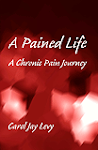
"Fascinating" Stephen S. Hall. writer, N.Y.Times magazine. "Hard to put down." A.C.P.A., American Chronic Pain Association.
Monday, May 30, 2011


Saturday, May 28, 2011
Cancer vs pain
I had a conversation, years ago, with someone about a friend of theirs who had gone through 13 operations for cancer. "!3!" I said, amazed. "How can anyone go through all that. I can't imagine."
My friend looked at me increduously. "You have had 12 brain surgeries for the pain." I shook my head. "No. that's not the same. Not the same at all. Your poor friend had cancer."
Is it the same: 12 operations to try and solve my pain, 13 to remove cancer? No. I did not see it. I 'only' have pain. She had cancer. Cancer can kill, pain can only...well..., kill me, even if it is only in the spiritual and life changing, altering, closing off of alternatives, choices, and abilities kind of way.
People know cancer. Chronic pain is, for the most part, unknown. And misunderstood/not understood.
I have a tiny basal cell skin cancer. Caught quickly, it is as close to nothing as anything associated with the word cancer can be. I hurt my thumb, it goes away. Both nothing much in the scheme of things.
I hurt my thumb. It sets off a bodywide pain that does not go away, that gets worse, that can keep me bedridden. This is RSD (CRPS). I get a chasm making, face splitting pain that lasts for only a few seconds. Within 2 weeks it disables me, coming on its own, triggered by any touch, and accompanied by a constant choking murderous pain. It is trigeminal neuralgia. I am diagnosed with an organ, blood, or bone cancer. It may be killing me, literally.
The word goes out for the latter. Jane has cancer. Family comes together, neighbors, local church groups offer to make meals, help take care of you. You are embraced. The cancer community, through wellness centers and other support groups, is there for you.
Jane has constant intractable pain. The word does not go out. Family, friends, neighbors, get tired of Jane refusing to go places. "She says she can't, she has pain." It is tiresome.
A number of years ago I was at lunch with my mother and sister, Sue (pseudonym). There was a decorative lit candle in the middle of the table. The movement and glow of the flame was excruciating to my eye. Nevertheless I was afraid to blow it out, afraid of the response I would get. The pain decided for me. "I need to blow that out." I said. As I did Sue gave me a look, a 'geesh' body gesture. "The light and flickering hurts my eye." "It's perfectly fine and looks nice. I'm going to have the waitress re light it." "Please don't do that" I said. "You just want to make a fuss and get attention." The waitress was summoned and lit the candle again as requested. A few minutes later Sue excused herself from the table. Immediately I blew out the light again. (My mother was quiet throughout not wanting to get involved.) The minute my sister came back to the table she looked at the candle and waved the waitress over again. For once I stood my ground, the pain taking the lead. "Thank you but we do not want to have that relit. In fact, wy don't you remove it from the table?" My sister fumed, the conversation stilted, the atmosphere blackened. What had I done wrong? Nothing. I merely asked that my pain be respected and honored.
My other sister developed cancer. (I was not notified until she was nearing the end of the disease.) Friends took care of her, my brother made sure I knew she stayed at his home while she underwent chemotherapy. The family embraced her.
I was denied, my pain ignored and disbelieved, 12 brain surgeries looked at as 'she must have talked them into it'. June's (pseudonym) cancer was accepted, her needs met as soon and as often as possible.
I was hurt by all this but that is not the point of this post. (It had started out in a different direction but as often happens, somehow it went in a completely new direction.) The difference is: cancer is believed. We hear about it all the time. I think most of us also fear it, and rightfully so. It is a clarion call.
Pain goes away. That is what most of us know from our own experience with it. A pain that continues, and continues, and continues still. It is also a taker of life, in a different way, and people also fear that. Cancer is real. We cannot turn our heads away or bury them in the sand.
We need to do that when it comes to pain. How can one live, exist, if the pain never goes away, when our bodies become the torturer? The only way to ignore that question is to pretend chronic intractable pain does not exist, that we who have it are poseurs, malingerers, liars.
The time has come. We raise money for cancer, all cancer, because at the end of the day cancer is cancer. We also raise money and awareness for pain but mostly for one pain disorder at a time. Arthritis, Lupus, MS, RSD even, now that that is becoming more accepted as a 'real' disease: they each have their own fundraisers. That cannot be done with chronic pain as a whole because each entity is a completely different disorder. None of it comes under one umbrella, except the one called chronic intractable pain. .
Please, do not ignore us or dismiss us. You would not do it if I had cancer. Pain is every bit just as real.
My friend looked at me increduously. "You have had 12 brain surgeries for the pain." I shook my head. "No. that's not the same. Not the same at all. Your poor friend had cancer."
Is it the same: 12 operations to try and solve my pain, 13 to remove cancer? No. I did not see it. I 'only' have pain. She had cancer. Cancer can kill, pain can only...well..., kill me, even if it is only in the spiritual and life changing, altering, closing off of alternatives, choices, and abilities kind of way.
People know cancer. Chronic pain is, for the most part, unknown. And misunderstood/not understood.
I have a tiny basal cell skin cancer. Caught quickly, it is as close to nothing as anything associated with the word cancer can be. I hurt my thumb, it goes away. Both nothing much in the scheme of things.
I hurt my thumb. It sets off a bodywide pain that does not go away, that gets worse, that can keep me bedridden. This is RSD (CRPS). I get a chasm making, face splitting pain that lasts for only a few seconds. Within 2 weeks it disables me, coming on its own, triggered by any touch, and accompanied by a constant choking murderous pain. It is trigeminal neuralgia. I am diagnosed with an organ, blood, or bone cancer. It may be killing me, literally.
The word goes out for the latter. Jane has cancer. Family comes together, neighbors, local church groups offer to make meals, help take care of you. You are embraced. The cancer community, through wellness centers and other support groups, is there for you.
Jane has constant intractable pain. The word does not go out. Family, friends, neighbors, get tired of Jane refusing to go places. "She says she can't, she has pain." It is tiresome.
A number of years ago I was at lunch with my mother and sister, Sue (pseudonym). There was a decorative lit candle in the middle of the table. The movement and glow of the flame was excruciating to my eye. Nevertheless I was afraid to blow it out, afraid of the response I would get. The pain decided for me. "I need to blow that out." I said. As I did Sue gave me a look, a 'geesh' body gesture. "The light and flickering hurts my eye." "It's perfectly fine and looks nice. I'm going to have the waitress re light it." "Please don't do that" I said. "You just want to make a fuss and get attention." The waitress was summoned and lit the candle again as requested. A few minutes later Sue excused herself from the table. Immediately I blew out the light again. (My mother was quiet throughout not wanting to get involved.) The minute my sister came back to the table she looked at the candle and waved the waitress over again. For once I stood my ground, the pain taking the lead. "Thank you but we do not want to have that relit. In fact, wy don't you remove it from the table?" My sister fumed, the conversation stilted, the atmosphere blackened. What had I done wrong? Nothing. I merely asked that my pain be respected and honored.
My other sister developed cancer. (I was not notified until she was nearing the end of the disease.) Friends took care of her, my brother made sure I knew she stayed at his home while she underwent chemotherapy. The family embraced her.
I was denied, my pain ignored and disbelieved, 12 brain surgeries looked at as 'she must have talked them into it'. June's (pseudonym) cancer was accepted, her needs met as soon and as often as possible.
I was hurt by all this but that is not the point of this post. (It had started out in a different direction but as often happens, somehow it went in a completely new direction.) The difference is: cancer is believed. We hear about it all the time. I think most of us also fear it, and rightfully so. It is a clarion call.
Pain goes away. That is what most of us know from our own experience with it. A pain that continues, and continues, and continues still. It is also a taker of life, in a different way, and people also fear that. Cancer is real. We cannot turn our heads away or bury them in the sand.
We need to do that when it comes to pain. How can one live, exist, if the pain never goes away, when our bodies become the torturer? The only way to ignore that question is to pretend chronic intractable pain does not exist, that we who have it are poseurs, malingerers, liars.
The time has come. We raise money for cancer, all cancer, because at the end of the day cancer is cancer. We also raise money and awareness for pain but mostly for one pain disorder at a time. Arthritis, Lupus, MS, RSD even, now that that is becoming more accepted as a 'real' disease: they each have their own fundraisers. That cannot be done with chronic pain as a whole because each entity is a completely different disorder. None of it comes under one umbrella, except the one called chronic intractable pain. .
Please, do not ignore us or dismiss us. You would not do it if I had cancer. Pain is every bit just as real.
Thursday, May 26, 2011
The dentist and I (and trigeminal neuralgia)
Yesterday I went to the dentist. Even though I no longer have the touch pain I have 'phantom pain' (also called anaesthesia dolorosa). Dr H, a graduate student at the university dental clinic, started setting things up. I was there for my right front tooth, the one I injured when a fell 6 weeks ago. As she started to look at the tooth she used both hands; the right one on the right side and the left hand pulling on the left side of my mouth. Each time the left mouth was moved or pulled, because of the paralysis, the whole side of my face was being moved and pulled. It is a very discomforting and unpleasant sensation. Anticipating this I flinched each time I saw her hand come over the top of the left side of my face.
I explained to her that the left side, even though I no longer had the 'tic', was very sensitive to touch. It was not pain but still unpleasant. "If I flinch it's not you. It is just the way it is." She seemed to understand. At least I thought she did until she asked for an assistant. "She is very scared." she told the assistant.
The assistant stood to my left side. "I am not scared of the dental work. I am concerned because I know when you touch the left side it will be very unpleasant." I reiterated the 'it's not you, it's me' mantra.
They tried to minimize the touch to that side as best they could. It did not always work out but I think the fear of the discomfort outweighed the number of times they set the discomfort into motion.
The fear remains even though the spontaneous and triggered pains stopped in 1998. I no longer look out the window and worry when I see a breeze or rain, or hear that it is cold, etc. I walk out my door when the weather is bad and I smile. "Thank G-d, I can do this." The worry is gone.
But...
I get some 'tics' now and again. They are not the same sensation but a strong feeling, sometimes an itch, taken to the 50th degree, sometimes more like a slightly reminiscent electric sensation, tic yet not tic. Either is strong enough to stop me in my tracks for a few seconds or sometimes minutes; longer than any tic I had when I did have the tic pain. They also only happen in the area where I did not have the trigeminal neuralgia. That was in what is called V1, V2: the top of my forehead to slightly under the eye. These I get only below my nose. My pain doc and I think these are from the anaesthesia dolorosa and not tn.
I know they are not tn but the fear comes as soon as the pain is there. It's coming back. Oh my G-d, what am I going to do??? Then it stops; and the fear ends as well.
I know the dentist will not set off the trigeminal neuralgia, she can't - I no longer have it. And yet, as she puts her hand up and moves to the left side of my head, my eyes start to water, my body tightens. I wait for the assault that, thankfully, never comes, not in a trigeminal neuralgia lightning, knife splitting, skin tearing torturous kind of way. I know the unpleasantness of the phantom pain, very discomforting but tolerable. Bearable and more forgettable.
Does the pain ever end? Yes. For me, the worst of it did. Does the fear ever go away? I still have hope.
I explained to her that the left side, even though I no longer had the 'tic', was very sensitive to touch. It was not pain but still unpleasant. "If I flinch it's not you. It is just the way it is." She seemed to understand. At least I thought she did until she asked for an assistant. "She is very scared." she told the assistant.
The assistant stood to my left side. "I am not scared of the dental work. I am concerned because I know when you touch the left side it will be very unpleasant." I reiterated the 'it's not you, it's me' mantra.
They tried to minimize the touch to that side as best they could. It did not always work out but I think the fear of the discomfort outweighed the number of times they set the discomfort into motion.
The fear remains even though the spontaneous and triggered pains stopped in 1998. I no longer look out the window and worry when I see a breeze or rain, or hear that it is cold, etc. I walk out my door when the weather is bad and I smile. "Thank G-d, I can do this." The worry is gone.
But...
I get some 'tics' now and again. They are not the same sensation but a strong feeling, sometimes an itch, taken to the 50th degree, sometimes more like a slightly reminiscent electric sensation, tic yet not tic. Either is strong enough to stop me in my tracks for a few seconds or sometimes minutes; longer than any tic I had when I did have the tic pain. They also only happen in the area where I did not have the trigeminal neuralgia. That was in what is called V1, V2: the top of my forehead to slightly under the eye. These I get only below my nose. My pain doc and I think these are from the anaesthesia dolorosa and not tn.
I know they are not tn but the fear comes as soon as the pain is there. It's coming back. Oh my G-d, what am I going to do??? Then it stops; and the fear ends as well.
I know the dentist will not set off the trigeminal neuralgia, she can't - I no longer have it. And yet, as she puts her hand up and moves to the left side of my head, my eyes start to water, my body tightens. I wait for the assault that, thankfully, never comes, not in a trigeminal neuralgia lightning, knife splitting, skin tearing torturous kind of way. I know the unpleasantness of the phantom pain, very discomforting but tolerable. Bearable and more forgettable.
Does the pain ever end? Yes. For me, the worst of it did. Does the fear ever go away? I still have hope.
Wednesday, May 25, 2011
Does accepting the label of disabled mean giving up hope?
(I wrote this at midnight a few minutes after finishing the last post.)
I ended my last post a few sentences early, wanting to end on a happier note. I had added two additional sentences that changed it from positive, or at least hopeful, to something more negative. Then I reread it and thought you cannot add those sentences. If you do you you negate hope but hope, or rather the question of hope is the point of this one.
What happens when you say "Okay. I am disabled?" If you say that, if you accept it, do you deny hope?
All the doctors have told me "I am sorry there is nothing else we can offer you." If I believe that, if I take those words to heart, hope becomes medically lost. If I take those words to heart while saying I am disabled, is it the refusal to say those words, to accept that term in applying it to myself, that keeps the (false) hope alive? And is it the falsity of that hope that keeps me from acknowledging my disability? And keeps me from accepting the falsehood of hope?
My family has treated me very poorly during all this. (It started way before that however). I hear and read people say about their dysfunctional families "No matter how estranged we are, no matter how dysfunctional when one of us is in need we come together for that person." That was never the case for me. The struggle to stay afloat, emotionally as well to meet the demands of facing more surgery, more meds, more side effects, and to do it alone could only be done if I was 'able', an irony since the fight was against my disabler - the pain. I needed to ignore, to not accept that I have a disability.
Wait a minute. Maybe right there, as I wrote that sentence, is where the difference comes in. I am not disabled, I have a disability. The word choice allows for the wiggle room. I am not the disability, I merely have one, which means that I also have ability. Hmm, is it the lateness of the day that has me meandering, maybe to an important AHA! moment?
I have never denied my abilities. It is those abilities that have made it harder to accept my limitations, my disability. "Of course I can do that." I say, offering for instance, to make phone calls, get people to sign petitions, write emails, knowing that I have offered to do something that will make me reach for the codeine pills, will hurt me, and hurt me bad, but if I say "No." I feel guilty. If I say "No." I may have to add, "I can't. The eye pain will not let me do that." If I say "No." I am saying 'my disability will not let me do that'.
I love words but when it comes to my own life distinction of meaning is harder to see. I am not sure if the acknowledgement of my abilities overrides the meaning of disability. My abilities let me do a lot of things. I can think, hear, see, speak, write, do the tasks of living.
It is the disability though that always has priority. Pain takes precedence, nature made it so.
So what do I do? Do I continue fighting the same fight?
I love the saying "crazy is doing the same thing over and over again and expecting a different result." Sometimes the different outcome does happen. Hope springs eternal. Disability ends, ability takes over. Until then seeing myself as Carol, who has a disability but is not her disability, may be trying to teach an old dog new tricks but old dogs can and do learn.
Maybe me too.
_________________________________________________________________________
I just read a comment from a reader about the difference between having a disability and being disabled. She makes a great point, for the most part when the question is asked on a form it is usually to find out if you can pay, rarely do they even need to know what your job is so you can pretty much write anything. That thought makes me smile. Maybe the old dog was just taught a new trick.
I ended my last post a few sentences early, wanting to end on a happier note. I had added two additional sentences that changed it from positive, or at least hopeful, to something more negative. Then I reread it and thought you cannot add those sentences. If you do you you negate hope but hope, or rather the question of hope is the point of this one.
What happens when you say "Okay. I am disabled?" If you say that, if you accept it, do you deny hope?
All the doctors have told me "I am sorry there is nothing else we can offer you." If I believe that, if I take those words to heart, hope becomes medically lost. If I take those words to heart while saying I am disabled, is it the refusal to say those words, to accept that term in applying it to myself, that keeps the (false) hope alive? And is it the falsity of that hope that keeps me from acknowledging my disability? And keeps me from accepting the falsehood of hope?
My family has treated me very poorly during all this. (It started way before that however). I hear and read people say about their dysfunctional families "No matter how estranged we are, no matter how dysfunctional when one of us is in need we come together for that person." That was never the case for me. The struggle to stay afloat, emotionally as well to meet the demands of facing more surgery, more meds, more side effects, and to do it alone could only be done if I was 'able', an irony since the fight was against my disabler - the pain. I needed to ignore, to not accept that I have a disability.
Wait a minute. Maybe right there, as I wrote that sentence, is where the difference comes in. I am not disabled, I have a disability. The word choice allows for the wiggle room. I am not the disability, I merely have one, which means that I also have ability. Hmm, is it the lateness of the day that has me meandering, maybe to an important AHA! moment?
I have never denied my abilities. It is those abilities that have made it harder to accept my limitations, my disability. "Of course I can do that." I say, offering for instance, to make phone calls, get people to sign petitions, write emails, knowing that I have offered to do something that will make me reach for the codeine pills, will hurt me, and hurt me bad, but if I say "No." I feel guilty. If I say "No." I may have to add, "I can't. The eye pain will not let me do that." If I say "No." I am saying 'my disability will not let me do that'.
I love words but when it comes to my own life distinction of meaning is harder to see. I am not sure if the acknowledgement of my abilities overrides the meaning of disability. My abilities let me do a lot of things. I can think, hear, see, speak, write, do the tasks of living.
It is the disability though that always has priority. Pain takes precedence, nature made it so.
So what do I do? Do I continue fighting the same fight?
I love the saying "crazy is doing the same thing over and over again and expecting a different result." Sometimes the different outcome does happen. Hope springs eternal. Disability ends, ability takes over. Until then seeing myself as Carol, who has a disability but is not her disability, may be trying to teach an old dog new tricks but old dogs can and do learn.
Maybe me too.
_________________________________________________________________________
I just read a comment from a reader about the difference between having a disability and being disabled. She makes a great point, for the most part when the question is asked on a form it is usually to find out if you can pay, rarely do they even need to know what your job is so you can pretty much write anything. That thought makes me smile. Maybe the old dog was just taught a new trick.
Monday, May 23, 2011
Description that evades me.
I have brown hair and brown eyes. I am short and a little overweight. I like dogs even though I have cats. My political beliefs lean towards liberal. I am Caucasian. I am a US citizen, born in Pennsylvania. I rarely get dressed up and hate wearing heels. I could go on but you have a fair idea of me from that description. Am I leaving anything out?
Oh. Yes. The dreaded "D" word. The word I try never to use. I am disabled. Why is that so hard for me to include? (As I write it my breath catches in my throat, I swallow, hard, my stomach clenches up.)
I hesitate whenever I fill out a form, any form, even medical. All the answers come easily: phone number, address, name, date of birth. Then the one that stumps me. 'Occupation' Oh no. I have to write disabled. There is no choice with the answer, but it is only very recently that I stopped putting the parenthetical extension,(at present).
An earlier post refers to the difficulty I have when talking about the pain. My fingers start to hesitate at the keys even as I write the words here.
Pain caused very weird things to happen. Brain surgery was for someone with tumors or something horrendous. It was an astonishment to me that 'only' pain brought the neurosurgeon into my hospital room and into my brain. Disabled also has its very specific niche, one that does not include the foreign invader into my life called trigeminal neuralgia, the face the only part of my body involved. Disabled means the body.
I discriminate not between mind and body but rather above the neck and below the neck. My disability does not stop me from walking, moving, or physically being able to do the things a body needs to do. It never has, not in the sense of inability to use my limbs and get around. My body always was ready to go. It was the face that said "No. there is a breeze, or cold, or wind, or rain, or, or, or." I think being 'able', absent the pain, has always made it harder to accept my inability to work and be a real participant in life.
I do not accept the pain. Not a day has gone by, not one in the 30 years and counting (except for the wonderful, fantastic 3 months when the first surgery worked and the pain was gone) where I have not awakened and expected that today is the day. No more pain, I can look for work, I can do anything. No, strike that. It is the day I can do everything.
Instead each day is another day I am disabled. Now that I have written it here maybe it will be easier to write it elsewhere.
Oh. Yes. The dreaded "D" word. The word I try never to use. I am disabled. Why is that so hard for me to include? (As I write it my breath catches in my throat, I swallow, hard, my stomach clenches up.)
I hesitate whenever I fill out a form, any form, even medical. All the answers come easily: phone number, address, name, date of birth. Then the one that stumps me. 'Occupation' Oh no. I have to write disabled. There is no choice with the answer, but it is only very recently that I stopped putting the parenthetical extension,(at present).
An earlier post refers to the difficulty I have when talking about the pain. My fingers start to hesitate at the keys even as I write the words here.
Pain caused very weird things to happen. Brain surgery was for someone with tumors or something horrendous. It was an astonishment to me that 'only' pain brought the neurosurgeon into my hospital room and into my brain. Disabled also has its very specific niche, one that does not include the foreign invader into my life called trigeminal neuralgia, the face the only part of my body involved. Disabled means the body.
I discriminate not between mind and body but rather above the neck and below the neck. My disability does not stop me from walking, moving, or physically being able to do the things a body needs to do. It never has, not in the sense of inability to use my limbs and get around. My body always was ready to go. It was the face that said "No. there is a breeze, or cold, or wind, or rain, or, or, or." I think being 'able', absent the pain, has always made it harder to accept my inability to work and be a real participant in life.
I do not accept the pain. Not a day has gone by, not one in the 30 years and counting (except for the wonderful, fantastic 3 months when the first surgery worked and the pain was gone) where I have not awakened and expected that today is the day. No more pain, I can look for work, I can do anything. No, strike that. It is the day I can do everything.
Instead each day is another day I am disabled. Now that I have written it here maybe it will be easier to write it elsewhere.
Saturday, May 21, 2011
Fear and pain stop me. I am a coward.
This 'tweet' spoke volumes to me: "Nobody made a greater mistake than he who did nothing because he could only do a little." Edmund Burke (Tweeted by Mayor Corey Booker this a.m.)
I often find myself saying that. I can't do what I want, I can only do a little so the heck with it.
I also tell myself the opposite: If I go forward, little by little, what if I am successful, I will not be able to do what needs to be done with the success.
I have started making greeting cards. I write text and do the illustrations. Because of the eye and intense concentration; and looking to do them right, it may take a few days to get one done the way I want. Then it takes more time to scan them into my computer and put them into a card format. Bottom line: the fun and joy of the doing turns into pain.
I enjoy the doing and even more so the having done. I get good reactions. Most are humorous. I love when someone opens the inside and guffaws. There is no more real response than that.
I want to start an etsy store, an online site for handmade crafts, etc. but I am afraid. It is not the eye time involved in getting it set up, rather it is the worry. What if I am successful? What if there are a lot of orders? How would I manage getting them sent out in a timely manner? My eye cannot handle that. Then what do I do? So my choice has been not to do.
Burke is right. You have to at least try. Doing nothing because I can only do a little is not only a mistake. It is the coward's way out.
I often find myself saying that. I can't do what I want, I can only do a little so the heck with it.
I also tell myself the opposite: If I go forward, little by little, what if I am successful, I will not be able to do what needs to be done with the success.
I have started making greeting cards. I write text and do the illustrations. Because of the eye and intense concentration; and looking to do them right, it may take a few days to get one done the way I want. Then it takes more time to scan them into my computer and put them into a card format. Bottom line: the fun and joy of the doing turns into pain.
I enjoy the doing and even more so the having done. I get good reactions. Most are humorous. I love when someone opens the inside and guffaws. There is no more real response than that.
I want to start an etsy store, an online site for handmade crafts, etc. but I am afraid. It is not the eye time involved in getting it set up, rather it is the worry. What if I am successful? What if there are a lot of orders? How would I manage getting them sent out in a timely manner? My eye cannot handle that. Then what do I do? So my choice has been not to do.
Burke is right. You have to at least try. Doing nothing because I can only do a little is not only a mistake. It is the coward's way out.
Thursday, May 19, 2011
How far would you go for a possible cure? (part 2)
I just realized that the last implant was put in 20 years ago. It seems like yesterday. It is 100% experimental: I am the 12th or 13th person in the world to have it placed where it is placed.
I 'only' have the eye usage and movement pain. It is what keeps me disabled. When surgeons would ask me "If I could only try and help one of the pains which would it be, the touch induced, spontaneous and constant pain or the eye pain? My answer never waivered. "The eye pain." To a one they would say "I am sorry I can't help you with that."
The last implant was a last ditch effort to try and help me. I lost the first and second dorsal column implants, placed in the back of my neck and upper spine, to infections. The first one worked. It took away about 85% of the pain. The eye pain lingered, but the touch, spontaneous, and constant pain was gone. The second implant, in the same place, never worked. Dr. Barolat, my neurosurgeon, told me there was nothing else he could do. "You have too much scar tissue there."
It is a funny thing about pain. Because the first one worked I fought against it being removed despite the infection.
I ran it 100% of the time at 100% of the stimulation. The battery lasted only 7 months because of my usage. And then, to add insult to injury, I went to take off my sweater one day, pulling it over my head because I could, because the touch pain was gone. Somehow in doing so I moved the wire that ran from the battery to the electrodes. Quickly all benefits stopped.
The infection was bad. I was in the hospital, the residents wanting me to have the entire system removed as soon as possible. I fought them, again and again, day after day, week after week. Dr. Barolat went along with me. I felt he was waiting for me to accept it had to be removed. I could not. It stopped my pain. It was not working now or helping but that did not matter. It had stopped my pain. You cannot let them remove a vestige of hope. Even when the risk was meningitis or worse.
Finally Dr. Barolat insisted. "It must come out."
The second implant was put in the same area of my neck. It never worked. It also became infected. Even though it helped not at all it was the same as the first so it came with hope. Same scenario "No!. You cannot take it out!" About three weeks later I was told I had no choice. Back again to the O.R. to have it removed.
Dr. Barolat told me he could not put anything back into the same area. There was too much scar tissue. "I am sorry but there is nothing else I can offer you." No. I was not going to accept that.
Thankfully, being the person and doctor he is, neither was he. One day he said "I have an idea. What if I was to attach the computer chip to the outside covering of your brain, to stimulate the sensory cortex? It is rarely done, about 12 in the world and usually for pain that comes from a different part of the brain but if you are willing to try I'm willing to do it."
I still had all the tn pain. It was fingers crossed, not only if it would work, but might it cause me to have seizures or other potential bad side effects?
It did not. Nevertheless, the fear that it would was there. Even when I had the battery changed, a few weeks ago, 20 years after the implant was placed, I worried.
The battery had been running very low for quite a while. Would putting in a strong new battery set off seizures? I would be lying if I told you I was not petrified of that possibility. It was a waste of fear. I am fine. It has not 'hit' yet, at least not to the degree that I am noticing a difference. I would never have it removed though, just in case.
An experimental surgery. How far would I go to get relief? To have a life back.
The other night the eye pain was very bad. It would not simmer down, much less stop. Oh man, it never changes and there is nothing anyone will do for me anyway. The next thought caught me offguard. Well what if someone came along with another idea, another experiment? Would you do it? Oh, no. Never, I'm too old to go through all this again. That was the first answer. The next surprised me. Why of course I would. How could I refuse anything? You're either okay with the pain or you're not and I for sure am not. I need it to stop. Logic dictates "No." The pain, emotion and fear of having the pain forever forces a "Yes."
I write in my book and in support groups: Never let the pain make your decisions. I have and it has cost me, greatly.
And yet.
Pain speaks for itself, louder sometimes than any other internal or external voice. Wanting pain to stop is a major biological necessity. Chronic pain is a different animal then acute pain. It's voice needs to be softened so thought and reason rule the day. And any trips you agree to take to the O.R.
I 'only' have the eye usage and movement pain. It is what keeps me disabled. When surgeons would ask me "If I could only try and help one of the pains which would it be, the touch induced, spontaneous and constant pain or the eye pain? My answer never waivered. "The eye pain." To a one they would say "I am sorry I can't help you with that."
The last implant was a last ditch effort to try and help me. I lost the first and second dorsal column implants, placed in the back of my neck and upper spine, to infections. The first one worked. It took away about 85% of the pain. The eye pain lingered, but the touch, spontaneous, and constant pain was gone. The second implant, in the same place, never worked. Dr. Barolat, my neurosurgeon, told me there was nothing else he could do. "You have too much scar tissue there."
It is a funny thing about pain. Because the first one worked I fought against it being removed despite the infection.
I ran it 100% of the time at 100% of the stimulation. The battery lasted only 7 months because of my usage. And then, to add insult to injury, I went to take off my sweater one day, pulling it over my head because I could, because the touch pain was gone. Somehow in doing so I moved the wire that ran from the battery to the electrodes. Quickly all benefits stopped.
The infection was bad. I was in the hospital, the residents wanting me to have the entire system removed as soon as possible. I fought them, again and again, day after day, week after week. Dr. Barolat went along with me. I felt he was waiting for me to accept it had to be removed. I could not. It stopped my pain. It was not working now or helping but that did not matter. It had stopped my pain. You cannot let them remove a vestige of hope. Even when the risk was meningitis or worse.
Finally Dr. Barolat insisted. "It must come out."
The second implant was put in the same area of my neck. It never worked. It also became infected. Even though it helped not at all it was the same as the first so it came with hope. Same scenario "No!. You cannot take it out!" About three weeks later I was told I had no choice. Back again to the O.R. to have it removed.
Dr. Barolat told me he could not put anything back into the same area. There was too much scar tissue. "I am sorry but there is nothing else I can offer you." No. I was not going to accept that.
Thankfully, being the person and doctor he is, neither was he. One day he said "I have an idea. What if I was to attach the computer chip to the outside covering of your brain, to stimulate the sensory cortex? It is rarely done, about 12 in the world and usually for pain that comes from a different part of the brain but if you are willing to try I'm willing to do it."
I still had all the tn pain. It was fingers crossed, not only if it would work, but might it cause me to have seizures or other potential bad side effects?
It did not. Nevertheless, the fear that it would was there. Even when I had the battery changed, a few weeks ago, 20 years after the implant was placed, I worried.
The battery had been running very low for quite a while. Would putting in a strong new battery set off seizures? I would be lying if I told you I was not petrified of that possibility. It was a waste of fear. I am fine. It has not 'hit' yet, at least not to the degree that I am noticing a difference. I would never have it removed though, just in case.
An experimental surgery. How far would I go to get relief? To have a life back.
The other night the eye pain was very bad. It would not simmer down, much less stop. Oh man, it never changes and there is nothing anyone will do for me anyway. The next thought caught me offguard. Well what if someone came along with another idea, another experiment? Would you do it? Oh, no. Never, I'm too old to go through all this again. That was the first answer. The next surprised me. Why of course I would. How could I refuse anything? You're either okay with the pain or you're not and I for sure am not. I need it to stop. Logic dictates "No." The pain, emotion and fear of having the pain forever forces a "Yes."
I write in my book and in support groups: Never let the pain make your decisions. I have and it has cost me, greatly.
And yet.
Pain speaks for itself, louder sometimes than any other internal or external voice. Wanting pain to stop is a major biological necessity. Chronic pain is a different animal then acute pain. It's voice needs to be softened so thought and reason rule the day. And any trips you agree to take to the O.R.
Subscribe to:
Posts (Atom)